
I decided to compare Rheem and Rinnai tankless water heaters after years of dealing with inconsistent hot water in my own home and hearing mixed stories from neighbors who made the switch.
My goal here is to give you a clear, side-by-side look at how these two popular brands perform in real households so you can weigh efficiency, reliability, cost, and daily convenience without the usual marketing fluff.
I base this on features that actually matter when you turn on the shower, run the dishwasher, and try to keep energy bills reasonable.
| Feature | Rheem | Rinnai |
| Typical UEF (high-efficiency models) | Up to 0.96–0.97 | Up to 0.97–0.98 |
| Max flow rate (common whole-house models) | Up to 9–11 GPM | Up to 9–11.1 GPM |
| Heat exchanger warranty (residential) | Often 12 years | 15 years |
| Parts warranty | 5 years | 5 years |
| Smart connectivity | EcoNet / Wi-Fi options, LeakGuard | Wi-Fi, app control, some recirculation built-in |
| Price range (unit only, mid-to-premium) | Generally lower | Generally higher |
| Electric models | Strong selection | Limited |
| Condensing technology | Widely available | Widely available |
| Recirculation options | Available (often external or smart) | Strong built-in or ready options |
| Overall reputation for longevity | Solid mid-to-premium | Frequently cited as premium reliability |
Key Differences Between Rheem And Rinnai Tankless Water Heaters
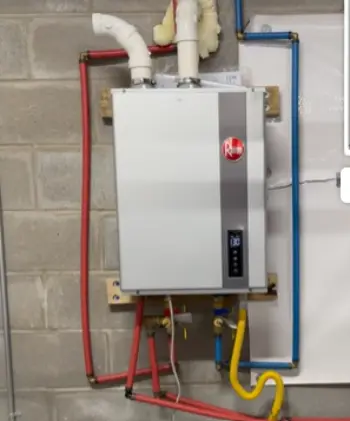
- Efficiency ratings and energy use: Rinnai reaches higher UEF numbers on top models.
Rheem stays close behind.
Both cut standby losses compared with tank heaters. The yearly savings difference stays small for most homes.
- Warranty length and coverage details: Rinnai gives 15 years on the heat exchanger.
Rheem usually offers 12 years.
Parts coverage matches at five years. Labor starts at one year on both. Registration can improve Rinnai labor terms.
- Upfront cost and value positioning: Rheem units cost less at purchase and install.
Rinnai carries a higher price due to its premium standing.
Rheem suits tighter budgets. Rinnai appeals to those focused on long coverage.
- Smart features and connectivity: Rheem uses EcoNet and LeakGuard for alerts. Rinnai offers Wi-Fi and strong recirculation options.
Both let you check settings from a phone. Choice depends on preferred app and need for faster hot water at distant taps.
- Availability of electric versus gas models: Rheem provides more electric tankless choices. Rinnai focuses mainly on gas units.
Electric models skip venting needs. Gas models often deliver higher flow in larger homes.
- Installation flexibility and service network: Both brands have wide dealer support. Rheem parts appear easily in big-box stores.
Rinnai relies more on trained installers. Local technician experience can tip the decision.
- Flow rate consistency in real conditions: Both brands deliver solid GPM when sized right. Cold groundwater reduces output on every unit.
Proper load calculation prevents shortfalls during peak use.
- Maintenance demands over time: Both need regular descaling in hard water areas. Skipping flushes shortens life on either brand. Annual care keeps efficiency high and warranties valid.
Key Features Of Rheem Tankless Water Heaters
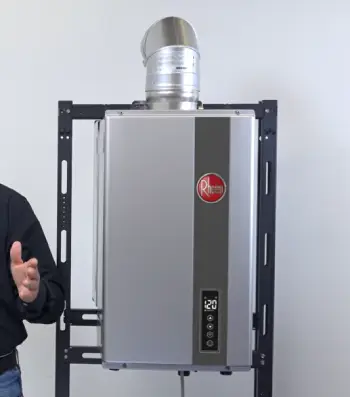
- On-demand heating with solid flow capacity: Rheem heats water only when a tap opens. Higher models support several fixtures at once in mild climates.
Cold groundwater lowers effective flow. Correct sizing keeps performance steady.
- Digital temperature control and modulation: You set temperature in one-degree steps. The unit adjusts output to match demand.
Water stays consistent. Energy waste drops compared with older fixed systems.
- EcoNet smart connectivity and LeakGuard: Selected models connect to your network. You monitor use and get alerts on a phone.
LeakGuard detects problems early. Some systems can shut off water to limit damage.
- Condensing and non-condensing options: Condensing models recover extra heat and need PVC venting plus a drain.
Non-condensing units cost less and use metal venting. Buyers gain flexibility based on budget and setup.
- Compact wall-mount design: The unit frees floor space that a tank would take.
Installation fits closets, garages, or utility rooms. Space savings help in smaller homes.
- Hot Start Programming on certain models: The unit stays ready for a short time after use.
This cuts the cold-water sandwich effect. Back-to-back tasks feel smoother.
- Self-modulating burners or elements: Output changes with water demand. The system avoids full power for light use.
Efficiency stays higher across different tasks.
Pros Of Rheem Tankless Water Heaters
- More accessible pricing: Rheem systems cost less than similar Rinnai units. The lower price makes the switch from a tank easier. Core performance stays strong.
- Wide product range including strong electric choices: Rheem offers more electric models. These work well without gas service. Venting needs disappear on electric versions.
- Good efficiency and ENERGY STAR availability: High-efficiency gas models save energy versus tanks. Rebates often apply. Payback improves over several years.
- User-friendly smart features: EcoNet and LeakGuard give practical monitoring. Phone alerts warn of unusual use. Daily control feels simple.
- Easy parts and unit availability: Rheem products sit on many store shelves. Replacements arrive quickly. Downtime stays shorter during repairs.
- Solid performance for average to large households when properly sized: A matched unit supplies continuous hot water. Showers, laundry, and dishes run without tank recovery waits. Families of four or more benefit most.
- Flexible installation in tight spaces: Compact size fits many locations. Existing gas or electric setups often adapt well. Professional install still remains important.
Cons Of Rheem Tankless Water Heaters
- Slightly shorter heat-exchanger warranty on many models: Twelve years covers most needs. It still trails Rinnai’s fifteen-year term. Long-term owners may notice the gap.
- Mixed long-term reliability comments from some installers: Many owners report years of solid service. Some plumbers prefer other brands for pure longevity. Local experience matters.
- Flow rates can feel limited in very cold climates or high-demand homes: Incoming water temperature affects output. Northern areas or busy fixtures may need higher capacity models. Temperature drops can appear without proper sizing.
- Maintenance still required: Hard water demands regular descaling. Skipping it shortens component life. Annual flushes remain a real ownership cost.
- Some models lack built-in recirculation: External pumps work as an add-on. Factory-integrated options feel stronger on certain Rinnai lines. Distant taps may wait longer without it.
- Occasional cold-water sandwich without Hot Start: Quick on-off faucet use can cause brief cool spells on basic models. The feature helps on higher units but is not universal.
Key Features Of Rinnai Tankless Water Heaters
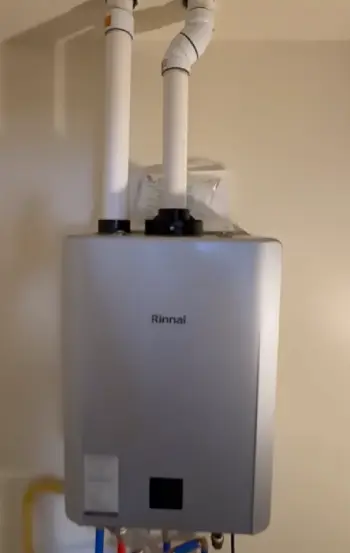
- High-efficiency condensing technology with top-tier UEF: Flagship models convert nearly all fuel into heat.
Select units reach 0.98 UEF.
Operating costs stay low in high-use homes.
- Strong continuous flow rates: Units reach 11 GPM or slightly more in suitable climates. Multiple fixtures run together when sized correctly.
Groundwater temperature still affects real output.
- Extended heat-exchanger warranty: Coverage lasts 15 years on the core part.
Registration can improve labor terms.
Buyers gain extra protection against major repairs.
- Wi-Fi connectivity and app control: You adjust temperature and view diagnostics from a phone. Notifications arrive quickly.
Some models include recirculation for faster delivery.
- Compact, durable construction: Wall mounting frees floor space.
Parts support service instead of full replacement.
Design favors longer useful life.
- Recirculation-ready or built-in options on premium lines: Certain models simplify loop addition. Hot water reaches distant taps faster.
Water waste during waits drops.
- Ultra-low NOx and clean combustion on many units: Emissions stay low.
Some models meet strict local air rules. Environmental compliance improves in regulated areas.
Pros Of Rinnai Tankless Water Heaters
- Reputation for reliability and longevity: Many installers and owners report service into the twenty-year range with care. The track record supports long home ownership plans. Surprises stay fewer over time.
- Top efficiency numbers: Higher UEF ratings cut operating costs. Frequent hot-water users see clearer savings. The difference compounds over years.
- Generous heat-exchanger warranty: Fifteen years of coverage lowers financial risk. Manufacturer confidence shows in the terms. Resale or insurance talks can benefit.
- Advanced smart and recirculation features: App control improves daily ease. Recirculation shortens waits at far fixtures. Water waste decreases during temperature lag.
- Strong professional support network: Rinnai trains many installers. Knowledgeable technicians handle setup and service. Consistency rises across regions.
- Consistent performance across a wide range of models: Build quality holds from mid-tier to premium. Hot-water delivery stays predictable under normal loads. Buyers face fewer surprises.
- Replaceable components for longer service life: Individual parts often swap instead of full unit replacement. Repair costs stay more manageable. Overall lifespan extends with care.
Cons Of Rinnai Tankless Water Heaters
- Higher purchase and often higher installed cost: Premium standing raises the price. Unit and labor can exceed Rheem totals. Budgets may stretch for some buyers.
- Fewer pure electric whole-house options: Electric selection stays narrower than Rheem. Homes without gas face limited choices. Alternative brands may fill gaps.
- Maintenance remains essential: Hard water still needs periodic flushing. Skipping care voids warranties and shortens life. Ongoing attention stays required.
- Potential for longer wait times if recirculation is not used: Distant fixtures can lag without a loop. Adding recirculation raises cost and complexity. The feature solves the issue when included.
- Availability of certain parts or specialized models can vary by region: Some accessories need dealer orders. Local store stock stays lower than Rheem. Repair timelines can extend in smaller markets.
- Premium features may go unused in simple households: Advanced recirculation or app tools add cost. Basic needs may not justify the extra expense. Value drops if features stay idle.
Real-World Performance Considerations
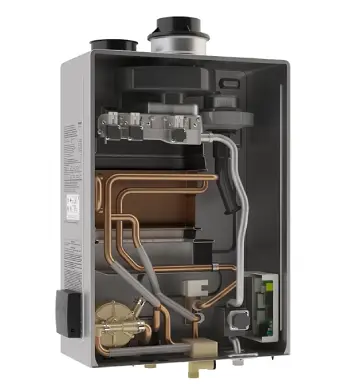
When I look at both brands side by side, the choice often comes down to your climate, household size, fuel type, and how long you expect to stay in the house.
In warmer southern regions with moderate groundwater temperatures, either brand’s mid-to-high flow models can support a family of four or five with simultaneous showers and appliance use.
In colder northern areas the effective gallons-per-minute drop for every tankless unit, so you size upward or accept that two high-flow fixtures at once may push the limits.
Energy savings appear similar once you compare apples-to-apples high-efficiency models. Both eliminate the standby losses of a storage tank.
The actual dollar amount saved depends on your local fuel prices, how much hot water you use, and whether you qualify for rebates.
Over ten or fifteen years the operating cost difference between a 0.96 UEF Rheem and a 0.98 UEF Rinnai is usually modest compared with the original price gap.
Installation quality matters more than the badge on the front. Undersized gas lines, improper venting, missing condensate drainage, or skipped water-quality treatment will cause problems on either brand.
I always recommend a licensed installer experienced with tankless systems and willing to perform a proper load calculation based on your fixtures and local water temperature.
Hard water is the quiet enemy of every tankless heater. Scale builds up on the heat exchanger and reduces efficiency and lifespan.
Both Rheem and Rinnai recommend periodic descaling. Homes with very hard water benefit from a whole-house softener or at least an annual professional flush.
Skipping this step is one of the fastest ways to turn a twenty-year appliance into a ten-year headache.
Noise levels are generally low on modern units. You may hear the fan and burner during operation, but most people find it unobtrusive once the unit is mounted in a utility space.
Electric models run quieter still because there is no combustion.
Who Should Choose Rheem?
If you want solid performance at a more approachable price, need electric options, or value easy parts availability, Rheem makes a strong case.
Households that plan to stay five to twelve years may find the shorter warranty acceptable given the lower initial outlay.
The smart features on higher models add convenience without forcing you into the most expensive tier.
Who Should Choose Rinnai?
If maximum efficiency ratings, the longest heat-exchanger warranty, and a reputation for long-term reliability rank highest on your list, Rinnai often wins.
Buyers who expect to remain in the home for decades and who want advanced recirculation options tend to lean this direction.
The higher upfront cost can be offset by energy savings and reduced risk of early replacement.
Also Read: Comparison Of American Standard Water Heater And Rheem
Frequently Asked Questions (FAQ)
Neither is universally better. Rinnai usually leads on warranty length and premium efficiency reputation. Rheem often wins on price and electric model selection. Your climate, budget, and fuel type decide the better fit.
Top contenders regularly include Rinnai, Rheem, Navien, and Noritz. The best brand for you depends on local installer expertise, water quality, and whether you prioritize cost or maximum warranty coverage.
Yes. Rinnai holds a strong reputation for efficiency, reliability, and solid warranties. Many professional installers recommend the brand for whole-house gas applications.
Consumer Reports testing has covered multiple brands including Rheem and Rinnai among others. Results vary by specific model and test year. High-efficiency gas tankless units generally score well on efficiency and operating cost compared with storage tanks, but individual model scores change over time. Check the latest ratings for current recommendations.
Final Thoughts
After examining the numbers, features, and real-user experiences, I see both Rheem and Rinnai as capable choices that can deliver endless hot water and lower energy use compared with old tank heaters.
Rinnai tends to feel like the premium pick with longer coverage and slightly higher efficiency peaks. Rheem feels like the practical, value-oriented option that still performs well for most households.
You should match the unit to your actual hot-water demand, local water temperature, and budget rather than chasing brand prestige alone.
Proper installation and regular maintenance will do more for longevity than any single marketing claim. Take the time to get a professional load calculation and water-quality assessment.
When those pieces line up, either brand can serve you reliably for many years and free you from the cold-shower surprises of traditional tanks.
Recent Posts
I spent months comparing budget options against established names after my last set of tires wore out sooner than expected.My goal here is to share what I learned from putting Dextero and...
AquaTru Carafe Vs. Classic: Which Is Actually Fits Your Kitchen?
I decided to write this comparison after months of testing both the AquaTru Carafe and the Classic in my own kitchen. Tracking covered daily use.Taste stayed consistent. Refill frequency...