
If you’re thinking about buying the ScaleBlaster Water Conditioner, I’d suggest slowing down before spending your money.
I looked into real customer experiences, long-term performance, and how this electronic water conditioner compares with other solutions.
While it promises to reduce limescale without salt or chemicals, my research and overall impression leave me unconvinced.
Before you decide, it’s worth understanding both the strengths and the shortcomings because this isn’t a product I’d personally recommend for most households.
My Personal Experience With The ScaleBlaster Water Conditioner
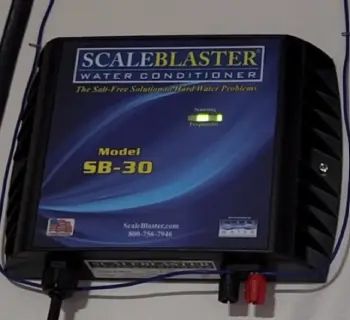
When I first came across the ScaleBlaster Water Conditioner, I thought it sounded like the perfect answer to hard water problems.
Like many homeowners, I wanted a solution that didn’t require hauling bags of salt, dealing with regeneration cycles, or constantly maintaining another appliance.
The promise of using electronic frequencies to reduce scale buildup without changing the chemistry of the water seemed almost too good to ignore.
After spending time researching how it works and reading hundreds of customer experiences across different platforms, I noticed something interesting.
Opinions weren’t simply mixed—they were often completely opposite. Some people claimed their fixtures stayed cleaner and scale buildup slowed down after installation.
Others insisted they saw absolutely no difference, even after several months of use.
That inconsistency became my biggest concern.
Unlike a traditional water softener, ScaleBlaster doesn’t remove calcium or magnesium from the water. Instead, it claims to alter the behavior of minerals so they are less likely to stick to pipes, heating elements, and plumbing fixtures.
In theory, that sounds reasonable. In practice, however, the results appear highly dependent on factors like water hardness, pipe material, plumbing layout, and mineral composition.
If your water hardness is relatively mild, you might notice some improvement over time. Faucets may develop less stubborn deposits, and appliances like kettles or coffee makers might require cleaning less frequently.
Some users reported that soap rinsed away a little easier, while others noticed slightly softer-feeling skin.
Unfortunately, those positive experiences weren’t universal.
Many homeowners with moderate to extremely hard water expected dramatic improvements and ended up disappointed. White spots continued appearing on shower doors, mineral deposits remained inside kettles, and water heaters still accumulated scale. Several users felt that the product simply didn’t justify its cost because they couldn’t identify any measurable improvement.
Another issue that stood out to me was expectations. Marketing often creates the impression that ScaleBlaster performs similarly to a water softener.
It doesn’t. If you’re expecting silky-soft water, reduced soap usage, or complete elimination of mineral buildup, you’re likely setting yourself up for disappointment.
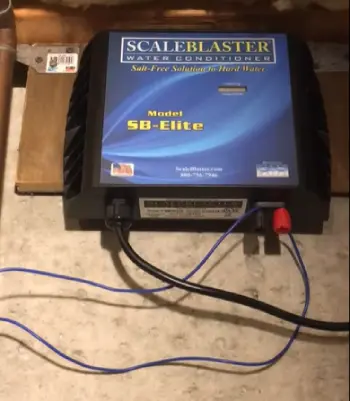
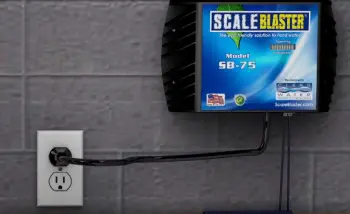
Installation itself appears straightforward. Most homeowners with basic DIY skills can mount the unit and wrap the signal wire around the incoming water pipe within an hour. There are no plumbing modifications or pipe cutting involved, which is certainly convenient.
The downside is that easy installation doesn’t necessarily translate into effective results.
I also noticed that people often kept waiting for improvements. Some reviews suggested waiting several weeks, while others mentioned several months before expecting noticeable changes. That’s a long period to evaluate whether an expensive product is actually working.
Personally, I prefer products that provide measurable, consistent benefits. With ScaleBlaster, the outcome seems unpredictable.
Some households experience modest improvements, while others see virtually none despite following installation instructions correctly.
That uncertainty is ultimately why I wouldn’t choose it for my own home. When investing in water treatment equipment, I want confidence that the results will be noticeable rather than hopeful.
How The ScaleBlaster Water Conditioner Works?
Instead of filtering or removing minerals from water, ScaleBlaster sends electronic frequencies through the home’s water pipes.
According to the manufacturer, these frequencies change the crystallization process of calcium and magnesium, making them less likely to attach to plumbing surfaces.
The minerals remain in your water.
Because of that, the water hardness level remains essentially unchanged. Test strips will still show hard water because the mineral content hasn’t been removed.
This distinction is extremely important because many buyers mistakenly assume they’re purchasing an electronic version of a water softener.
Who Might Consider Buying It?
ScaleBlaster may appeal to homeowners who:
- Want to avoid using salt.
- Prefer a maintenance-light system.
- Don’t want plumbing modifications.
- Have only mildly hard water.
- Understand that it won’t soften water.
However, if your primary goal is eliminating hard water problems, there are more dependable alternatives available.
Pros Of The ScaleBlaster Water Conditioner
- Chemical-Free Operation
One of the product’s biggest advantages is that it doesn’t rely on chemicals or salt.
If you’re concerned about adding sodium to your household water, this approach may initially seem attractive.
Because it doesn’t remove minerals, the natural mineral content stays intact, which some homeowners appreciate.
- Easy Installation
I genuinely like how simple installation is.
Unlike conventional softeners, there’s no need to cut plumbing, connect drain lines, or install a brine tank. Most people can complete installation with basic tools.
That simplicity also makes it appealing for renters or homeowners who don’t want major plumbing work.
- Compact Design
The unit occupies very little wall space.
There’s no large tank taking over part of your garage or utility room, making it suitable for homes with limited installation space.
- No Salt Refills
Traditional water softeners require ongoing salt purchases.
ScaleBlaster eliminates that recurring chore, which can reduce routine maintenance and save some effort over time.
- No Water Waste During Regeneration
Conventional softeners periodically regenerate, sending wastewater down the drain.
ScaleBlaster doesn’t perform regeneration cycles, so there isn’t any additional water consumption related to operation.
- Quiet Daily Operation
Once installed, the unit works silently.
There are no motors cycling, no tanks filling, and no loud regeneration noises during the night.
- Low Electricity Consumption
Electronic water conditioners generally consume very little electricity.
That means operating costs remain relatively small throughout the year.
- Potential Improvement in Mild Hard Water Conditions
Some homeowners with moderately hard water reported gradual reductions in scale accumulation on fixtures and shower doors.
It’s important to emphasize the word “potential.”
The improvements appear inconsistent rather than guaranteed.
- Maintenance-Free Daily Use
There are no filters to replace regularly.
There are no salt bags to lift.
There are no regeneration schedules to monitor.
Once installed, most homeowners simply leave it running.
- Better Than Doing Nothing
If someone refuses to install a traditional water softener and only wants a non-invasive electronic solution, ScaleBlaster may offer small benefits in certain situations.
That said, I still believe expectations should remain realistic.
Cons Of The ScaleBlaster Water Conditioner
- Results Are Highly Inconsistent
This is easily the biggest drawback.
Some customers report improvement.
Many others report absolutely no noticeable difference.
That level of inconsistency makes it difficult to confidently recommend.
- Does Not Actually Soften Water
Hardness minerals remain in the water.
If you’re expecting softer water for bathing, laundry, or cleaning, you’ll probably be disappointed.
- Performance Depends on Water Conditions
Water hardness varies enormously between homes.
A solution that appears to help one household may accomplish very little in another.
- Expensive for Uncertain Results
The purchase price isn’t insignificant.
Considering the mixed customer experiences, many buyers expected much better performance.
- White Water Spots Often Continue
Numerous homeowners continued seeing mineral spots on sinks, faucets, and shower glass despite extended use.
- Heavy Scale Can Still Build Up
Many users with very hard water reported little improvement inside kettles, water heaters, and plumbing fixtures.
- Scientific Debate Continues
Electronic descaling remains a topic with differing opinions.
While some users believe it works, others remain unconvinced after long-term use.
- Marketing Expectations Can Be Misleading
Some advertising creates expectations closer to traditional water softening.
In reality, the technology serves a different purpose entirely.
Maintenance Tips For ScaleBlaster Water Conditioner
- Keep Your Expectations Realistic
The first maintenance tip isn’t about the device—it’s about your expectations.
ScaleBlaster isn’t designed to remove hardness minerals. Understanding that from the beginning helps prevent disappointment.
- Monitor Your Fixtures Regularly
Continue checking faucets, showerheads, and sinks for mineral buildup.
If scale continues accumulating at the same rate, you’ll know the system isn’t making a meaningful difference.
- Clean Existing Scale Before Installation
Installing the unit won’t instantly eliminate years of accumulated mineral deposits.
Start with clean fixtures so you can more accurately judge future performance.
- Inspect the Indicator Lights
Occasionally verify that the unit remains powered and operating.
A quick visual inspection takes only seconds.
- Keep the Wiring Secure
The signal wire should remain tightly wrapped around the incoming water pipe according to installation instructions.
Loose wiring may reduce effectiveness.
- Protect the Unit from Physical Damage
Avoid striking the device during storage changes or maintenance around the utility area.
Although compact, it should remain securely mounted.
- Continue Routine Appliance Maintenance
Don’t assume ScaleBlaster eliminates the need for cleaning.
Coffee makers, dishwashers, washing machines, and water heaters still benefit from periodic maintenance.
- Flush Water Heaters When Needed
Sediment naturally accumulates over time.
Regular flushing remains good practice regardless of whether you install an electronic conditioner.
- Clean Showerheads Periodically
Mineral buildup can still occur.
Removing deposits early helps maintain water flow and fixture appearance.
- Evaluate Performance Objectively
Rather than relying on hope, compare your fixtures before and after installation over several months.
If you don’t observe meaningful improvement, reconsider whether the investment is providing value.
Comparison Of ScaleBlasterWith Other Brands
- ScaleBlaster Compared with Traditional Salt Water Softeners
Traditional softeners physically remove calcium and magnesium through ion exchange. The improvement is immediately noticeable in soap performance, water feel, laundry, and mineral reduction.
ScaleBlaster attempts to reduce scaling without removing minerals, making its results significantly less predictable.
If your household struggles with severe hard water, a conventional softener generally delivers more reliable performance.
- ScaleBlaster Compared with Electronic Competitors
Many electronic water conditioners make similar promises.
In my research, ScaleBlaster doesn’t clearly separate itself from competing electronic descalers because customer experiences remain inconsistent across the category.
The technology itself appears to produce variable outcomes regardless of brand.
- ScaleBlaster Compared with Salt-Free Water Conditioners
Some salt-free template-assisted crystallization systems have demonstrated more consistent performance for scale prevention than simple electronic devices.
Although these systems usually cost more, many homeowners report greater confidence in their effectiveness.
Is The ScaleBlaster Water Conditioner Worth It?
After reviewing how the product works and examining numerous customer experiences, I don’t believe it’s the right investment for most homeowners.
The biggest issue isn’t installation, maintenance, or operating cost.
It’s uncertainty.
When you spend money on a water treatment system, you expect measurable improvements. Unfortunately, ScaleBlaster doesn’t consistently deliver those improvements across different households.
If your water is only mildly hard, you may notice some reduction in scale formation.
However, if your home has moderate or severe hard water, I believe you’re more likely to achieve dependable results with other water treatment solutions.
Also Read: Comparison Of Navien And Rinnai Tankless Water Heaters
Frequently Asked Questions (FAQ)
It may reduce scale buildup in some situations, but results vary widely depending on water conditions and installation.
The best choice depends on your water hardness and goals. Traditional water softeners generally provide the most consistent results for hard water.
Some homeowners report modest improvements, while many others notice little or no change. Performance is inconsistent.
Not usually for severe hard water. A descaler may help reduce scale formation, while a water softener actually removes hardness minerals and typically delivers more reliable results.
Wrapping Up
After looking at the technology, customer feedback, and real-world expectations, I can’t confidently recommend the ScaleBlaster Water Conditioner.
While the salt-free design, simple installation, and low maintenance are appealing, the inconsistent performance is difficult to overlook.
If you’re dealing with significant hard water issues, investing in a proven water softening solution is likely to provide better long-term value and more predictable results than relying on an electronic conditioner with mixed reviews.
Recent Posts
I spent months comparing budget options against established names after my last set of tires wore out sooner than expected.My goal here is to share what I learned from putting Dextero and...
AquaTru Carafe Vs. Classic: Which Is Actually Fits Your Kitchen?
I decided to write this comparison after months of testing both the AquaTru Carafe and the Classic in my own kitchen. Tracking covered daily use.Taste stayed consistent. Refill frequency...