
If you need a cleaner that can handle greasy equipment, oily workshop surfaces, tools, and stubborn grime without making cleaning unnecessarily complicated, I think Simple Green Industrial Cleaner & Degreaser is worth considering.
I would especially recommend it to garage owners, mechanics, maintenance teams, workshops, and anyone who regularly deals with industrial messes.
In this review, I’ll explain how it performed for me, where it impressed me, where it fell short, and how I would use and maintain it for consistent results.
My First Experience With Simple Green Industrial Cleaner & Degreaser
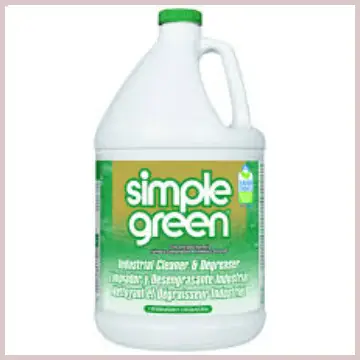
The first thing I noticed when using Simple Green Industrial Cleaner & Degreaser was how versatile it felt.
I wasn’t dealing with just one type of mess, either. I used it around areas where grease, oil, dirt, and general shop grime had built up, and I quickly realized that the product’s biggest strength is flexibility.
I like cleaners that don’t force me to keep several different bottles within arm’s reach. With this one, I could adjust how aggressively I wanted to clean by changing the dilution.
For lighter cleaning, I used a weaker solution. When I encountered heavier grease, I increased the concentration and gave the cleaner more time to work.
That dwell time mattered.
Instead of immediately scrubbing a greasy surface as hard as I could, I found that allowing the cleaner to sit briefly helped loosen the buildup. After that, wiping or brushing became considerably easier.
On moderately dirty surfaces, I found the cleaning performance quite satisfying. It handled oily residue and everyday industrial grime without requiring excessive physical effort. However, I wouldn’t describe it as a magical one-spray solution for years-old, baked-on grease.
Extremely heavy deposits still needed agitation, repeated applications, or a stronger cleaning method.
Another thing I appreciated was the lack of an overwhelmingly harsh solvent experience. I still treated the product like an industrial chemical and used appropriate ventilation and protective equipment, but the overall cleaning process felt more manageable than working with some extremely aggressive degreasers.
I also liked having control over the cleaning strength. That matters because not every surface needs maximum cleaning power.
Using a concentrated solution everywhere would be wasteful, and it could create unnecessary compatibility concerns.
My overall impression was straightforward: Simple Green Industrial Cleaner & Degreaser is a practical workhorse. It isn’t perfect, but when I needed a multipurpose cleaner for grease, oil, dirt, and general maintenance grime, it proved useful.
Pros Of Simple Green Industrial Cleaner & Degreaser
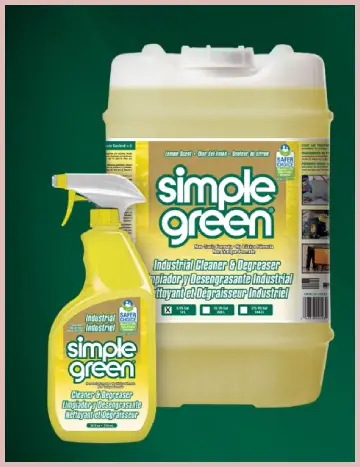
- Strong Everyday Degreasing Performance
The biggest positive for me is its ability to deal with common industrial grime. Grease, oily residue, dirt, and accumulated workshop mess are exactly the kinds of contaminants where I found it useful.
When I applied it to moderately dirty areas and allowed it some contact time, I could usually see the grime beginning to loosen. That reduced the amount of aggressive scrubbing I needed.
For routine equipment cleaning, that’s a meaningful advantage.
- Flexible Dilution
I consider dilution flexibility one of the product’s strongest practical features. I don’t need maximum concentration for every job.
If I’m cleaning a lightly soiled surface, I can use a milder solution. When the contamination is heavier, I can increase the strength according to the product directions.
That gives me more control over consumption and cleaning intensity.
- Useful for Multiple Cleaning Tasks
Another reason I like it is versatility. Instead of buying a specialized product for every little cleaning job, I can use one cleaner for several appropriate applications.
That can be particularly convenient in a workshop or maintenance environment where conditions change throughout the day.
One job might involve greasy tools, while another involves oily equipment exteriors or dirty hard surfaces. Having a multipurpose industrial cleaner available simplifies the process.
- Less Reliance on Extremely Aggressive Solvents
For users who prefer a water-based cleaning approach, Simple Green’s industrial cleaner and degreaser can be an appealing option.
I still wouldn’t treat it casually. “Water-based” doesn’t mean “harmless,” and I always think about ventilation, gloves, eye protection, surface compatibility, and the manufacturer’s safety instructions.
Still, I appreciate having an alternative to reaching immediately for a very aggressive solvent.
- Good Fit for Routine Maintenance
I think this is where the product makes the most sense.
If I’m cleaning regularly rather than trying to rescue a neglected machine covered in decades of hardened grease, I can get more value from it.
Routine cleaning prevents contamination from becoming increasingly difficult to remove. In that environment, a versatile degreaser becomes part of maintenance rather than an emergency cleaning solution.
- Convenient for Workshops and Garages
If you maintain vehicles, machinery, tools, or equipment, you already know how quickly oily grime spreads.
I like having a product that can cover multiple appropriate cleaning tasks because it reduces the clutter of specialized cleaners.
For a home garage, small workshop, commercial maintenance area, or similar environment, that convenience can be valuable.
Cons Of Simple Green Industrial Cleaner & Degreaser

- It Isn’t a Miracle Cleaner
My biggest criticism is also the easiest one to explain: I wouldn’t expect it to dissolve every imaginable grease deposit instantly.
Very old, carbonized, baked-on, or exceptionally heavy contamination can require mechanical agitation and repeated treatment.
If you’re expecting a spray-and-wipe experience on severe industrial buildup, you may be disappointed.
- Surface Compatibility Still Matters
I never assume that a degreaser is automatically safe for every material.
Different metals, painted surfaces, coatings, plastics, rubber, finishes, and sensitive components can react differently to cleaning chemicals.
I recommend checking the manufacturer’s guidance and testing an inconspicuous area when you’re uncertain.
- Rinsing Can Be Important
Depending on the application and surface, I may need to wipe thoroughly or rinse after cleaning.
That adds another step to the process.
For someone who wants an extremely quick cleaner with virtually no cleanup afterward, this may feel inconvenient.
- Heavy Grease May Require Agitation
I found that the cleaner performs best when I work with it rather than simply spraying and immediately wiping.
A brush, cloth, or suitable agitation method can make a significant difference when contamination is stubborn.
That isn’t necessarily a flaw, because serious grease often requires mechanical action regardless of the chemical being used. Still, it’s worth setting realistic expectations.
Maintenance Tips For Simple Green Industrial Cleaner & Degreaser
- Start With the Right Dilution
One of my most important habits is matching the dilution to the cleaning job.
I don’t automatically use the strongest solution. Light dirt doesn’t need the same treatment as thick grease.
Using the appropriate dilution helps me avoid unnecessary product consumption while still getting the cleaning performance I need.
I follow the manufacturer’s dilution instructions and adjust only within the recommended application guidelines.
- Remove Loose Dirt First
Before applying a degreaser, I like to remove loose dirt, dust, debris, and particles whenever practical.
There is no reason to make a cleaner fight through a layer of loose contamination that I could remove mechanically first.
A quick brush, wipe, or air-cleaning step can make the chemical cleaning stage more efficient.
- Give the Cleaner Time to Work
This is one of the easiest improvements I can make.
When I spray and immediately wipe, I’m not always giving the cleaner enough opportunity to loosen the contamination.
For appropriate surfaces, I apply the product, allow suitable contact time according to the directions, and then agitate if necessary.
The key is not to let the product simply dry on a surface when the instructions call for rinsing or wiping.
- Use Mechanical Agitation for Stubborn Grime
When grease is stubborn, I don’t keep adding more cleaner indefinitely.
Instead, I use an appropriate brush, cloth, pad, or other cleaning tool to provide mechanical action.
That combination of chemical action and physical agitation is often much more effective than relying on either one alone.
I also make sure the tool I’m using is suitable for the surface. There’s little point removing grease if I end up scratching a finish in the process.
Rinse or Wipe Thoroughly
After cleaning, I pay attention to residue.
Depending on the application, I may rinse with water or wipe the surface thoroughly with clean cloths.
This is especially important when the cleaned component will later receive lubrication, paint, adhesive, or another treatment. Residual cleaner or contamination can interfere with subsequent work.
- Dry the Surface Properly
I don’t like leaving cleaned metal or equipment wet unnecessarily.
After rinsing, I dry the surface using an appropriate method. This helps keep the workspace tidy and reduces concerns associated with moisture remaining on susceptible materials.
For equipment with sensitive electrical components, I take additional care and avoid indiscriminate spraying.
- Don’t Spray Electrical Components Carelessly
This is a rule I take seriously.
A degreaser may be suitable for cleaning the exterior of equipment without being appropriate for directly soaking electrical connections, energized components, motors, switches, or sensitive electronics.
I disconnect or isolate equipment when required and follow appropriate cleaning procedures.
- Test Unfamiliar Surfaces First
Whenever I encounter a new material or finish, I don’t assume compatibility.
I test a small, inconspicuous area first, particularly when the surface is painted, coated, delicate, or expensive.
That small precaution can prevent a frustrating and expensive mistake.
- Store the Cleaner Correctly
I keep cleaning chemicals in their original, properly labeled containers and store them according to the manufacturer’s instructions.
I also avoid transferring chemicals into random bottles that could be mistaken for something else.
Good storage isn’t glamorous, but it is part of responsible maintenance.
- Keep Cleaning Tools Clean
A surprisingly common mistake is using a dirty rag to clean an already dirty surface.
I keep separate cloths and brushes for different tasks where practical. I also clean or replace heavily contaminated materials rather than continually spreading old grease around.
The cleaner can only do so much if my tools are saturated with grime.
Comparison Of Simple Green Industrial Cleaner & Degreaser With Other Brands
- Simple Green vs Zep Degreasers
When I compare Simple Green with Zep’s range of degreasers, I see two products families that can appeal to users looking for stronger commercial-style cleaning performance.
Zep has several formulations aimed at different applications, so the comparison depends heavily on the exact product.
For my purposes, Simple Green’s flexibility and multipurpose positioning make it attractive when I want one cleaner for a range of appropriate jobs.
Zep can make more sense when I’m looking for a formulation specifically targeted toward a particular heavy-duty cleaning task.
I wouldn’t automatically declare one the winner. I would choose based on the contamination, surface, required strength, and manufacturer’s application guidance.
- Simple Green vs Purple Power
Purple Power is another name that often comes up when people discuss heavy-duty degreasing.
In my experience-based assessment, I would view Purple Power as a more aggressive choice for users primarily concerned with attacking heavy grime.
Simple Green appeals to me when I want versatility and a cleaner that can fit into broader routine maintenance.
If your garage regularly deals with extremely heavy grease, you may prefer a more aggressive formulation. If you want flexibility across everyday cleaning tasks, Simple Green remains compelling.
- Simple Green vs Super Clean
Super Clean is also popular among people who want substantial degreasing capability.
I see this comparison as a question of cleaning intensity versus versatility and application requirements.
If I am dealing with seriously contaminated equipment, I want to pay close attention to the specific formulation, dilution instructions, material compatibility, and rinsing requirements of each product.
Simple Green is appealing because I can use its dilution flexibility to tailor the cleaning process rather than treating every task identically.
- Simple Green vs Dawn
Dawn isn’t positioned as an industrial degreaser in the same way, but people frequently compare dish soap with stronger cleaners because dish soap can remove grease effectively in everyday situations.
For light household grease, dish soap may be perfectly adequate.
For workshop equipment, oily machinery, automotive grime, and more demanding maintenance situations, I would rather use a product designed for that type of cleaning.
That’s where I see Simple Green having a clear practical advantage.
Which Brand Would I Choose?
If I needed one general-purpose industrial cleaner for regular maintenance, I’d put Simple Green high on my shortlist.
If my main priority were extremely aggressive grease removal, I’d compare it with dedicated heavy-duty degreasers and choose based on the exact job.
The important point is that there isn’t one universal “best” degreaser. The best choice depends on what you’re cleaning, how dirty it is, what the surface is made from, and what level of rinsing or follow-up work you’re prepared to do.
Also Read: Is CPR Leather Cleaner And Conditioner Worth It?
Frequently Asked Questions (FAQ)
Yes. I find it effective for many everyday grease, oil, dirt, and grime cleaning tasks when used according to its directions.
I wouldn’t use it on surfaces or components that the manufacturer does not approve, especially sensitive materials, finishes, or electrical components.
It is designed for cleaning and degreasing appropriate industrial, commercial, workshop, equipment, and hard-surface applications.
There isn’t one universal winner. A stronger dedicated degreaser may be better for extremely heavy contamination, while Simple Green can be better for versatility.
Wrapping Up
I would recommend Simple Green Industrial Cleaner & Degreaser to anyone who wants a versatile cleaner for regular workshop, garage, equipment, or maintenance duties.
I like its flexibility more than any single cleaning claim. It handles everyday grime well, adapts to different cleaning strengths, and can become a useful part of a routine maintenance system.
If your main goal is tackling exceptionally heavy, baked-on grease, I’d compare stronger specialty degreasers first.
For general-purpose industrial cleaning, though, I’d happily keep Simple Green in my cleaning arsenal.
Recent Posts
I tried Meltoway Hair Dissolving Cream because I wanted a quick way to deal with unwanted body hair without reaching for a razor every few days. If you are looking for a convenient at-home...
If you’re considering a saffron-based supplement to support mood, appetite control, and everyday wellness, Happy Saffron Plus is worth considering.I like that it takes a familiar botanical...