
I have spent years testing stand mixers in my own kitchen, baking everything from soft cookie dough to dense bread and silky meringues.
My goal here is to share a clear, side-by-side look at the Smeg stand mixer versus the KitchenAid so you can decide which one fits your baking style, kitchen space, and budget without second-guessing the choice.
| Feature | Smeg Stand Mixer | KitchenAid Stand Mixer (Artisan 5-Qt typical) |
| Motor Power | 600W (some models 750W+) | 325W (higher models up to 600W+) |
| Bowl Capacity | 4.8–5 qt | 5 qt (range 3.5–7 qt across models) |
| Speeds | 10 with Smooth Start | 10 with Soft Start on many models |
| Design | Retro 1950s Italian style | Classic American curved silhouette |
| Weight | Around 19–21 lbs | Around 24–26 lbs |
| Included Attachments | Dough hook, flat beater, wire whisk, flex-edge beater, pouring shield | Flat beater, dough hook, wire whisk, pouring shield |
| Attachment Ecosystem | Front hub with limited options | Front hub with 80+ attachments |
| Price Range | Higher, often $500–$675+ | More accessible, often $400–$500 for Artisan |
| Warranty | Typically 2 years | Typically 1 year |
Key Differences Between The Smeg And Kitchenaid Stand Mixer
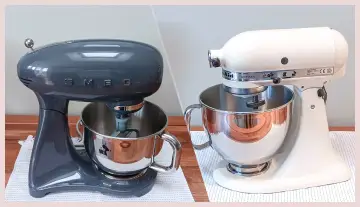
- Power delivery and motor feel: Smeg usually starts with a stronger 600-watt motor that handles thick dough with less strain overall.
KitchenAid’s popular Artisan runs at 325 watts which still works well for everyday tasks but can work harder on heavy bread batches.
I notice the Smeg keeps a steadier pace when I push larger amounts of pizza dough through it.
- Design language and counter presence: Smeg leans hard into glossy 1950s Italian curves and bold color choices that make the machine a true visual centerpiece.
KitchenAid keeps the familiar rounded profile that has lived on counters for decades and offers an even wider color palette for matching. In my kitchen the Smeg draws more comments from guests while the KitchenAid blends in more quietly with the rest of the appliances.
- Weight and stability during mixing: Smeg models tend to be lighter yet many testers including me find they stay planted thanks to solid base design and non-slip feet.
KitchenAid feels heavier and more planted by sheer mass though some tilt-head versions can walk a little on very stiff doughs if the counter is slick.
Both stay reliable once you learn their habits.
- Included tools right out of the box: Smeg often includes a flex-edge beater with silicone that scrapes the bowl sides for you during mixing.
KitchenAid gives you the classic three tools and a pouring shield as standard.
That extra flex-edge tool saves me scraping time on cake batters and cookie dough every single time I use it.
- Long-term accessory options: KitchenAid wins by a wide margin here because the front hub accepts pasta rollers meat grinders ice-cream makers spiralizers and dozens more.
Smeg offers a smaller set of pasta and grinding attachments that still work well.
If you plan to expand beyond basic mixing this gap matters a great deal over the years.
- Price and perceived value: Smeg carries a premium price that matches its design statement and stronger stock power.
KitchenAid Artisan models usually cost less while still delivering reliable performance for most home bakers.
Over years of ownership the KitchenAid’s lower entry cost and huge accessory range often feel like better long-term money spent.
Key Features Of The Smeg Stand Mixer
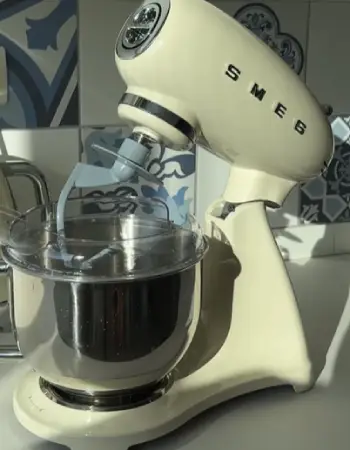
- High-wattage direct-drive motor: The 600-watt or higher on newer Classico and Forte versions motor gives consistent torque across tasks.
I can knead four pounds of bread dough without the machine sounding strained or overheating during longer sessions.
- Planetary mixing action: The attachment spins one way while the shaft orbits the other direction around the bowl.
This reaches nearly every part of the bowl and leaves fewer unmixed pockets than older orbital designs I have used before.
- Smooth Start technology: Speed builds gradually instead of jumping straight to the selected setting on the dial.
Flour stays in the bowl instead of puffing out when I start a cake batter or cookie dough mix.
- Tilt-head design with rear button release: Lifting the head is simple once you learn the button placement at the back.
A safety lock stops the motor when the head is raised so nothing spins by accident.
- Stainless-steel bowl with handle: The 4.8- to 5-quart bowl feels solid in the hand and the handle makes pouring and locking easy every time.
Non-slip feet keep everything steady even when the mixer works on dense mixtures.
- Front accessory port: You can add pasta rollers or a meat grinder later if needed though the selection is smaller than KitchenAid’s full range.
This still expands the machine beyond basic mixing for many recipes.
- Color and finish options: Glossy enamel finishes in cream black red pastels and two-tone Classico styles turn the mixer into kitchen art that stands out.
The look alone makes it worth leaving on the counter permanently.
Pros Of The Smeg Stand Mixer
- Strong everyday power: The higher wattage handles dense cookie dough and pizza dough with less effort than the standard KitchenAid Artisan model. I finish kneading faster and the motor stays cooler during repeated use throughout the day.
- Attractive statement design: If your kitchen leans mid-century or you simply want an appliance that looks intentional rather than purely functional Smeg delivers every time. Guests notice it and often ask about the brand right away.
- Flex-edge beater included: The silicone-edged tool scrapes the bowl as it mixes so ingredients incorporate more evenly. Cake batters come together with less manual work and I spend less time stopping to scrape the sides.
- Quieter operation in many tests: Compared with older KitchenAid models the Smeg often runs a touch quieter at medium speeds. This matters when I mix early in the morning or while others are still sleeping nearby.
- Smooth speed transitions: Changing speeds feels refined and controlled on the dial. The gradual start prevents flour clouds and keeps ingredients inside the bowl where they belong.
Cons Of The Smeg Stand Mixer
- Higher purchase price: You pay extra for the design and the stronger motor right from the start. The cost can stretch a budget that would cover a solid KitchenAid plus a couple of useful attachments.
- Limited attachment ecosystem: Pasta and grinding tools exist and work well enough for basic needs. The range is narrower though so serious bakers who want an ice-cream maker or spiralizer may feel restricted over time.
- Shorter standard warranty in many markets: Two years is common versus KitchenAid’s typical one-year base in some regions. Real-world durability still feels solid but replacement parts can take longer to source depending on where you live.
- Head-lift button can feel fiddly: The rear button works once you get used to the placement and pressure needed. It is less intuitive than KitchenAid’s side lever at first and a few users report it sticks until broken in.
- Heavier visual footprint: The retro shape takes more counter real estate in some layouts and does not tuck away as easily as a lower-profile machine. You need to plan space carefully if storage is limited.
Key Features Of The KitchenAid stand mixer
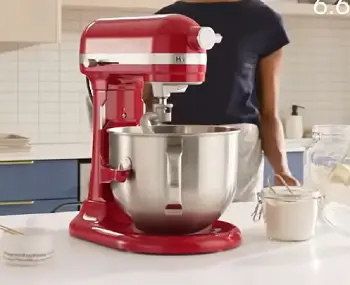
- Proven planetary mixing system: The 59-point planetary action is well documented across decades of use.
Attachments reach the sides and bottom thoroughly for most recipes I throw at it.
- Wide model range: From the compact Mini to the 7-quart bowl-lift Professional series there is a size and power level for almost every kitchen.
You can match capacity exactly to your household size and baking volume.
- Soft Start on many current models: Speed ramps up gently similar to Smeg’s system and this reduces mess at the beginning of a mix.
Ingredients stay put instead of flying around the bowl.
- Massive attachment library: More than eighty options exist including pasta sets food grinders ice-cream makers spiralizers and juicers.
One machine can replace several single-purpose gadgets over the years.
- Die-cast metal construction: The body feels substantial and built to last through heavy use.
Many units are still assembled in the United States which some buyers value for longevity and easier parts availability.
- Extensive color selection: Dozens of finishes including limited-edition and collaboration colors make matching cabinetry or personal taste straightforward.
You can find almost any shade that fits your kitchen style.
- Tilt-head or bowl-lift options: Tilt-head models are easier for smaller batches and quick access to the bowl.
Bowl-lift versions stay more stable with heavy doughs and larger volumes.
Pros Of The KitchenAid Stand Mixer
- Exceptional versatility through attachments: I can roll pasta grind meat and churn ice cream with the same base unit. That flexibility stretches the value far beyond basic mixing for years of creative cooking.
- Reliable everyday performance: The Artisan handles cake batter cookie dough whipped cream and moderate bread dough without complaint in daily use. Higher-end models tackle commercial-level volumes when needed.
- Strong resale and parts support: Used KitchenAids hold value well on the secondary market. Replacement bowls beaters and gears remain easy to find years later no matter where you live.
- Familiar learning curve: Most bakers already know how these machines work from recipes and videos. Instructions and community tips assume a KitchenAid so getting started feels natural.
- Competitive pricing on core models: You can often find a well-equipped Artisan for less than a comparable Smeg. This leaves room in the budget for extra tools and attachments right away.
Cons Of The KitchenAid stand mixer
- Lower wattage on popular tilt-head models: The 325-watt motor works hard on very stiff dough and shows the effort. Some users report the head lifting slightly or the machine walking if the dough is especially dense.
- Extra cost for premium accessories: The flex-edge beater and many specialty attachments are sold separately from the base unit. Building a full toolkit adds up quickly once you start expanding.
- Heavier overall weight: Moving the mixer for cleaning or storage takes more effort than lighter machines. Counter space must accommodate the solid footprint without much flexibility.
- Occasional dry pockets in mixing: Without a flex-edge tool or careful scraping flour can hide at the bottom of the bowl on certain recipes. Newer models improve this but the issue still appears in older units from time to time.
- Design feels more functional than decorative to some: While colors are plentiful the silhouette is familiar and classic. If you want a true showpiece the Smeg may feel more distinctive on an open counter.
Performance In Real Baking Tasks
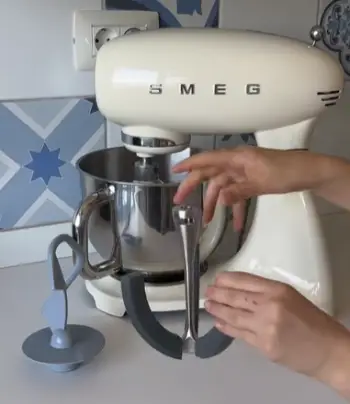
I ran both machines through the same set of recipes over several months. For whipped cream and egg whites the results were nearly identical.
Both reach stiff peaks quickly and the bowls stay cool enough for comfort. Cake batters come out smooth on either machine though the Smeg’s flex-edge beater reduced the number of times I stopped to scrape the sides.
Cookie dough was where differences showed most clearly. The Smeg’s extra power and scraping beater incorporated butter and flour more evenly with less manual intervention.
KitchenAid still produced excellent cookies but I spent more time with a spatula to finish the job.
Bread and pizza dough highlighted power gaps between the two. On a standard 325-watt KitchenAid Artisan I watched the motor work harder and the head flex slightly under a full four-pound batch.
The Smeg 600-watt unit pushed through with less drama and produced a smoother more elastic dough in slightly less time. Higher-end KitchenAid bowl-lift models close that gap completely when you step up.
Noise levels stayed reasonable on both machines. Neither is silent but neither is so loud that conversation stops in the kitchen.
Stability favored the heavier KitchenAid base on very stiff mixes while the lighter Smeg still stayed put thanks to good foot design and balance.
Design And Kitchen Fit
Smeg makes the stronger visual statement on any counter. The glossy curves and color options turn the mixer into furniture that anchors the space.
If your counters are open and you like appliances that look intentional it earns its keep just by sitting there day after day.
KitchenAid offers more subtle integration into existing kitchens. Its classic shape has become almost invisible in many homes which some people prefer when they want pure function without the spotlight.
Footprint and height are similar enough that either fits under most standard cabinets when the head is down.
The Smeg can feel a bit taller with the head raised for bowl access. Weight difference is noticeable when you move the machine for cleaning or holiday storage and the KitchenAid requires more effort.
Attachments And Long-Term Flexibility
This is the clearest dividing line between the two brands. KitchenAid’s ecosystem is unmatched in breadth and availability.
I have used the pasta roller set for years and the meat grinder for homemade sausage with excellent results. The ice-cream maker attachment turns the mixer into a summer staple that gets constant use.
Smeg’s front hub accepts useful tools yet the catalog is smaller and newer overall. If you only need the basic beaters the difference is minor for casual bakers
. If you want one appliance to do the work of five KitchenAid wins without question.
Value Over Time
Purchase price favors KitchenAid for most buyers looking at the numbers. The Artisan often costs less while delivering solid performance and an enormous accessory path for growth.
Smeg’s higher price buys stronger stock power and distinctive looks that stand out. Warranty length leans toward Smeg in some markets but KitchenAid’s parts availability and long track record balance that out nicely.
Resale values remain strong for both machines with KitchenAid holding a slight edge because more people recognize the brand name.
Who Should Choose Which?
Choose the Smeg if you bake regularly value a stronger motor for bread and cookie work and want a machine that doubles as kitchen décor.
The included flex-edge beater and smooth power delivery make daily use enjoyable and efficient.
Choose the KitchenAid if you want maximum flexibility through attachments a lower entry price and a machine that has proven itself across decades of home kitchens.
The wide model range also lets you match capacity exactly to your household size and needs.
Both machines are capable for home use. Neither is fragile under normal conditions. Your decision comes down to whether design and stock power matter more than accessory breadth and overall price.
Also Read: Comparison Of Kitchenaid Artisan And Classic
Frequently Asked Questions (FAQ)
Yes. It offers strong power even mixing and attractive design that works well for most home bakers.
KitchenAid remains the most popular and versatile choice for the majority of home cooks because of its attachment range and proven reliability.
He has been associated with KitchenAid stand mixers in various kitchen settings and recommendations.
She has collaborated with KitchenAid on a Magnolia collection and is frequently seen with KitchenAid models.
Wrapping Up
I set out to compare the Smeg stand mixer and the KitchenAid so you could see the real differences in power design attachments and daily use.
After months of baking with both I know the Smeg delivers stronger stock performance and a more distinctive look while the KitchenAid offers broader versatility and better long-term expansion options.
You now have the details to match either machine to your own baking habits and kitchen priorities.
Pick the one that fits how you actually cook and it will earn its place on your counter for years to come.
Recent Posts
I tried Meltoway Hair Dissolving Cream because I wanted a quick way to deal with unwanted body hair without reaching for a razor every few days. If you are looking for a convenient at-home...
If you’re considering a saffron-based supplement to support mood, appetite control, and everyday wellness, Happy Saffron Plus is worth considering.I like that it takes a familiar botanical...