
I’ve always been fascinated by how technology can make outdoor monitoring simpler and more effective.
In this article, I’ll compare the Tactacam Defend and Reveal cameras from my own experiences and research, helping you decide which one fits your needs—whether it’s watching wildlife or securing your property.
My main goal is to break down their features, strengths, and weaknesses so you can pick the right tool without any guesswork.
| Feature | Tactacam Reveal | Tactacam Defend |
| Primary Purpose | Wildlife scouting and hunting | Property security and monitoring |
| Design Style | Camouflaged, discreet for blending into nature | Visible, deterrent-style for open placement |
| Placement Height | 3-4 feet, slightly downward angle | 8-10 feet, downward angle for wider view |
| IR Flash Type | Low-glow or no-glow depending on model | Low-glow |
| Photo Resolution | Up to 4K in higher models | 4K UHD |
| Video Resolution | 1080p | 1080p |
| Detection Range | Up to 90+ feet | 75 feet |
| Trigger Speed | Sub 0.5 seconds | Sub 0.5 seconds |
| Battery Life | Excellent, months on lithium batteries | Long-lasting with included solar panel |
| Storage | Requires SD card (up to 512GB) | 8GB internal, no external needed |
| Live View | Available in premium models like Ultra | Yes, with pan-tilt-zoom control |
| GPS | Built-in on most models | Not standard |
| Price Range | $120-$200 depending on model | Around $200 (often on sale) |
| App Integration | Reveal app for hunting focus | Defend app for security alerts |
Understanding The Basics Of Tactacam Cameras
As an avid outdoorsman who’s spent countless hours setting up cameras in remote spots, I can tell you that Tactacam has carved out a solid reputation for reliable cellular cameras.
These devices send photos and videos straight to your phone via cell networks, eliminating the need to trek out and check them manually.
The Reveal line started as a game-changer for hunters, while the Defend branched out to address security needs.
Both share core tech like motion detection and night vision, but their designs cater to different scenarios.
I’ve used them in various setups, from tracking deer on my hunting lease to keeping an eye on my barn, and the differences become clear pretty quickly.
What draws me to these cameras is their no-fuss setup. You scan a QR code, connect to the app, and you’re good to go. No wiring, no complicated hubs—just pop in batteries or attach the solar panel, and let the cell signal do the work. But choosing between Reveal and Defend isn’t just about picking a name; it’s about matching the camera to your environment and goals.
Key Differences Between Tactacam Reveal And Defend
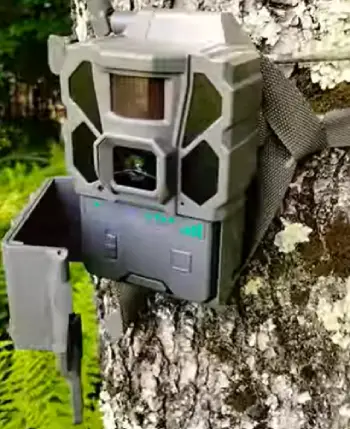
Diving into what sets them apart, these distinctions have influenced how I deploy each.
Intended Use: Reveal targets wildlife in forests, while Defend guards homes or farms.
I use Reveal for deer patterns and Defend for vehicle watching—totally different vibes.
Visibility and Placement: Reveal’s low, hidden mount blends in; Defend’s high, prominent setup deters.
This shift means Defend covers broader zones but stands out more.
Control Features: Defend’s PTZ and live view offer dynamic monitoring; Reveal’s are more static, with on-demand in premiums.
Remote panning on Defend feels empowering.
Power and Storage: Defend includes solar and internal memory; Reveal needs add-ons and SD cards.
This makes Defend more plug-and-play for long-term use.
App Ecosystem: Separate apps—Reveal for hunting tools, Defend for security alerts.
Managing both can be a hassle if you own multiples.
Flash and Range: Reveal often has no-glow for stealth; Defend’s low-glow suits open areas.
Detection edges to Reveal in distance, but Defend wins in width.
These differences boil down to stealth versus presence, shaping your choice based on what you’re protecting.
Key Features Of The Tactacam Reveal
The Reveal series feels like it was built by hunters for hunters. I’ve deployed several models over the years, and they excel at staying hidden while capturing crisp details.
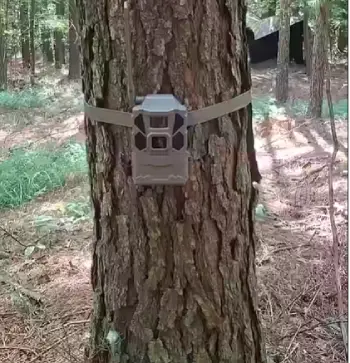
- Camouflage Design: This makes it blend seamlessly into trees or brush, so animals don’t spook.
In my experience, this discretion means more natural behavior from wildlife, leading to better scouting data.
- Cellular Connectivity: It auto-selects the strongest carrier, sending images to the Reveal app.
I love how I get notifications without needing Wi-Fi, perfect for deep woods where signals can be spotty.
- IR Flash Options: Models like the Pro 3.0 use no-glow for total stealth at night, while the X 3.0’s low-glow is still subtle.
This has helped me capture nocturnal activity without alerting critters.
- Burst Mode: Up to 9 photos per trigger on the Ultra model, giving multiple angles of movement.
It’s great for identifying patterns, like a buck’s travel route.
- GPS Tracking: Built-in on most, so you can pinpoint locations via the app. I’ve recovered a stolen camera this way—priceless peace of mind.
- On-Demand Media: Higher-end versions let you request videos remotely.
When I suspect activity, I trigger a clip without disturbing the site.
These features make the Reveal a workhorse for trail use. The app organizes galleries by camera, with filters for time and activity, turning raw data into actionable insights.
Pros Of The Tactacam Reveal
From my hands-on time, the Reveal shines in reliability and user-friendliness, but let’s list out what stands out.
- Affordability Across Models: Starting at around $120 for the X 3.0, it’s accessible. I started with a basic one and upgraded without breaking the bank, getting solid value each time.
- Stealth and Discretion: The camo housing and no-glow flash mean it stays undetected. On my property, this has led to incredible wildlife shots that a bulkier camera might scare away.
- Battery Efficiency: Lasts months on lithium AAs or with a solar add-on. I’ve left one out all season without a recharge, saving me trips.
- Image Quality: Sharp 4K photos and 1080p videos capture details like antler points clearly. In low light, the clarity beats older cameras I’ve used.
- App Features: Customizable settings, like sensitivity adjustments, make it adaptable. The live aim via Wi-Fi helps position it perfectly without guesswork.
- Durability: Weatherproof against rain and cold. Mine survived a brutal winter storm, still sending pics reliably.
Overall, these pros make it ideal for anyone focused on nature observation.
Cons Of The Tactacam Reveal
No camera is perfect, and in my testing, a few drawbacks popped up that might sway your choice.
- Limited Live View: Basic models lack real-time streaming; even premiums like Ultra have it, but it’s not as seamless as dedicated security cams. I’ve wished for instant checks during peak activity.
- SD Card Dependency: You need to buy and insert one, up to 512GB. Forgetting it once meant lost data until I returned—annoying in remote spots.
- Narrower Field of View: Optimized for trails, not wide areas. On larger plots, I’ve needed multiple units to cover what one broader cam might handle.
- No Built-in Solar: It’s an add-on, so initial setup costs more if you want endless power. My first unit drained faster in cold weather without it.
- App Overload for Multi-Use: If you’re mixing with security, the hunting-focused interface feels clunky. Switching apps for different cams isn’t ideal.
- Price Creep for Features: The Ultra at $200 packs everything, but basics miss out on no-glow or screens, forcing upgrades for full potential.
These aren’t deal-breakers, but they highlight why it’s tailored for woods over home use.
Key Features Of The Tactacam Defend
Shifting to the Defend, it’s like Tactacam took the Reveal’s tech and beefed it up for protection duties. I’ve mounted one on my garage, and its presence alone changes how I approach security.
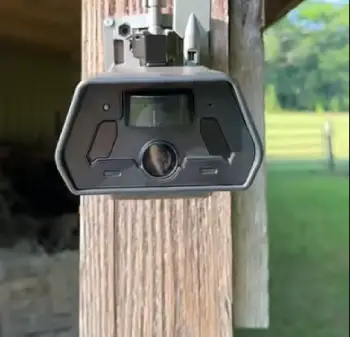
- 360-Degree Pan-Tilt-Zoom: Control via app for full coverage.
I can scan an entire driveway remotely, zooming in on suspicious spots—game-changing for monitoring.
- Live View Capability: Quick access to real-time feeds.
Though it takes a few seconds to connect, it’s handy for verifying alerts without driving home.
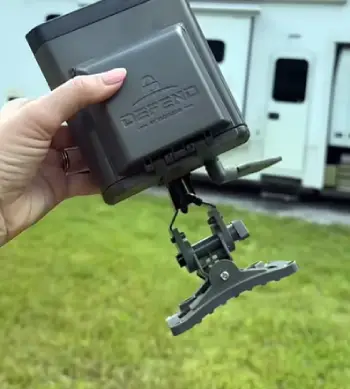
- Solar Power Included: Rechargeable battery with detachable panel.
Mine stays charged year-round, even in shady areas, reducing maintenance.
- Motion Alerts: Instant notifications with photos.
The 75-foot detection has caught deliveries and wildlife, keeping me looped in.
- Internal Storage: 8GB built-in, plus cloud options.
No fumbling with cards; everything saves automatically, which simplifies things.
- Deterrent Design: Bold, visible look warns off intruders.
Placed high, it covers more ground, and the low-glow IR handles night without blinding.
The Defend app emphasizes alerts and history, making it feel like a proper security system.
Pros Of The Tactacam Defend
In my setup, the Defend’s strengths lie in its robustness and convenience for everyday watching.
- Deterrence Factor: The obvious design scares off potential threats. Since installing mine, I’ve noticed fewer curious wanderers around my property.
- Wide Coverage: Higher placement and PTZ mean fewer blind spots. One unit watches my whole front yard, where a Reveal might need two.
- Endless Power: Solar inclusion means no battery swaps. It’s run non-stop for months, even through cloudy weeks.
- Easy Remote Control: App-based PTZ and live view let me check in anytime. During a trip, I spotted a fallen branch and called a neighbor—proactive stuff.
- Affordable Data Plans: Starts at $5/month, with 60-day cloud storage. Adding cameras drops costs, making it scalable for bigger setups.
- Rugged Build: IP65 rating handles elements. Mine endured heavy rains and dust without a hitch, proving its toughness.
These make it a strong pick for anyone prioritizing protection over subtlety.
Cons Of The Tactacam Defend
Like any tool, it has limitations that I’ve encountered in real use.
- Higher Price Point: At $200, it’s pricier than basic Reveals. The value is there, but budget folks might hesitate.
- Less Stealthy: The visible design isn’t for hidden spots. If you want to catch someone unaware, it might not blend like a Reveal.
- Shorter Detection Range: 75 feet vs. Reveal’s 90+. In vast open areas, I’ve supplemented with extra sensors.
- Live View Delays: Takes seconds to activate, and sessions are limited. During urgent moments, that lag can frustrate.
- No GPS Standard: Lacks built-in tracking. If stolen, recovery relies on last known signals, not active locating.
- US-Only Compatibility: Cellular limits it to domestic use. For international properties, it’s a no-go, which bummed me for a planned trip setup.
Still, for property focus, these are minor compared to the benefits.
In-Depth Analysis: Performance In Real Scenarios
Let me share some stories from my own trials to illustrate how these cameras perform. Last fall, I set up a Reveal X 3.0 on a game trail.
The low-glow IR captured a trophy buck at night without spooking him, and the burst mode gave me three angles to study his habits.
Battery lasted the whole season on AAs, and GPS helped me relocate it after a storm shifted markers. But when I tried using it for my driveway, the narrow view missed half the area, and no live view meant waiting for alerts.
Switching to Defend on the same driveway was eye-opening. Mounted at 9 feet on a pole, its PTZ let me swivel to check gates or barns remotely.
One night, motion triggered a photo of a coyote; I zoomed in live to confirm and scare it off with a shout via app (though no audio out, just my imagination).
Solar kept it powered through winter, and internal storage meant no card worries. However, in woods tests, its bulkier look felt out of place, and shorter range missed distant deer.
Analytically, Reveal’s edge in battery efficiency (up to 6-12 months) suits off-grid hunting, where power conservation matters.
Defend’s solar offsets heavier use from PTZ, averaging 3-6 months without sun. Image-wise, both deliver sharp 4K photos, but Reveal’s no-glow preserves natural behavior better for research.
Defend’s video clips include audio in some setups, adding context to security events.
Cost-wise, Reveal scales better for multiples—data plans discount heavily. I’ve run five Reveals on one plan for under $20/month.
Defend’s plans are similar but app separation means duplicate logins. Durability holds up equally; both IP-rated against elements.
But Reveal’s camo resists fading, while Defend’s plastic shows scratches faster from exposure.
If you’re mixing uses, like I do on my rural land, hybrid setups work. A Reveal in the back woods for animals, Defend up front for people. The cell tech ensures seamless integration, though app switching takes getting used to.
User Perspectives: When To Choose Each?
Thinking like a real user, if you’re a hunter like me, Reveal is your go-to. Its discretion lets you scout without interference, and features like burst mode help pattern game.
I’ve shared pics with buddies, planning hunts based on timestamps. For families securing a home, Defend’s visibility and controls provide reassurance. Picture checking your vacation cabin remotely—PTZ scans for break-ins, alerts ping your phone.
Farmers benefit from Defend’s wide view for livestock or equipment. I know folks using it to monitor gates, preventing theft. Conversely, Reveal suits ecologists or backyard birders wanting unobtrusive observation. Budget plays in: Start with Reveal X for basics, upgrade to Ultra for pro features.
Defend’s all-in-one kit justifies the price for security-first users.
Potential pitfalls? Signal strength—both need decent cell coverage. I’ve boosted with antennas in weak areas. Data usage spikes with videos, so monitor plans.
Maintenance is low, but clean lenses seasonally for clarity.
Also Read: Comparison Of Iegeek And Reolink Camera System
Frequently Asked Questions (FAQ)
The Reveal is designed for discreet wildlife monitoring in woods, with camo and low placement, while Defend focuses on visible property security with higher mounts and wider coverage.
Yes, it includes live view with pan-tilt-zoom control via the app, though activation takes a few seconds.
It depends on your needs—Reveal for hunting, Defend for security; the Reveal Ultra offers premium features for advanced users.
No, it has 8GB internal storage, so an external SD card isn’t required.
Wrapping It Up
Reflecting on my time with these cameras, I appreciate how Tactacam tailored each for specific worlds—Reveal for the thrill of the hunt, Defend for solid protection.
You’ve got options that fit your lifestyle, whether tracking trails or guarding gates. I encourage you to assess your space and priorities; maybe start with one and expand.
Whichever you choose, it’ll bring peace of mind and exciting captures. What do you think—ready to set one up?
Recent Posts
● Interactive 5-Zone Interior & Exterior Paint Blueprint Paint Coverage Calculator: Gallons, Primer, Square Footage & Cost Tap any architectural surface zone on the blueprint...
If you want smooth, shiny hair without spending a fortune on a premium styling tool, the Ella Bella hair dryer may be worth considering.In these Ella Bella hair dryer reviews, I’ll look...