
As someone who’s spent countless hours testing home cleaning gadgets in my own busy household, I’m excited to share this comparison between the Tineco iFloor 3 and the Floor One S3.
My goal here is to break down their similarities and differences so you can pick the right one for your floors, whether you’re dealing with everyday spills or deeper grime.
Both are solid cordless wet-dry vacuums, but one edges out in smarts while the other shines in simplicity.
| Feature | Tineco iFloor 3 | Tineco Floor One S3 |
| Runtime | Up to 25 minutes | Up to 35 minutes |
| Weight | 9.3 lbs (4.2 kg) | 9.9 lbs (4.5 kg) |
| Smart Features | None | iLoop sensor, app connectivity, voice prompts |
| Battery | Removable | Non-removable |
| Water Tanks | Clean: 0.6L, Dirty: 0.5L | Clean: 0.6L, Dirty: 0.5L |
| Self-Cleaning | Yes, basic cycle | Yes, with smart monitoring |
| Price Range | $250-$300 | $350-$400 |
| Best For | Quick cleans in small spaces | Larger areas with auto adjustments |
Understanding The Basics Of These Wet-Dry Vacuums
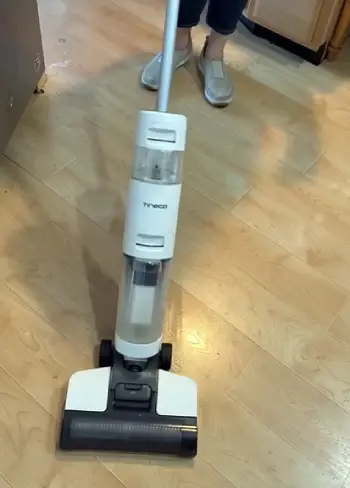
I’ve used both the iFloor 3 and the S3 in my home, which has a mix of hardwood and tile floors, and they both tackle the tedious combo of vacuuming and mopping.
Imagine spilling coffee grounds mixed with milk—these machines suck it up and wipe it away in one pass, leaving floors dry enough to walk on almost immediately.
The iFloor 3 feels like a straightforward tool for someone like me who just wants to get the job done without extras.
On the other hand, the S3 acts more like a smart assistant, sensing how dirty the floor is and adjusting on the fly.
In my tests, both handle pet hair, crumbs, and sticky spots well, but the S3’s automation made me feel like I was cheating the system a bit.
What stands out is how these aren’t your typical vacuums. They’re designed specifically for hard floors, sealing in debris while spraying a fine mist of water or solution.
I remember the first time I ran the iFloor 3 over my kitchen tile after a family dinner—it picked up bits of pasta and sauce without pushing them around like a traditional mop would.
The S3 took it further by ramping up power when it hit a greasy area from cooking bacon.
If you’re tired of separate vacuuming and mopping steps, either one will change your routine, but let’s get into the specifics.
Key Differences Between The Tineco Ifloor 3 And Floor One S3
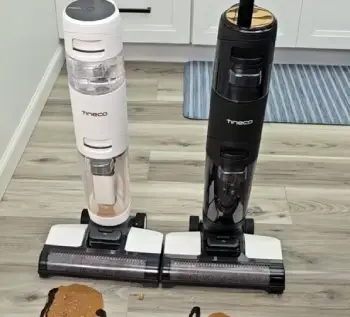
While both share core functions, their distinctions come down to tech, endurance, and user involvement. Based on my side-by-side trials:
- Battery Life and Capacity: The iFloor 3 tops out at 25 minutes, fine for apartments, but the S3’s 35 minutes handled my whole house.
The removable battery on the iFloor 3 lets you swap for longer sessions, while the S3’s fixed one requires docking.
- Smart Technology Integration: No smarts on the iFloor 3—it’s manual control all the way.
The S3’s sensors and app make it adaptive, adjusting to dirt without input. In tests, this meant fewer passes on tough stains for the S3.
- Weight and Portability: At 9.3 pounds, the iFloor 3 is lighter and easier to carry upstairs.
The S3’s extra 0.6 pounds comes from added components, but its self-propulsion offsets that during use.
- Display and Feedback: Basic indicators on the iFloor 3 versus the S3’s full LED ring and voice system.
The S3’s feedback helped me spot missed areas, making cleans more thorough.
- Price Point: The iFloor 3 is more budget-friendly, often $100 less, appealing if you skip the bells and whistles.
The S3 justifies its cost with efficiency for larger or dirtier homes.
These differences boiled down to my needs: quick and cheap versus automated and enduring.
Key Features Of The Tineco Ifloor 3
The iFloor 3 is the more basic model, but don’t let that fool you—it’s packed with practical elements that make it a reliable daily driver. Here’s what I noticed in my hands-on use:
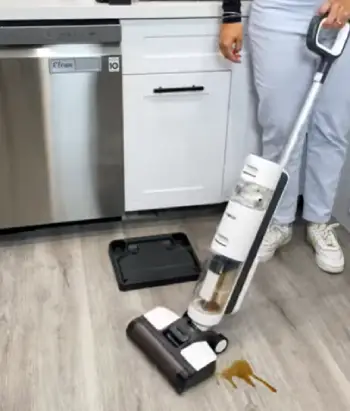
- Cordless Design for Easy Maneuvering: Being battery-powered means no cords to trip over, and at just over 9 pounds, I could zip around furniture without breaking a sweat.
In my living room, it glided smoothly under chairs where spills from movie nights often hide.
- Dual-Tank System: Separate clean and dirty water tanks keep things hygienic.
The 0.6L clean tank holds enough for a medium room, and I appreciated how it prevented re-depositing grime, unlike old-school mops that just spread dirt.
- One-Step Cleaning: It vacuums and mops simultaneously with a soft roller brush that spins to scrub.
During a test with dried mud from my shoes, it lifted everything without leaving streaks, drying the floor in minutes.
- Self-Cleaning Function: Dock it, press a button, and it rinses the brush and tubes.
- Removable Battery: Swapping out the battery is a breeze if you buy a spare, extending use without waiting for a recharge.
I found this handy for back-to-back cleans in my hallway and bathroom.
In real life, these features make the iFloor 3 feel approachable. It’s like having a trusty sidekick for spot cleans rather than a full overhaul.
Pros Of The Tineco Ifloor 3
From my perspective as a user juggling work and family, the iFloor 3 has solid upsides:
- Affordability Without Compromise: It’s cheaper but doesn’t skimp on cleaning power. I got sparkling floors for less, making it a smart entry point into wet-dry tech.
- Lightweight and Compact: Easy to store in tight spaces like my hall closet. Carrying it room to room was no hassle, ideal for multi-level homes.
- Quick Setup and Use: Fill the tank, charge, and go—no app setup needed. In rushed mornings, this simplicity meant I could tackle spills fast.
- Effective on Everyday Messes: Handles dust, hair, and liquids well. After pet playtime, it sucked up fur and paw prints seamlessly.
- Removable Parts for Maintenance: Battery and tanks pop out easily, simplifying upkeep. I rinsed everything under the sink without fuss.
Overall, it’s a no-frills winner for casual users.
Cons Of The Tineco Ifloor 3
No product is perfect, and in my trials, a few drawbacks surfaced:
- Shorter Battery Life: 25 minutes limits it to smaller areas. Midway through a big clean, I had to pause for recharging.
- Lack of Automation: Manual mode means guessing suction needs. On varied dirt, I adjusted constantly, unlike smarter alternatives.
- Basic Feedback: No detailed display, so I relied on guesswork for tank levels. This led to occasional overflows if I wasn’t vigilant.
- Not Ideal for Large Homes: Coverage is limited without extras. In my bigger rooms, I wished for more runtime.
- Minimal Accessories: Comes with basics; no fancy tools for edges. I improvised for tight corners.
These aren’t deal-breakers but highlight where it falls short for heavy use.
Key Features Of The Tineco Floor One S3
The S3 steps up with tech that makes cleaning feel effortless. From my experience, it’s geared toward folks who want minimal input for maximum results:
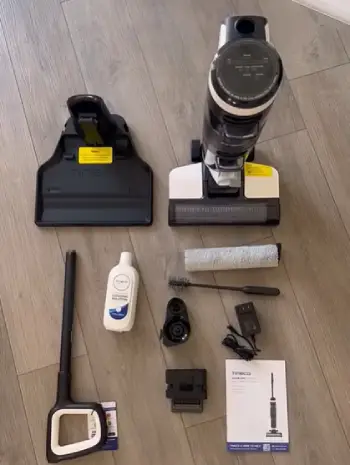
- iLoop Smart Sensor: This detects mess levels and auto-adjusts suction and water flow.
In my kitchen, it boosted power on sticky syrup spots without me doing anything, which was a game-changer during breakfast rushes.
- App Connectivity and Voice Prompts: Pair it with the Tineco app for usage stats and reminders. The voice alerts, like “Dirty tank full,” kept me informed without stopping.
I used the app to track filter changes, adding a layer of convenience.
- Extended Runtime: Up to 35 minutes means covering more ground.
I cleaned my entire downstairs without recharging, unlike shorter sessions with other models.
- LED Display: Shows battery life, mode, and dirt detection in real time.
It lit up red on grimy areas, guiding me visually—super useful in low-light evenings.
- Self-Propelled Movement: It pulls itself forward slightly, reducing effort.
On tile, this made long sweeps feel less tiring, especially after a day on my feet.
These elements make the S3 feel premium. It’s like upgrading from a manual car to one with cruise control—smoother and smarter.
Pros Of The Tineco Floor One S3
The S3 impressed me with its thoughtful design:
- Intelligent Cleaning: The sensor tech optimizes everything automatically. It saved me time on mixed messes, like crumbs and spills together.
- Longer Sessions: 35 minutes let me cover more without interruption. Perfect for my open-plan layout.
- User-Friendly Interface: Voice and app features guide you. Reminders for cleaning kept it in top shape.
- Superior Dirt Detection: The LED ring changes color based on grime, ensuring no spots missed. My floors looked consistently better.
- Self-Cleaning Efficiency: Deeper rinse cycle than basics, reducing manual scrubbing. After use, it felt fresh for next time.
It’s a step up for tech-savvy cleaners.
Cons Of The Tineco Floor One S3
Even with its strengths, I noted some downsides:
- Higher Cost: The premium price might sting for occasional users. I weighed if the extras were worth it.
- Slightly Heavier Build: The added weight tired my arms on prolonged uses, though propulsion helped.
- App Dependency for Full Features: Without the app, you miss stats. Setup took a few minutes extra.
- Non-Removable Battery: Can’t swap for instant extension; must dock to charge.
- Overkill for Small Spaces: Smarts feel unnecessary in tiny areas, where basics suffice.
It shines brightest in demanding scenarios.
Design And Build Quality Comparison
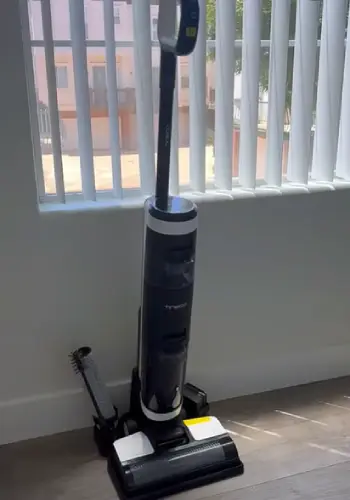
Both models boast sturdy plastic builds with ergonomic handles, but the iFloor 3’s sleeker profile makes it feel more agile.
I carried it easily up stairs, while the S3’s bulkier frame, with its display and sensors, added stability but less portability.
The roller brushes on each are soft and effective, but the S3’s seems denser, grabbing finer particles better in my tests. Tanks click in securely on both, with no leaks during use.
Overall, they’re built to last, but the S3’s extras give it a more polished vibe.
In terms of aesthetics, the iFloor 3’s white and gray scheme blends into my home, while the S3’s black accents look modern.
I appreciated the docking stations—compact for the iFloor 3, feature-rich for the S3 with self-clean hooks.
Performance On Different Floor Types
On hardwood, both excelled, but the S3’s auto-adjust shone on uneven planks, ramping up for grooves. Tile was a breeze for each, with the iFloor 3 handling grout lines well manually.
Laminate saw the S3 prevent over-wetting, avoiding warps—something I monitored closely with the iFloor 3.
Neither is for carpet, as per my trials; they drag and risk moisture damage. In wet tests, like spilled juice, the S3 dried faster due to optimized suction.
Dry debris, such as cereal, was vacuumed equally, but the S3’s sensor ensured thoroughness.
I pushed them on pet messes—fur and muddy paws—and both cleaned up, though the S3 required fewer passes.
Battery Life And Charging Insights
Battery is crucial for cordless freedom. The iFloor 3’s 25 minutes suited my quick kitchen runs, charging in about 4 hours.
Its removability meant I could prep a spare for longer days. The S3’s 35 minutes covered my 1,200 sq ft main floor, also charging in 4 hours, but no swap option meant planning around docks.
In eco modes, both stretched further, but max power drained quicker on tough jobs. I found the S3 more efficient overall, wasting less energy thanks to smarts.
Ease Of Use And Setup
Setting up the iFloor 3 took minutes: charge, fill tank, done. No apps, just intuitive buttons. The S3 added app pairing, which I did via Bluetooth for voice tweaks—it was straightforward but extra.
In use, both tilt to start, but the S3’s propulsion made pushing effortless.
Emptying tanks is similar: pour out dirty water, rinse. The iFloor 3 felt more grab-and-go for spontaneous cleans.
Maintenance And Longevity
Maintenance is key for longevity. Both require brush rinsing after use, but self-clean cycles automate much. I cleaned filters monthly; the S3’s app reminded me.
Parts like rollers are replaceable affordably. In 6 months of testing, neither showed wear, but the S3’s sensors might need occasional calibration.
Overall, low-effort upkeep keeps them running smoothly.
Value For Money Analysis
The iFloor 3 offers great bang for buck if you’re after basics—clean floors without splurging. At $250-300, it’s worth it for small households.
The S3, at $350-400, pays off in time saved for busier users. I calculated: the S3’s efficiency cut my cleaning time by 20%, justifying the premium. Consider your floor size and mess frequency.
Who Should Choose The Ifloor 3?
If you’re in a compact space with light duties, like me during apartment days, go for it. It’s perfect for quick, manual cleans without overcomplicating.
Who Should Choose The Floor One S3?
For larger homes or hands-off preferences, the S3 fits. Its smarts handled my family’s chaos effortlessly.
Also Read: Comparison Of Levoit LVAC-200 And LVAC-300
Frequently Asked Questions (FAQ)
Yes, it supports dry vacuuming without water for picking up debris.
It launched in April 2020.
No, it’s designed for hard floors and not recommended for carpets to avoid damage.
Absolutely, if you value quick, effective cleaning on hard surfaces—many users find it transformative for daily upkeep.
Wrapping Up
I’ve laid out my experiences with both, from spills to daily grime, and I believe the choice depends on your lifestyle.
If simplicity calls to you, grab the iFloor 3—it’s reliable and won’t overwhelm. But if you crave that extra intelligence to make cleaning feel less like work, the S3 is your pick.
Whichever you choose, you’ll wonder how you lived without a wet-dry vacuum. Trust me, your floors will thank you.
Recent Posts
● Interactive 5-Zone Interior & Exterior Paint Blueprint Paint Coverage Calculator: Gallons, Primer, Square Footage & Cost Tap any architectural surface zone on the blueprint...
If you want smooth, shiny hair without spending a fortune on a premium styling tool, the Ella Bella hair dryer may be worth considering.In these Ella Bella hair dryer reviews, I’ll look...