
If you need a compact machine for landscaping, trenching, digging, or small construction projects, Typhon mini excavators may be worth considering.
I like the idea of getting excavator functionality without the high purchase price and storage demands of a full-size machine.
However, before you buy, you should compare digging performance, hydraulic power, build quality, replacement parts, and warranty support.
My recommendation is to consider a Typhon mini excavator if you need an affordable machine for light to moderate work and can verify local service and parts availability before placing your order.
My Personal Experience With Typhon Mini Excavators
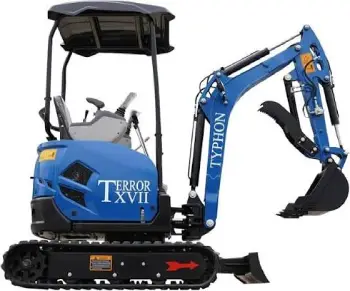
When I evaluate a compact excavator like a Typhon, I focus on how it might perform during ordinary work rather than how impressive it looks in a product photo.
A small excavator can be extremely useful around a home, farm, or construction site, but only if its capabilities match the jobs you intend to complete.
I would first consider where I planned to use the machine. For example, digging a narrow trench for drainage, preparing a garden, removing shallow roots, and shaping a small area of land are very different from breaking through hard ground or excavating a deep foundation.
A mini excavator can handle many smaller jobs efficiently, but its digging force, operating weight, and hydraulic capacity determine how comfortably it handles demanding conditions.
Typhon offers compact machinery aimed at buyers who want excavation capabilities without investing in a larger commercial machine.
That makes the brand interesting to homeowners, small contractors, farmers, and property maintenance professionals. Still, I would never assume that every Typhon model offers the same performance.
Engine specifications, hydraulic systems, digging depth, bucket size, and available attachments can vary between models.
Another thing I would assess is maneuverability. A compact excavator can make a significant difference when you need to work between fences, near garden beds, or around existing structures.
Compared with a full-size excavator, a suitably sized mini excavator can require less working space and may be easier to transport.
However, the machine’s actual width, tail-swing design, and weight matter more than the word “mini” in its name.
I would also pay attention to the operator controls. Smooth movements make trenching and grading easier, especially when you are working near water lines, foundations, or other obstacles. If the controls feel inconsistent or the hydraulic response is slow, even a powerful engine cannot completely compensate for the problem.
My overall approach would be practical: identify the jobs I need to complete, compare the specifications of the exact Typhon model, and ask about spare parts and warranty coverage before paying. I would also request a demonstration or a video showing the machine working under realistic conditions.
One important distinction: this is a practical buying assessment, not a claim that I have personally operated or independently tested a Typhon excavator. Actual owner experiences can differ by model, maintenance history, working conditions, and dealer support.
Pros Of Typhon Mini Excavators
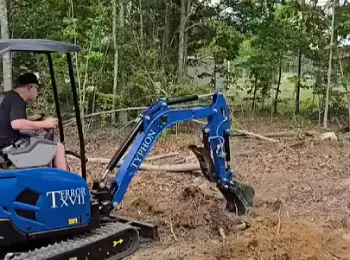
- More Affordable Entry Into Excavation
One of the main reasons I would consider a compact excavator is the possibility of getting mechanical digging power without purchasing a large construction machine.
For homeowners, the value can come from avoiding repeated manual labor on projects that involve substantial soil removal. For contractors, the value may come from completing small jobs without bringing larger equipment onto a residential property.
I would compare the purchase price with similar machines offering equivalent operating weight, digging depth, engine specifications, and hydraulic performance.
A lower price is meaningful only when the machine can handle your intended work safely and reliably.
- Useful for Landscaping and Property Maintenance
I find the versatility of mini excavators particularly appealing for property improvement. Depending on the model’s capabilities, you may be able to prepare planting areas, dig drainage channels, remove loose soil, and reshape sections of land.
These jobs often require precision rather than maximum digging force. A compact machine can help you work in smaller areas while reducing the amount of heavy manual digging.
However, I would avoid assuming that a small excavator can remove every tree stump or dig through every type of soil. Large roots, compacted clay, buried rock, and debris can place significant demands on the machine.
- Easier Access to Confined Work Areas
A compact footprint can be a major advantage on residential projects. If your work takes place near fences, sheds, garden borders, or existing buildings, a smaller excavator may fit into spaces that are impractical for larger equipment.
Before buying, I would measure the narrowest access point on my property and compare it with the machine’s published width. I would also consider turning clearance, tail swing, boom reach, and the space required to unload the equipment.
A machine that fits through a gate but cannot safely rotate or position its boom may not solve the problem you are trying to address.
- Potential Savings on Labor and Project Time
Manual digging takes time, especially when the job involves long trenches or repeated excavation. A suitable mini excavator can reduce physical effort and potentially shorten the time needed to complete the work.
For a small business, those time savings may allow you to complete additional jobs or spend less on hired labor. For a homeowner, the benefit may be finishing a project sooner and avoiding exhausting repetitive work.
I would still factor in transportation, setup, fuel, maintenance, and operator training. The machine saves money only when those costs are reasonable relative to the work completed.
- Attachment Options Can Expand Its Usefulness
I would investigate the attachment options before choosing a Typhon excavator. Different bucket sizes may be useful for narrow trenches or general digging, while other compatible attachments can support particular landscaping and construction tasks.
The key word here is compatible. I would verify attachment dimensions, mounting arrangements, hydraulic requirements, and the manufacturer’s approved operating limits before buying accessories.
An inexpensive attachment is not a bargain if it cannot connect properly or places excessive demands on the machine.
- A Practical Option for Small Equipment Owners
A mini excavator may be easier to accommodate than larger machinery, provided you have suitable storage and transport arrangements. This can appeal to people who maintain their own land or operate a small construction business.
I would nevertheless check the machine’s operating weight and the capacity of any trailer and towing vehicle. Compact equipment is still heavy machinery, and safe transport requires appropriately rated equipment, secure loading, and compliance with applicable road regulations.
Cons Of Typhon Mini Excavators
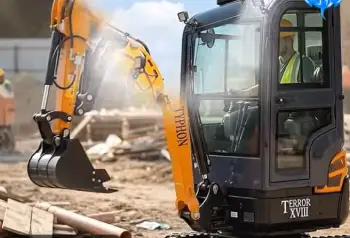
- Performance Depends Heavily on the Model
I would not judge the entire Typhon range based on one machine. Compact excavators can differ considerably in operating weight, digging depth, engine output, hydraulic capacity, and lifting ability.
A lighter model may work well for garden projects but struggle with demanding excavation.
Before buying, I would compare the manufacturer’s specifications with the hardest job I expect to perform regularly.
- Limited Ability in Tough Ground
A mini excavator has physical limits. Hard-packed soil, thick roots, rocky ground, and deep excavation can demand more breakout force and stability than a smaller machine provides.
If your projects regularly involve difficult ground, I would consider a heavier model or a rental machine designed for those conditions. Working beyond the excavator’s capacity can damage components and create dangerous situations.
- Parts and Service Need Careful Verification
Dealer support is one of the most important questions I would ask before purchasing a less familiar equipment brand.
I would want clear answers about engine components, hydraulic hoses, filters, tracks, rollers, electrical parts, and replacement buckets. I would also ask where parts are stocked and how warranty repairs are handled.
If replacement parts must be shipped internationally, downtime could become expensive. Even an affordable excavator may become a poor investment if it remains unusable while you wait for a critical component.
- Transport Is Still a Major Consideration
Small does not mean lightweight. Depending on its operating weight and configuration, a mini excavator may require a suitable trailer, towing vehicle, loading ramps, and secure tie-down points.
I would calculate the total transported weight, including attachments and accessories, rather than relying on a general product description. I would also confirm the towing vehicle’s rated capacity and comply with local transportation requirements.
- Resale Value May Be Less Predictable
When buying equipment, I consider what happens when I no longer need it. Established equipment brands may have broader dealer networks and more familiar resale markets, although actual resale value depends on many factors.
For Typhon, I would look for evidence of comparable used-machine sales, local demand, service history, and parts availability before assuming the excavator will retain its value.
Maintenance Tips For Typhon Mini Excavators
- Check Engine Oil Regularly
Engine oil helps lubricate moving components and manage heat. I would check the oil level before starting the machine, following the manufacturer’s instructions for positioning the excavator and checking the dipstick.
I would also watch for unusual discoloration, contamination, leaks, or a noticeable change in oil consumption. When an oil change is due, I would use the specified oil grade and replace the filter as directed.
I would never assume that every Typhon model uses the same engine oil or service interval. Engine type and operating conditions can affect maintenance requirements.
- Maintain the Hydraulic System
The hydraulic system controls important movements, including the boom, arm, bucket, and tracks on hydraulically driven models. I would inspect accessible hoses, fittings, cylinders, and connections for leaks, abrasion, or visible damage.
Hydraulic fluid should be checked and changed according to the manufacturer’s schedule. I would also keep hydraulic components clean when servicing them because contamination can damage sensitive parts.
If I noticed slow movement, unusual noises, excessive heat, or unexpected changes in performance, I would stop and investigate rather than continuing to work.
Hydraulic systems can retain dangerous pressure even after the engine is switched off. I would never use my hands to search for a pressurized leak or loosen a connection without following the proper pressure-release procedure.
- Inspect Tracks and Undercarriage Components
Rubber tracks and undercarriage parts experience considerable wear, particularly when the excavator operates on abrasive ground or turns frequently.
I would remove accumulated mud, stones, roots, and other debris after working. I would inspect the tracks for cuts, cracks, unusual wear, and damage to the guide lugs. Track tension should be checked and adjusted according to the model’s manual.
Overly tight tracks can increase wear, while insufficient tension can contribute to derailment. I would avoid making adjustments based on guesswork because the correct procedure and tension vary by machine.
- Keep the Cooling System Clean
Dust, grass, and debris can restrict airflow through the radiator or cooling components. I would inspect the cooling system regularly, especially after working in dry soil or vegetation.
I would clean accessible surfaces using the method recommended by the manufacturer and avoid damaging delicate fins with excessive water pressure. Coolant levels and condition should also be checked according to the manual.
I would never open a hot, pressurized cooling system. If the temperature warning activates or the engine repeatedly overheats, I would stop operating and investigate the cause.
- Lubricate Grease Points
Pins, bushings, and joints in the boom, arm, and bucket can wear more quickly when lubrication is inadequate. I would identify the grease points listed in the maintenance manual and lubricate them at the recommended intervals.
The frequency may increase when working in wet, muddy, dusty, or otherwise demanding conditions. I would use the specified grease and wipe away excess material that could collect dirt.
During lubrication, I would also inspect the joints for unusual movement, missing retaining hardware, or signs of damage.
Comparison Of Typhon Mini Excavators With Other Brands
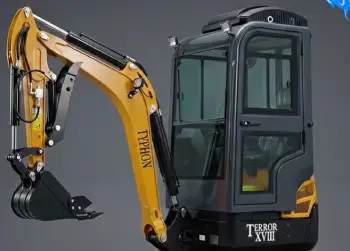
- Typhon vs. Rippa
Rippa is another name buyers may encounter when shopping for compact excavators, particularly in the lower-cost segment.
I would compare the specific Typhon and Rippa models by operating weight, digging depth, engine manufacturer, hydraulic specifications, and included attachments.
I would also investigate how each seller handles replacement parts and warranty claims. Neither brand should automatically be considered superior based only on its advertised price or appearance.
My take: I would choose the machine with better-documented specifications and more dependable support for my location, even if it costs a little more upfront.
- Typhon vs. Kubota
Kubota is an established name in compact construction equipment. Buyers may value its dealer network, product documentation, service arrangements, and familiarity among equipment professionals.
Typhon may appeal to someone prioritizing a lower initial purchase price, while a comparable Kubota may be worth considering when dealer support, established service procedures, and resale demand are important.
However, I would not assume every Kubota is better for every job. The correct comparison depends on the models, their condition if used, and the total ownership cost.
My take: I would lean toward Kubota if accessible dealer service and long-term support were my top priorities. I would consider Typhon when the budget mattered more and its support arrangements were satisfactory.
- Typhon vs. Bobcat
Bobcat is widely associated with compact construction equipment and offers machines designed for professional applications. When evaluating a Bobcat against a Typhon, I would look at the equipment’s operating capabilities, service access, and suitability for frequent commercial use.
A higher purchase price can sometimes be justified by the support available to a contractor who depends on equipment every day. On the other hand, that extra investment may not make sense for a homeowner who only needs occasional trenching or landscaping work.
My take: I would compare Bobcat closely for regular commercial use and assess Typhon more seriously for budget-conscious, smaller projects.
- Typhon vs. John Deere
John Deere offers construction equipment across several categories, including compact excavation equipment. For a buyer who already operates John Deere machinery, an established dealer relationship may make servicing and parts procurement more convenient.
I would compare the specific excavators rather than treating brand familiarity as proof of superior performance. Digging depth, hydraulic capability, machine dimensions, and the dealer’s actual support all matter.
My take: John Deere deserves consideration when local service and established equipment support are priorities. Typhon may remain attractive if it meets the project’s requirements at a more manageable initial cost.
- Typhon vs. Yanmar
Yanmar is known for compact construction equipment and diesel engine technology. When comparing a Yanmar excavator with a Typhon, I would pay close attention to the exact engine specifications, service intervals, hydraulic performance, and availability of replacement components.
A machine with a well-supported engine can be easier to maintain over years of use. Nevertheless, engine reputation alone does not determine the quality of the complete excavator, which also depends on the hydraulics, undercarriage, assembly, and service arrangements.
My take: I would consider Yanmar when established equipment support and engine servicing are important. I would evaluate Typhon on its actual specifications, price, and parts support rather than dismissing it simply because it is less familiar.
Which Brand Would I Choose?
For occasional landscaping, small trenches, and home improvement, I would prioritize affordability, compact dimensions, and ease of maintenance. For daily contracting work, I would place greater weight on dealer response times, parts availability, uptime, and resale value.
I would also calculate the total cost of ownership over several years. That means adding the purchase price, transport, attachments, routine servicing, likely repairs, and eventual resale value.
The best excavator is not necessarily the cheapest or the most famous. It is the machine that completes your jobs safely and reliably without creating unnecessary financial pressure.
Also Read: Is CFG Industry Excavator Worth It?
Frequently Asked Questions (FAQ)
Typhon-branded excavators are sold through machinery suppliers. Verify the specific manufacturer’s identity, importer, and warranty provider with the seller before purchasing.
Neither is automatically better. Compare equivalent models, hydraulic performance, build quality, parts availability, and warranty support.
The best value is a machine that matches your workload, has reliable parts support, and offers a reasonable total ownership cost.
Verify the seller’s business details, customer history, written warranty, payment protections, and parts support before placing an order.
Final Verdict
I would consider a Typhon mini excavator if I needed an affordable machine for landscaping, trenching, and smaller property projects.
Its value depends on the exact model, build quality, and availability of service and replacement parts.
Before buying, I would verify the specifications, inspect the machine if possible, and obtain written warranty terms.
If those checks are satisfactory, Typhon may be worth considering for budget-conscious buyers.
Recent Posts
● Interactive 5-Zone Interior & Exterior Paint Blueprint Paint Coverage Calculator: Gallons, Primer, Square Footage & Cost Tap any architectural surface zone on the blueprint...
If you want smooth, shiny hair without spending a fortune on a premium styling tool, the Ella Bella hair dryer may be worth considering.In these Ella Bella hair dryer reviews, I’ll look...