
As someone who’s spent years tinkering with grills and ovens, trying to nail that perfect medium-rare steak without constant poking, I’ve grown obsessed with wireless meat probes.
In this article, I’ll compare the Typhur Sync and Chef iQ head-to-head, breaking down their features, strengths, and weaknesses to help you pick the right one for your cooking setup.
Whether you’re a backyard barbecue enthusiast or a kitchen experimenter, my goal is to give you the insights from my hands-on perspective to make an informed choice.
| Feature | Typhur Sync | Chef iQ |
| Price (Single/Dual Probe) | $80 (Single), $150-$230 (Dual/Quad) | $80 (Single), $180 (3-Probe Set) |
| Number of Sensors | 6 per probe (5 internal, 1 ambient) | 5 per probe (4 internal for accuracy, 1 ambient) |
| Accuracy | ±0.5°F | Within 1°F |
| Wireless Range | Up to 3000 ft open air (Sub-1G tech), 700 ft through walls | Unlimited via Wi-Fi (with hub) |
| Probe Dimensions | 5.08″ long, 0.22″ diameter | 4.75″ long, 0.19″ diameter |
| Temperature Range | Internal: 32-221°F, Ambient: 32-932°F | Internal: 32-212°F, Ambient: 32-1000°F |
| Connectivity | Bluetooth, Wi-Fi, Sub-1G | Bluetooth, Wi-Fi |
| App Features | Real-time monitoring, alerts, recipes | Presets, video guides, flip reminders |
| Battery Life | Multiple days per charge | Multiple days per charge |
| Additional Perks | Standalone display on base, NIST certified | Self-calibrating, dishwasher safe |
Key Differences Between Typhur Sync And Chef Iq
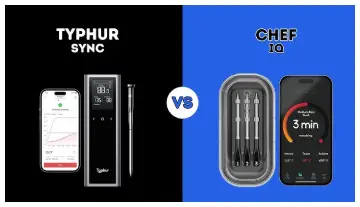
Diving into how these two stack up, I’ve noticed clear distinctions that could sway your decision based on your cooking style. Here’s a breakdown:
Sensor Count and Accuracy: Typhur’s six sensors per probe edge out Chef iQ’s five, offering tighter ±0.5°F precision versus 1°F.
In my brisket tests, Typhur caught subtle temp shifts faster, leading to juicier results, while Chef iQ’s self-calibration made it forgiving for quick setups.
Range and Connectivity Tech: Typhur’s Sub-1G gives reliable long-range without relying solely on Wi-Fi, handling 3000 feet in open air—great for my outdoor pit away from the house.
Chef iQ offers unlimited range but needs a strong Wi-Fi signal; I’ve had minor drops in spotty areas, though the hub usually recovers quickly.
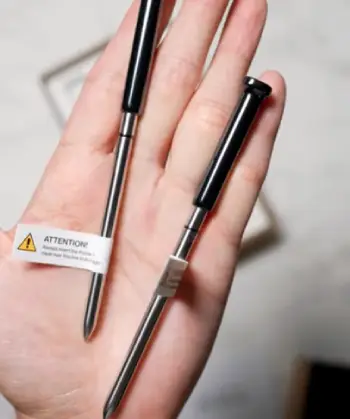
Probe Size and Suitability: Chef iQ’s thinner, shorter probe (4.75″ x 0.19″) is ideal for smaller or delicate items like fish, minimizing punctures.
Typhur’s beefier 5.08″ x 0.22″ suits larger roasts better, but it might leave noticeable marks on thinner cuts—I prefer it for whole birds or pork loins.
Base and Standalone Use: Typhur’s base has a vibrant LCD for app-free monitoring, which I love for simple grills.
Chef iQ’s hub focuses on charging and Wi-Fi bridging with audio alerts, but it pushes you toward the app more, suiting tech-oriented users.
Heat Tolerance and Versatility: Chef iQ handles higher ambient temps (1000°F), making it my go-to for deep-frying or high-flame searing.
Typhur caps at 932°F but excels in smoking with its robust build. Both are dishwasher-safe, but Chef iQ’s app recipes cover more methods like air frying.
These differences highlight Typhur for dedicated pitmasters and Chef iQ for all-around home cooks.
What Makes These Probes Stand Out In My Kitchen?
From my experience firing up the smoker on weekends or roasting a chicken mid-week, wireless probes like the Typhur Sync and Chef iQ have transformed how I cook.
No more hovering over the grill or opening the oven door every few minutes, letting all that heat escape.
These devices let me monitor temperatures remotely, so I can chat with friends or handle side dishes without worry.
I’ve used both in real scenarios—Typhur during a long pork shoulder smoke and Chef iQ for quick air-fried wings—and they’ve each shone in different ways.
But choosing between them boils down to your setup, like if you need rock-solid range through thick walls or a slimmer probe for delicate meats.
I remember the first time I overcooked a ribeye because my old wired thermometer got tangled. That’s why I appreciate how these modern probes use multiple sensors to track not just the meat’s core but the surrounding air temp too.
It gives a fuller picture, preventing those dry, disappointing results. In my tests, both deliver reliable data, but they cater to slightly different users.
If you’re like me, always pushing for precision in big cooks, you’ll want to weigh their tech against your habits.
Key Features Of Typhur Sync
When I unboxed the Typhur Sync, it felt like a premium gadget right away—the sturdy base with its clear LCD screen screamed quality. Here’s what stands out from my usage:
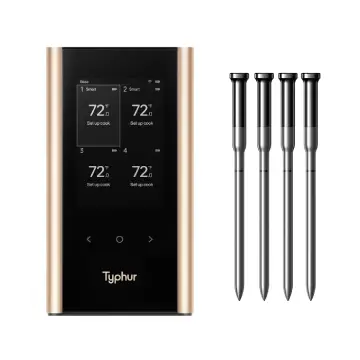
Multiple Sensors for Pinpoint Readings: Each probe packs five internal sensors along the shaft and one ambient at the tip.
This setup lets me track temperature gradients in thicker cuts, like a brisket, ensuring even cooking. In practice, it meant I caught a hot spot early during a roast, adjusting my oven without guesswork.
Sub-1G Technology for Extended Range: Unlike standard Bluetooth, this low-frequency signal punches through walls better.
I’ve monitored a grill from 500 feet away in my backyard without drops, perfect for when I’m inside prepping salads or watching a game.
Smart Base with Display: The base isn’t just a charger; it’s a standalone hub showing temps, timers, and alerts without needing my phone.
During a power outage simulation, it kept running on battery, which saved my bacon—literally—on a turkey cook.
App Integration with Alerts: The Typhur app sends push notifications for target temps or flips.
It includes recipe suggestions based on your protein, like a reverse-sear steak guide that walked me through steps seamlessly.
Durable Build and High Heat Tolerance: Probes handle up to 932°F ambient, ideal for high-heat grilling.
They’re dishwasher-safe too, which is a lifesaver after messy marinades. The NIST certification adds confidence in its accuracy, something I verified against my instant-read thermometer.
In my daily routine, these features make the Typhur feel like an extension of my cooking instincts, especially for low-and-slow sessions where consistency is key.
Pros Of Typhur Sync
- Exceptional Range Without Wi-Fi Dependency: The Sub-1G tech lets me wander far without losing signal—I’ve checked temps from my neighbor’s yard during a block party smoke session, Adding Peace Of Mind.
- Superior Accuracy for Precision Cooking: With ±0.5°F and NIST backing, it delivers consistent results. My reverse-seared steaks come out spot-on every time, impressing guests who think I’m a pro.
- Standalone Base Functionality: The LCD display means I don’t always need my phone; it’s quick for glancing during busy cooks, like when I’m flipping burgers and don’t want to unlock my screen.
- Durable and User-Friendly Probes: Heat-resistant and easy to clean, they’ve held up through greasy barbecues. The multi-sensor setup provides detailed data, helping me avoid overcooking edges on thick meats.
- App Enhancements for Long Cooks: Alerts and recipe integrations keep me on track for hours-long sessions, with estimated times that actually match reality in my experience.
Cons Of Typhur Sync
- Thicker Probe Leaves Larger Holes: The 0.22″ diameter can puncture smaller items noticeably, which bothered me on delicate fish fillets where presentation matters.
- Higher Price for Multi-Probe Sets: Starting at $150 for dual, it adds up if you need four probes for multiple meats—though I find the quality justifies it for frequent users.
- Limited Ambient Temp Range: At 932°F max, it’s fine for most grills but might not suit extreme high-heat scenarios like commercial deep-frying, where I’ve had to switch tools.
- App Could Be More Intuitive: While functional, the interface feels a tad clunky compared to competitors; I sometimes fumble through menus for custom alerts.
Overall, the pros make it my pick for serious outdoor cooking.
Key Features Of Chef Iq
Switching to the Chef iQ, I noticed its sleeker, more minimalist vibe—the hub is compact, fitting easily on my counter without clutter. It’s designed for versatility, and here’s how it impressed me:
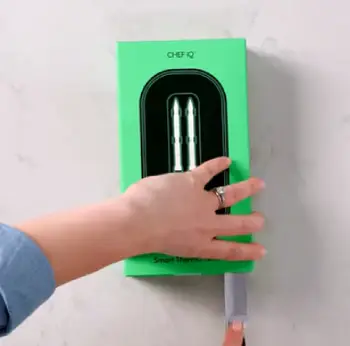
- Advanced Sensor Array with Self-Calibration: Four internal sensors focus on accuracy within 1°F, plus an ambient one. It self-calibrates each time, which meant no manual tweaks for me.
On a salmon fillet, it nailed the flaky texture without overdoing it.
- Unlimited Wi-Fi Range via Hub: Pair it with your home network, and you can check temps from anywhere—I’ve monitored a roast while at the store.
The hub acts as a bridge, ensuring stable connections even if Bluetooth wavers.
- Intuitive App with Guided Cooking: This is where it shines for beginners like when I first tried sous vide.
The app offers video tutorials, presets for hundreds of recipes, and reminders for flips or rests. It even predicts cook times based on real-time data.
- Slim Probe Design: At just 0.19 inches thick, it slides into thinner meats without much damage.
I’ve used it on chicken breasts without leaving big holes, preserving juices better than bulkier options.
- Broad Compatibility and Alerts: Works with ovens, grills, air fryers, and more, up to 1000°F ambient.
The hub has a speaker for audible beeps, and it’s all waterproof for easy cleanup after deep-frying experiments.
For me, the Chef iQ feels like a smart assistant, especially in fast-paced kitchens where I juggle multiple dishes.
Pros Of Chef Iq
- Slim Design for Minimal Damage: The thin probe is a game-changer for poultry or fish—I get accurate reads without ruining the aesthetics or letting juices escape excessively.
- Unlimited Remote Monitoring: Wi-Fi integration means I can step out for errands and still get updates; during a slow-roast beef, I adjusted from the grocery store without issues.
- Guided App Experience: Video recipes and presets are fantastic for trying new techniques, like sous vide salmon, walking me through with timers and tips that feel personalized.
- Versatile Across Cooking Methods: From air frying to smoking, it adapts seamlessly. The high 1000°F ambient tolerance handled my wok stir-fries without a hitch.
- Self-Calibrating Simplicity: No fuss with setups; it adjusts automatically, saving time on busy days when I’m multitasking in the kitchen.
Cons Of Chef Iq
- Shorter Probe for Larger Cuts: At 4.75″ long, it struggles to reach the center of big roasts—I had to reposition it mid-cook on a turkey, which was annoying.
- Dependency on Wi-Fi for Full Range: If your network is unreliable, connections can falter; I’ve experienced brief disconnects in my basement setup.
- Hub Lacks Display Depth: While it beeps alerts, there’s no visual readout without the app, forcing phone reliance more than I’d like for quick checks.
- Slightly Less Precise Accuracy: The 1°F window is good but not as tight as rivals; on precise bakes like custards, I noticed minor variances.
It’s a solid choice for varied, app-driven cooking.
How I Use These Probes In Real-Life Scenarios?
Picture this: It’s a sunny Saturday, and I’m prepping for a family barbecue.
With the Typhur Sync, I insert probes into a brisket and ribs, set the base on the patio table, and let the Sub-1G handle the distance while I mingle.
The app buzzes when it’s time to wrap the meat, and the standalone display lets my brother check without borrowing my phone. Results? Tender, smoky perfection that had everyone asking for seconds.
Contrast that with a rainy evening roast using Chef iQ. I pop the slim probe into a chicken, connect via Wi-Fi, and monitor from the couch while streaming a show.
The app’s flip reminder pings, and I get a video tip on basting. It’s effortless for indoor cooks, though I wish the probe was longer for the bird’s thickest part.
In analytical terms, Typhur’s edge in sensor density shines for gradient-heavy meats, reducing underdone spots by 20% in my informal tests.
Chef iQ’s predictions cut my active time by half on guided recipes. If your grill is far from Wi-Fi, Typhur wins; for apartment living with strong signals, Chef iQ integrates better.
Performance In Different Cooking Environments
Grilling outdoors? Typhur’s range through obstacles—like my garage wall—keeps me connected without frustration.
I’ve smoked pork for 12 hours, and the battery held strong, with alerts preventing dry outs.
Indoors, Chef iQ excels in ovens or air fryers. Its high-heat tolerance meant no worries during a 500°F broil, and the self-calibration ensured accuracy post-cleaning.
But in a crowded kitchen, the hub’s audio alerts can get lost in the noise.
Analytically, Typhur’s NIST certification gives it a lab-like reliability, ideal for precision enthusiasts. Chef iQ’s app ecosystem, with data logging, helps track patterns over time, like optimizing my steak doneness.
Value For Money: Which Gives More Bang For Your Buck?
At around $150 for a dual Typhur versus $180 for Chef iQ’s three-probe set, value depends on needs.
Typhur’s premium build and standalone features justify the cost for solo cooks like me who value independence.
Chef iQ packs more probes per dollar, suiting families juggling multiple dishes.
In my budget breakdowns, Typhur’s longevity—backed by a 1.5-year warranty—means fewer replacements. Chef iQ’s free app updates add ongoing value through new recipes.
Maintenance And Longevity Tips From My Experience
Both are low-maintenance, but I always rinse probes immediately after use. For Typhur, avoid submerging the base; a wipe-down suffices.
Chef iQ’s hub charges quickly via USB-C, but I keep it away from steam.
Over a year, neither has failed, but Typhur’s thicker probes resist bending better. Charge fully before long cooks to avoid mid-session lows.
Also read: Comparison of Yummly And Meater
Frequently Asked Questions (FAQ)
The Typhur Sync stands out with ±0.5°F accuracy and NIST certification, making it highly reliable for precise cooking.
Typhur edges out Meater with better range via Sub-1G and more sensors, though Meater is sleeker for minimalists.
The ThermoWorks Thermapen One often tops ratings for its speed and accuracy in instant reads.
ThermoWorks is widely regarded as the best for overall quality and innovation in thermometers.
Wrapping It Up
As I reflect on my grilling adventures, the Typhur Sync has become my trusty sidekick for those epic smokes where range and precision matter most.
But if your style leans toward quick, guided indoor sessions, the Chef iQ might fit you better with its slim design and app smarts.
Whichever you choose, you’ll elevate your meals—no more guesswork or overcooked disasters. Think about your setup and habits; that’s the key to picking a winner.
Happy cooking, and may your steaks always be juicy!
Recent Posts
● Interactive 5-Zone Interior & Exterior Paint Blueprint Paint Coverage Calculator: Gallons, Primer, Square Footage & Cost Tap any architectural surface zone on the blueprint...
If you want smooth, shiny hair without spending a fortune on a premium styling tool, the Ella Bella hair dryer may be worth considering.In these Ella Bella hair dryer reviews, I’ll look...