
If you want an engine oil designed to do more than simply lubricate moving parts, I think Valvoline Restore and Protect is worth considering.
I’d especially recommend buying it if your vehicle has accumulated mileage, you want to help control internal deposits, or you prefer an oil built around long-term engine cleanliness.
It isn’t a miracle treatment, but its cleaning-focused formulation makes it interesting for drivers who want preventive maintenance rather than waiting for obvious engine problems to appear.
My Personal Experience With Valvoline Restore And Protect
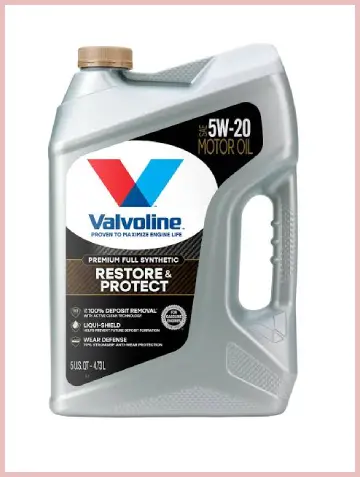
When I first looked at Valvoline Restore and Protect, what caught my attention was that it wasn’t marketed as just another motor oil.
The emphasis was on helping clean existing deposits while protecting the engine against new deposits.
That immediately made me curious because engine cleanliness is something you usually don’t think about until a problem shows up.
I approached it like I would any maintenance product: I didn’t expect an instant transformation. Instead, I wanted to know whether consistent use could make sense as part of an ordinary oil-change routine.
The biggest thing I noticed about the concept is that the oil is intended to work continuously while the engine is operating.
Rather than adding a separate aggressive cleaner and hoping it removes accumulated material quickly, the formulation is designed to clean gradually during normal operation.
That distinction matters. If you are expecting your engine to suddenly sound brand-new after one oil change, you may be disappointed.
I wouldn’t buy Restore and Protect with that expectation. But if your goal is to maintain a cleaner engine over repeated oil-change intervals, the proposition becomes much more convincing.
I also like the fact that using it doesn’t require an additional cleaning procedure. I simply treat it as engine oil, assuming the viscosity and specifications match what my vehicle requires. That makes the maintenance routine straightforward.
My overall impression is that Restore and Protect makes more sense as a long-term maintenance strategy than as an emergency solution. If your engine already has serious sludge, mechanical wear, oil-consumption problems, or neglected maintenance, I wouldn’t expect a bottle of oil to reverse those issues.
What I appreciate most is the preventive angle. You change the oil anyway, so choosing a formulation focused on deposit control can be an appealing upgrade if the product is appropriate for your engine.
Pros Of Valvoline Restore And Protect
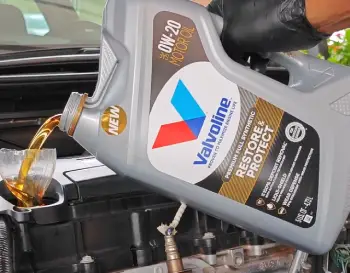
- Deposit Cleaning
The most obvious advantage is its focus on deposits.
If you have a higher-mileage vehicle or an engine that hasn’t always received perfect maintenance, deposit control can be particularly appealing.
I like the idea of incorporating cleaning into something I already have to do rather than adding another complicated maintenance step.
The important point is that the oil is not promising to repair worn components. Cleaning and repairing are completely different things.
- Full-Synthetic Formulation
A full-synthetic motor oil can offer strong resistance to oxidation and high-temperature stress when used under appropriate conditions.
That matters because engine oil operates in a demanding environment. Temperatures can become extremely high around areas such as turbochargers and piston rings, while the oil is constantly exposed to contaminants and mechanical stress.
I consider the synthetic base oil an important part of the overall package rather than treating the cleaning additives as the only reason to consider Restore and Protect.
- Helps Prevent New Deposits
Removing existing deposits is only half of the equation.
If the engine immediately creates another layer of deposits, the benefit doesn’t last. That’s why I find the prevention side of the formulation just as interesting.
For me, the best maintenance product is usually the one that helps prevent a problem from becoming worse rather than trying to rescue an engine after years of neglect.
- Easy to Incorporate Into Routine Maintenance
This is one of the strongest practical advantages.
I don’t have to schedule an additional cleaning procedure simply to use engine oil. If the product meets my vehicle’s required specifications, it can become part of a normal oil-change routine.
That’s convenient.
You buy the correct amount, replace the old oil and filter according to the manufacturer’s procedure, and continue driving.
- Suitable for Preventive Maintenance
I think Restore and Protect makes the most sense for someone who thinks about engine care over years rather than days.
If you’re keeping your car for a long time, deposit control becomes more interesting because you’re repeatedly exposing the engine to heat cycles, contaminants and normal wear.
A good maintenance strategy is rarely about one dramatic intervention. It’s about making sensible choices consistently.
- Strong Brand Recognition
Valvoline has been producing automotive lubricants for a very long time, and that gives buyers some confidence when comparing engine oils.
Of course, a recognizable brand doesn’t automatically mean every product is right for every vehicle. I still check the required viscosity and specifications before purchasing.
But when I’m choosing between several compatible oils, established formulation experience is something I consider.
Cons Of Valvoline Restore And Protect
- It Cannot Repair Mechanical Damage
This is the biggest limitation I’d keep in mind.
If your engine has worn piston rings, damaged bearings, failing seals, poor compression, a malfunctioning PCV system, or another mechanical problem, changing to Restore and Protect isn’t going to magically repair it.
Oil can protect components and help control deposits, but it cannot substitute for mechanical repairs.
- Results May Not Be Dramatic
If you’re waiting for an obvious before-and-after transformation, you may not see one.
Engine cleanliness is largely an internal process, and much of the benefit is preventative. You might not hear a dramatic difference or suddenly gain noticeable power.
That’s not necessarily a failure.
A motor oil can be doing its job successfully without producing a noticeable sensation from the driver’s seat.
- Higher Cost Than Basic Oils
Premium full-synthetic oils generally cost more than entry-level conventional or synthetic-blend options.
Whether that additional cost makes sense depends on your vehicle, driving habits and maintenance priorities.
Personally, I see more value in paying extra when I’m confident the formulation meets my vehicle’s requirements and I intend to keep the car for years.
- Not a Substitute for Regular Oil Changes
This point deserves emphasis.
I wouldn’t use Restore and Protect as an excuse to stretch oil-change intervals beyond what the manufacturer recommends.
A premium oil still becomes contaminated and degraded through use. The oil filter also has a finite capacity.
Good maintenance remains good maintenance.
Maintenance Tips For Valvoline Restore And Protect
- Check the Required Oil Viscosity
Before anything else, check your owner’s manual.
You may see specifications such as 0W-20, 5W-30, 5W-20 or another viscosity depending on your engine.
Don’t choose the oil based only on vehicle age or mileage. Use the manufacturer’s recommendation unless a qualified professional has given you a specific reason to do otherwise.
- Confirm the Required Specification
Viscosity is only part of the equation.
Modern engines may require particular API, ILSAC, ACEA, OEM or other specifications. If your vehicle requires a specific approval, make sure the exact oil you purchase meets it.
I consider this more important than choosing an oil simply because it has a cleaning-focused marketing message.
- Replace the Oil Filter
I wouldn’t install fresh premium oil while leaving an old filter in place.
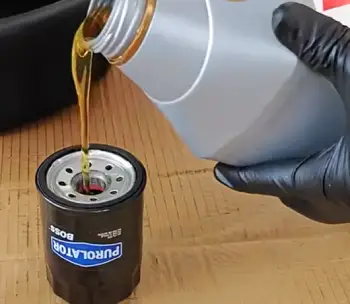
The oil filter plays a major role in removing suspended contaminants. Since Restore and Protect is intended to help manage deposits and contaminants, pairing it with a quality filter makes practical sense.
- Don’t Ignore the Oil Level
Checking oil level is one of the easiest maintenance tasks you can perform.
I recommend checking it according to your vehicle manufacturer’s procedure and keeping it within the recommended range.
Too little oil can create serious problems, while overfilling can also cause issues.
- Follow the Manufacturer’s Oil-Change Interval
Even if the oil is designed to resist deposits and protect the engine, I wouldn’t automatically extend the service interval.
Driving conditions matter.
Frequent short trips, heavy traffic, extreme temperatures, towing and severe-duty operation can place different demands on engine oil.
Your vehicle’s maintenance schedule should be your starting point.
- Pay Attention to Warning Signs
If your engine suddenly develops increased oil consumption, blue smoke, unusual knocking, low oil pressure, rough running or persistent warning lights, don’t assume a different motor oil will solve it.
I would investigate the underlying cause.
Preventive maintenance is valuable, but it works best when combined with proper diagnosis.
Comparison Of Valvoline Restore And Protect And Other Brands
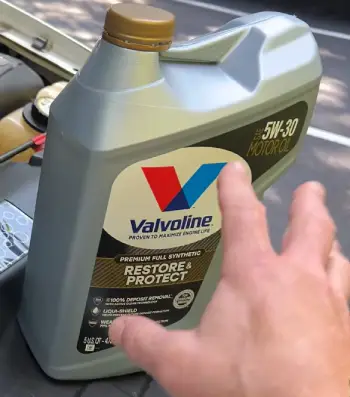
- Valvoline Restore and Protect vs Mobil 1
Mobil 1 has a strong reputation in the synthetic motor oil market, with several formulations targeting different driving requirements.
When I compare it with Restore and Protect, I see the distinction primarily in product positioning. Mobil 1 offers a broad range of oils, while Restore and Protect places particularly strong emphasis on cleaning existing deposits and preventing new ones.
If engine cleanliness is the feature you’re specifically shopping for, Restore and Protect becomes particularly interesting.
If you are looking for a broader selection tailored to different performance or vehicle requirements, Mobil 1’s extensive product range may give you more choices.
- Valvoline Restore and Protect vs Pennzoil Platinum
Pennzoil Platinum is another well-known full-synthetic option.
Both products focus heavily on synthetic-engine protection and cleanliness, but Restore and Protect has a particularly strong identity around deposit removal and deposit prevention.
For me, the choice would come down to the exact specification required by my engine and the features I value most.
I wouldn’t choose solely because one bottle claims to clean better. The correct oil specification remains the foundation.
- Valvoline Restore and Protect vs Castrol EDGE
Castrol EDGE is another premium synthetic motor oil family that emphasizes protection under demanding conditions.
If I were choosing between compatible formulations, I’d consider the engine specification, driving conditions, viscosity, price and the specific claims of each product.
Restore and Protect stands out when the conversation centers on deposit control.
Castrol EDGE may appeal more to someone whose primary interest is high-performance lubricant technology and demanding driving applications.
- Valvoline Restore and Protect vs Conventional Motor Oil
This is where the difference can become easier to understand.
A conventional oil may be perfectly acceptable for vehicles whose manufacturer permits it, but Restore and Protect is positioned as a more advanced full-synthetic formulation with a specialized additive strategy.
If you’re maintaining an older vehicle that specifically permits conventional oil, switching isn’t automatically necessary.
However, if your vehicle calls for full synthetic oil, then a product like Restore and Protect can be a logical option.
Also Read: Comparison Of Jiffy Lube And Take 5
Frequently Asked Questions (FAQ)
It is designed to help remove certain deposits and protect against new deposit formation, but results depend on engine condition, maintenance history and continued use.
Deposit cleaning is gradual. I would judge it over repeated oil-change intervals rather than expecting dramatic results immediately.
Its main distinction is its focus on cleaning existing engine deposits while helping prevent new deposits through its additive formulation.
How good is Valvoline Restore and Protect Fuel System Cleaner?
It is intended to clean fuel-system deposits, but it should be viewed as a maintenance product rather than a cure for mechanical or fuel-system faults.
Wrapping Up
I think you should buy Valvoline Restore and Protect if your vehicle calls for a compatible full-synthetic oil and you want to make engine cleanliness part of your long-term maintenance strategy.
I especially like its deposit-control focus because it works within a routine oil change rather than requiring an additional treatment.
Just keep your expectations realistic: it can support cleanliness and protection, but it won’t repair mechanical damage.
For a properly maintained engine that you want to keep running well for years, I consider Restore and Protect a sensible premium oil option.
Recent Posts
I tried Meltoway Hair Dissolving Cream because I wanted a quick way to deal with unwanted body hair without reaching for a razor every few days. If you are looking for a convenient at-home...
If you’re considering a saffron-based supplement to support mood, appetite control, and everyday wellness, Happy Saffron Plus is worth considering.I like that it takes a familiar botanical...