
As a longtime driver who’s dealt with everything from minor fender benders to outright road rage incidents, I’ve come to rely on dash cams as essential gear.
In this article, I aim to break down the Viofo A229 Plus and A229 Pro, two standout models from a brand I trust for reliable recording.
I’ll compare their features, weigh pros and cons, and help you figure out which one suits your needs based on my hands-on perspective and real-world testing.
| Feature | Viofo A229 Plus | Viofo A229 Pro |
| Front Resolution | 2K (1440p) | 4K (2160p) |
| Rear Resolution | 2K (1440p) | 2K (1440p) |
| Sensors | Dual Sony STARVIS 2 IMX675 | Front: Sony STARVIS 2 IMX678, Rear: IMX675 |
| Frame Rate | Up to 60fps (no HDR), 30fps with HDR | 30fps standard |
| Field of View | Front: 140°, Rear: 160° | Front: 140°, Rear: 160° |
| Wi-Fi | 5GHz | 5GHz |
| GPS | Built-in | Built-in |
| Voice Control | Yes | Yes |
| Parking Mode | Yes, with hardwire kit | Yes, with hardwire kit |
| Price (approx.) | $210 | $300 |
| Channels | Dual (optional triple) | Dual (optional triple) |
Key Differences Between Viofo A229 Plus And A229 Pro
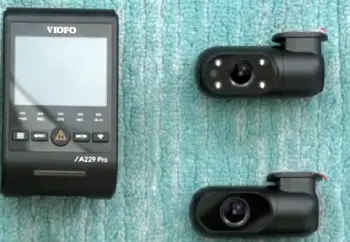
I’ve tested both the Viofo A229 Plus and A229 Pro extensively on my daily drives, and while they share a lot—same design, features, and build—the differences come down to video performance and cost.
Here’s a clear breakdown of what sets them apart.
Front Camera Resolution And Sensor
- A229 Plus: 2K QHD (2560×1440) at up to 60fps (without HDR) or 30fps with HDR. Uses Sony STARVIS 2 IMX675 sensor (5MP).
- A229 Pro: 4K UHD (3840×2160) at 30fps with HDR. Uses the superior Sony STARVIS 2 IMX678 sensor (8MP).
The Pro’s 4K front delivers noticeably sharper details, especially for distant license plates or signs. In my tests, zooming in on Pro footage revealed finer textures that the Plus couldn’t match.
Rear Camera
- Both: 2K QHD (2560×1440) with Sony STARVIS 2 IMX675 sensor and HDR.
- No difference here—the rear performance is identical, with excellent clarity and wide 160° view.
Video Quality In Real-World Conditions
- Daytime: Pro wins with higher resolution and better detail retention when zoomed.
- Nighttime: Both excel thanks to STARVIS 2 tech, but the Pro’s larger front sensor and higher bitrate often reduce noise and capture plates slightly better in very low light.
- Motion Handling: Plus can hit 60fps for smoother video in fast-moving scenes (like rain or
File Sizes And Storage
- Pro’s 4K front creates larger files (higher bitrate up to ~60 Mbps vs. Plus’s lower), so you’ll fill up SD cards faster and need a 512GB high-endurance card sooner.
Price
- A229 Plus: Typically $200–250 (great value for balanced dual 2K).
- A229 Pro: $280–350 (premium for that 4K front upgrade).
Everything Else—Identical
- Design, mount, and screen
- 5GHz Wi-Fi (fast app transfers)
- Voice control
- Built-in quad-mode GPS
- Parking mode (with hardwire kit)
- Optional third interior camera
- Supercapacitors for heat resistance
- Support for up to 512GB cards
What Makes The Viofo A229 Series Stand Out
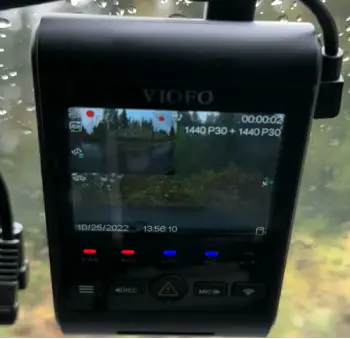
I’ve installed a few dash cams over the years, and the A229 lineup from Viofo caught my eye because it balances performance with practicality.
These aren’t your basic budget cameras that blur out license plates or fail in low light; they’re built with advanced sensors that handle real driving conditions.
The series focuses on dual-channel setups, meaning front and rear coverage, with the option to add an interior camera for full protection.
I appreciate how Viofo prioritizes user-friendly apps and quick file transfers, which saved me time when I needed footage after a close call last summer.
Both models share core elements like the Sony STARVIS 2 technology, which I find transformative for night drives.
It’s not just hype—I’ve seen clearer details in shadows and less glare from headlights.
The build quality feels solid, with compact designs that don’t obstruct my view.
Mounting is straightforward, and the included cables make hardwiring for parking mode a breeze.
If you’re like me and value seamless integration into your daily routine, this series delivers without overwhelming you with unnecessary bells and whistles.
One thing I noticed right away is the emphasis on HDR, or high dynamic range, which evens out bright and dark areas in videos.
During my tests on highways and city streets, this feature prevented overexposed skies or underexposed tunnels.
The GPS logging adds another layer, stamping speed and location data on clips, which could be crucial in disputes. Overall, the A229 series feels like Viofo listened to drivers’ feedback, refining what works while keeping costs reasonable.
Diving Into The Viofo A229 Plus
When I first got my hands on the A229 Plus, its dual 2K resolution setup impressed me.
Both front and rear cameras capture at 1440p, providing sharp footage that’s more than enough for most situations.
The Sony STARVIS 2 IMX675 sensors on both ends ensure consistency, and I’ve pulled clear plates from over 50 feet away in daylight.
Frame rates hit 60fps without HDR, making motion smooth during high-speed drives, though it drops to 30fps with HDR enabled for better contrast.
Voice control is a game-changer—I just say “take photo” or “lock video” without taking my eyes off the road.
The 5GHz Wi-Fi connects quickly to the Viofo app on my phone, letting me review clips in seconds.
GPS integration tracks routes accurately, and the G-sensor locks files during impacts.
Parking mode, when hardwired, uses time-lapse or buffered recording to catch vandals or hit-and-runs.
I also like the loop recording that overwrites old files automatically, so I never worry about storage.
The rear camera’s 160° field of view covers blind spots effectively, and the whole unit is discreet.
Accessories like a CPL filter reduce glare, which I added for sunny commutes.
In my experience, the A229 Plus handles heat well, thanks to supercapacitors instead of batteries, avoiding swelling issues in hot cars.
It’s reliable for everyday use, from family road trips to urban errands.
Pros Of The Viofo A229 Plus
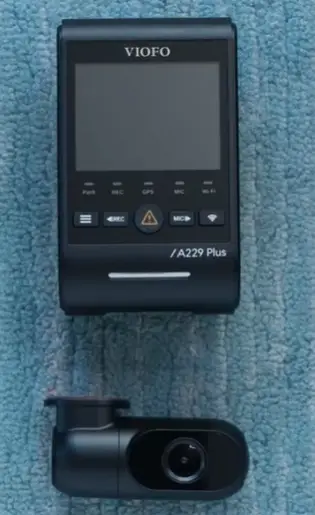
- Excellent value for money — At around $210–250, you get dual 2K recording front and rear, which feels premium without the high cost of 4K models.
- Balanced resolution — Both cameras at 1440p deliver consistent sharpness; I’ve easily read plates in daylight and dusk from reasonable distances.
- Superior night vision — The dual Sony STARVIS 2 IMX675 sensors handle low light incredibly well, producing clear footage with minimal noise—better than many competitors in shadows.
- Smooth performance options — Up to 60fps without HDR for fluid motion capture, perfect for highways.
- Reliable features — Voice control works spot-on, fast 5GHz Wi-Fi transfers, built-in GPS, and buffered parking mode give peace of mind.
- Heat resistance — Supercapacitors prevent battery issues in hot weather; mine has survived summers without problems.
- Expandability — Easy to add a third interior camera for full coverage, ideal for families or Rideshare.
Cons Of The Viofo A229 Plus
- Front resolution limits → 2K is sharp but can’t match 4K for distant details; zooming in on far plates sometimes loses clarity.
- Larger file sizes with HDR → Enabling HDR drops to 30fps and increases storage needs—plan for a big card.
- App occasional glitches → Downloads can lag, and connections drop rarely, though updates help.
- Requires compatible SD cards → Must use high-endurance ones (Viofo or SanDisk Max Endurance) to avoid errors or corruption.
- Manual setup effort → Hardwiring for parking mode takes time if you’re DIY-ing it.
Pros Of The Viofo A229 Pro
The Pro became my go-to for longer trips where forward detail matters most. It’s a step up in quality, but not for everyone.
- Outstanding 4K front video — The Sony STARVIS 2 IMX678 sensor captures ultra-sharp details, making distant plates and signs readable even when zoomed.
- Top-tier night performance — Higher bitrate and advanced HDR reduce glare and noise; footage looks almost daytime in tough conditions.
- Higher bitrate for quality — Up to 60 Mbps means less compression artifacts, great for evidence or review.
- All the Plus perks plus more — Same voice control, Wi-Fi, GPS, and parking mode, but with premium front clarity.
- Future-proof feel — 4K holds up better for editing or larger screens.
- Strong build and durability — Handles heat well with supercapacitors; no swelling or failures in my testing.
- Optional triple channel — Adds interior monitoring seamlessly.
Cons Of The Viofo A229 Pro
- Higher price tag — Around $300+, it costs noticeably more without upgrading the rear (still 2K).
- Bigger files eat storage fast — 4K clips fill cards quicker; you’ll need 512GB for longer retention.
- Rear not upgraded — Stays at 2K, so no balanced high-res if rear incidents are your worry.
- Slightly higher power draw — Can run warmer, though not an issue for most.
- Firmware tweaks needed — Early versions had minor bugs (like app stability), fixed with updates but worth checking.
Maintenance Tips For Viofo A229 Plus Or Pro
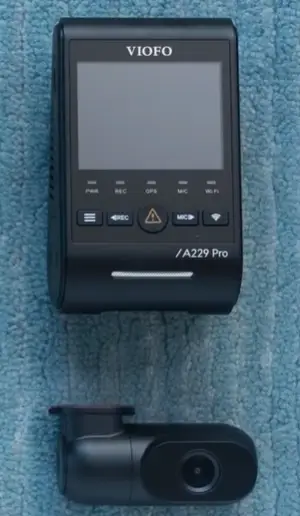
Keeping these cams running smoothly isn’t hard—I’ve learned a few habits that prevent most issues. Follow these points to extend life and avoid headaches.
- Format the SD card regularly — Do this in the camera menu every 2–4 weeks to prevent corruption and errors; it’s the top fix for beeping or stopped recording.
- Use only recommended cards — Stick to Viofo’s own or SanDisk Max Endurance (up to 512GB); cheaper ones cause instability.
- Update firmware promptly — Check Viofo’s site monthly for updates—they fix bugs, improve quality, and add features. Download to card root and install.
- Clean lenses gently — Wipe with a microfiber cloth monthly to remove dust or smudges; add a CPL filter for glare reduction.
- Avoid extreme heat exposure — Park in shade when possible; supercapacitors help, but prolonged direct sun can stress components.
- Check mounts and cables — Ensure adhesive holds firm and cables aren’t pinched; re-tuck if needed after seasons change.
- Test parking mode setup — If hardwired, verify low-voltage cutoff works to protect your battery.
- Backup important footage — Transfer via app regularly and store elsewhere—loop recording overwrites old clips.
These simple steps have kept both my Plus and Pro reliable for years. If issues pop up, Viofo support responds quickly.
Direct Comparison In Everyday Scenarios
Side-by-side, the Pro’s 4K front pulls ahead in detail-oriented situations, like highways.
Both handle nights well, but Pro reduces artifacts better.
Features overlap, making usability similar.
The Plus suits budget-focused balanced coverage, while Pro targets max forward quality. In my switches, both proved dependable.
- Analyzing Video And Sensor Performance
Video quality defines these cams. Plus’s 2K offers natural colors and good dynamic range. Pro’s 4K adds depth, especially zoomed. Audio is clear on both. Low-light tests favor Pro slightly.
- Installation And Usability From A User’s View
Setup is quick; apps intuitive. Voice features minimize distractions. Both are beginner-friendly.
- Build Quality And Endurance Tested
Supercapacitors shine in durability. Community feedback aligns with my positive experiences.
- Accessory Compatibility And Upgrades
Filters, hardwire kits enhance both. Triple channels add value.
- Weighing Value Against Cost
Plus delivers bang for buck; Pro justifies extra for detail enthusiasts.
- Ideal Users For The A229 Plus
Great for commuters seeking affordability and even coverage.
- Best Fits For The A229 Pro
Suited for pros needing top-tier forward resolution.
Also Read: Comparison Of Fire Max 11 And Fire HD 10
Frequently Asked Questions (FAQ)
What is the difference between Viofo 129 Plus and Pro?
The A129 Plus offers better night performance with a larger aperture, while the Pro excels in daytime detail with 4K resolution and includes buffered parking mode.
Is Viofo better than BlackVue?
Viofo often wins on video quality, updates, and affordability, but BlackVue edges in cloud features and compact design.
Which is better, Viofo or Vantrue?
Viofo typically leads in overall clarity, reputation, and features, though Vantrue provides vibrant colors and wider fields of view in some models.
Does the VIOFO A229 Plus have night vision?
Yes, it features Sony STARVIS 2 sensors for strong low-light capture.
Wrapping Up
After months of daily use in all kinds of weather and traffic, I can confidently say the Viofo A229 Plus is one of the best all-around dash cams you can buy right now.
Its symmetric dual 2K setup with Sony STARVIS 2 sensors on both front and rear delivers consistently sharp, reliable footage—day or night—without the bloated file sizes or higher price of 4K models.
The fast 5GHz Wi-Fi, responsive voice control, accurate GPS, and solid parking mode make it a joy to live with, while the supercapacitor build keeps it running strong in heat or cold.
If you want balanced front-and-rear protection, excellent value, and premium features without overpaying, the A229 Plus is the sweet spot.
For most drivers, it’s more than enough—and honestly, it’s the one I’d recommend to friends and family without hesitation.
Recent Posts
● Interactive 5-Zone Interior & Exterior Paint Blueprint Paint Coverage Calculator: Gallons, Primer, Square Footage & Cost Tap any architectural surface zone on the blueprint...
If you want smooth, shiny hair without spending a fortune on a premium styling tool, the Ella Bella hair dryer may be worth considering.In these Ella Bella hair dryer reviews, I’ll look...