
I decided to put the Wagner FLEXiO 3000 and 3500 head to head after using both on real projects around my home.
My goal here is simple: help you figure out which sprayer fits your next painting job so you waste less time and money picking the wrong one.
| Feature | Wagner FLEXiO 3000 | Wagner FLEXiO 3500 |
| Turbine | X-Boost, 9-speed dial | X-Boost, 9-speed dial |
| Weight & Design | Standard handheld | 10% lighter, more compact |
| On/Off Switch | None (trigger starts motor) | Side-mounted on/off switch |
| Power Cord | Longer | Shorter |
| Nozzles | iSpray + Detail Finish | iSpray + Detail Finish |
| Paint Cup | 1.5 quart | 1.5 quart |
| Extra Accessories | Carrying case | Carrying case + 5 bonus cup liners |
| Best For | Larger areas needing reach | Extended sessions, less fatigue, fewer start-up splatters |
| Cleanup | Lock-N-Go, ~5 minutes | Lock-N-Go, ~5 minutes with liners |
My Hands-On Experience With These Two Sprayers
I grabbed both of these Wagner models because I was tired of brushes leaving streaks on cabinets and rollers slowing me down on walls.
The 3000 came first. I used it on a fence and some old furniture. Later I switched to the 3500 for a set of kitchen cabinets and a bedroom refresh.
Both run on the same basic idea: a turbine built right into the gun that pushes high volume of air at low pressure.
That setup lets you spray regular latex paint straight from the can in most cases. No separate compressor. No long hose dragging behind you.
The real difference shows up the moment you pick them up and start working. I noticed the 3500 felt easier in my hand after about twenty minutes.
That lighter build matters when you are coating an entire room or flipping a bunch of cabinet doors. The on/off switch on the side of the 3500 also changed how clean my starts looked.
With the 3000 I had to learn a half-pull on the trigger first so the motor could spin up before paint flowed. Miss that step and you get a little spit of paint. The 3500 just runs steady once you flip the switch.
Both tools cover an 8 by 10 wall in roughly five minutes when you use the right settings. That speed is why I keep reaching for them instead of a brush.
Yet the finish quality depends on which nozzle you snap on and how you dial the material flow and air power. I spent time testing different combinations so you do not have to guess.
Key Differences Between The Wagner Flexio 3000 And 3500
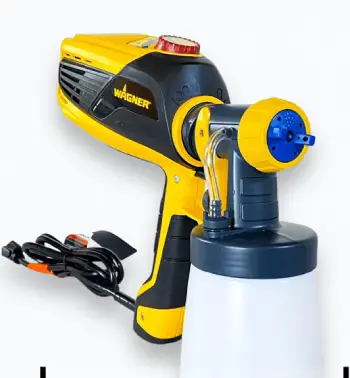
- On/off switch presence: The 3500 has a side-mounted switch that keeps the turbine running the whole time.
You pull the trigger only for paint. This cuts down on the tiny splatters that can appear when the 3000 motor kicks on. I found the switch especially useful on detailed work where clean starts matter.
- Weight and overall size: Wagner trimmed about 10 percent off the 3500 compared with earlier handheld models.
In practice that means less arm fatigue after an hour of spraying overhead or reaching into corners. The 3000 feels a bit bulkier in the same situations.
- Power cord length: The 3000 gives you more cord to work with. On a big outdoor job that extra length let me move farther before I needed an extension.
The 3500 cord is shorter so I always plugged it into a heavy-duty extension right away. Both still need an extension for most real projects.
- Included extras: The 3500 arrives with five cup liners. Those liners made cleanup faster because I could pull the used liner out and drop a fresh one in for the next color.
The 3000 still cleans quickly with the Lock-N-Go system but the liners on the 3500 save a couple of extra minutes.
- Handling during long sessions: After painting a full set of cabinets I preferred the 3500. The lighter body and steady turbine kept me from taking as many breaks.
On a fence the longer cord of the 3000 felt more practical.
- Start-up control: The 3000 needs a half-pull technique to avoid paint spit. The 3500 starts clean every time once the switch is on.
- Overall refinement: The 3500 feels like the updated version of the same tool. Small changes add up during multi-hour jobs.
These points are not huge leaps yet they add up once you start a multi-hour job. I treat the 3500 as the refined version of the same core tool.
Key Features Of The Wagner FLEXiO 3000
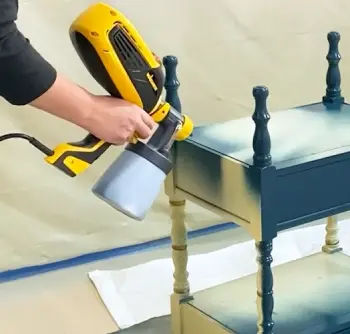
- X-Boost turbine with nine speed settings: I dialed the power higher for thick latex and lower for stain.
The range covers almost every coating I threw at it without forcing me to thin first.
- Two interchangeable nozzles: The iSpray nozzle laid down a roller-like texture on walls and fences. The Detail Finish nozzle gave me the smoother look I wanted on furniture legs and cabinet faces.
- 1.5-quart paint cup: One fill covered a decent stretch of wall or a couple of large doors.
I still refilled on bigger jobs but the size reduced interruptions.
- Adjustable material flow spray width and three patterns: Vertical horizontal and round patterns let me match the surface.
I kept the flow dial around the middle for most latex and opened it more for primers.
- Lock-N-Go split design: I twisted the front end off in seconds rinsed five parts under the faucet and had the gun ready again in about five minutes.
- Sturdy carrying case: Everything stores in one hard shell so the nozzles and cup stay protected between projects.
- Consistent spray performance: Once settings were dialed the pattern stayed even across fences and furniture.
Overspray still needs masking but the core delivery is reliable.
Pros Of The Wagner FLEXiO 3000
- Strong coverage speed on large surfaces: I finished fence sections in a fraction of the time a brush would take. The iSpray nozzle moved paint quickly without leaving thick ridges.
- Reliable power for unthinned coatings: Most latex paints went in straight from the can. That saved me the extra step of measuring thinner and testing viscosity.
- Longer cord for outdoor reach: On a deck job I could walk farther before adding an extension. That small convenience reduced the number of times I stopped to reposition the cord.
- Easy nozzle swap for mixed projects: Switching from the broad iSpray to the Detail Finish took seconds. I used both on the same afternoon when I painted a fence and then touched up a bench.
- Quick Lock-N-Go cleanup: Five parts under the sink and the gun was ready for the next color. I never left paint drying inside overnight.
- Solid value for versatile DIY work: The tool handled walls fences furniture and trim without forcing me to buy a second specialized sprayer.
- Good outdoor performance: The longer cord and solid power made fence and deck jobs straightforward once the area was prepped.
The 3000 rewards you if your projects lean toward larger exterior surfaces and you value the extra cord length. It does the same core jobs as the 3500 with only minor differences in daily handling.
Cons Of The Wagner FLEXiO 3000
- Heavier feel during long sessions: After forty-five minutes of overhead spraying my arm noticed the weight. Breaks became more frequent than with the lighter model.
- Learning curve on trigger technique: You must half-pull the trigger to start the motor before full paint flow. Until that habit sticks you can get small splatters at the start of a stroke.
- Cup size still requires refills on big jobs: A 1.5-quart cup covers a good area but not an entire large room without stopping. I kept a second container of mixed paint nearby.
- Noise level: The turbine runs loud enough that I wore ear protection indoors. Outside the noise is less noticeable.
- Overspray needs careful masking: Like every HVLP unit the fine mist drifts. I spent more time taping and covering floors than I expected on the first indoor job.
- Slight bulk in tight spaces: The standard size made reaching into corners a bit more awkward compared with the compact 3500.
These drawbacks did not stop me from finishing projects yet they shaped how I planned the work. I scheduled shorter sessions and prepared the area more thoroughly.
Key Features Of The Wagner FLEXiO 3500
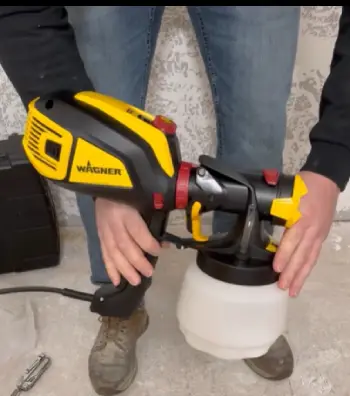
- Same X-Boost turbine and nine speeds: Power feels identical to the 3000.
I sprayed unthinned latex solid stains and primers with no trouble once the dials were set.
- Compact body that is 10 percent lighter: After an hour of cabinet work my wrist and forearm felt less tired.
That difference is real when you hold the full weight of the turbine in your hand.
- Side on/off switch: One-handed operation becomes easier.
I flipped the switch aimed and pulled the trigger without worrying about the initial spit of paint.
- Dual nozzles again: iSpray for broad walls and ceilings.
Detail Finish for the smooth surface I wanted on cabinet doors and trim.
- 1.5-quart cup plus five bonus liners: The liners turned color changes into a two-minute job.
I simply swapped the liner instead of scrubbing every drop of the previous color.
- Full range of adjustments: Flow control width lever and pattern selector sit in the same places.
I could fine-tune for a fine mist on furniture or a heavier coat on rough fencing.
Durable storage case: Identical practicality to the 3000. Everything packs away cleanly.
- Better balance for detail work: The lighter feel helped me keep a steady hand on cabinet edges and trim pieces.
Pros Of The Wagner FLEXiO 3500
- Noticeably lighter and more compact: I could spray cabinet doors for longer stretches without the same wrist fatigue. The balance feels better in the hand.
- On/off switch eliminates start-up splatters: Clean starts every time. That single feature made detailed furniture work more predictable and less messy.
- Bonus cup liners speed color changes: Switching from primer to paint or from one color to another became almost effortless. I kept the liners in the case for quick swaps.
- Same strong performance on unthinned paint: Walls fences cabinets and furniture all received even coats once the settings matched the material.
- Excellent control for fine finishes: With the Detail Finish nozzle and lower material flow I achieved a smooth surface on kitchen cabinets that looked far better than brush marks.
- Practical storage and cleanup: The case and Lock-N-Go system keep the tool ready for the next weekend project. Cleanup still takes only a few minutes.
- Reduced fatigue on multi-hour jobs: The lighter body let me finish more cabinet doors in one sitting without needing as many rest breaks.
Cons Of The Wagner FLEXiO 3500
- Shorter power cord: I always needed an extension cord right from the start. On outdoor jobs that meant one extra step of setup compared with the 3000.
- Still produces overspray: The mist travels. Careful masking remains essential indoors and windy days outdoors force you to wait or move the work.
- Noise remains present: The turbine is just as loud as the 3000. Ear protection is wise for longer indoor sessions.
- Weight is still in the hand: Even though it is lighter than the 3000 the turbine lives in the gun. After several hours you will feel it. Stationary turbine models keep the motor on the floor if arm fatigue is a major concern.
- Price sits a bit higher: You pay for the refinements. The extra cost is reasonable if you spray often but it may feel steep for a one-time project.
- Extension cord dependency: The short cord means you almost never run the tool without an extra length of cable nearby.
None of these cons made the 3500 unusable. They simply reminded me to plan the workspace and take short breaks.
How I Choose Between Them For Real Projects?
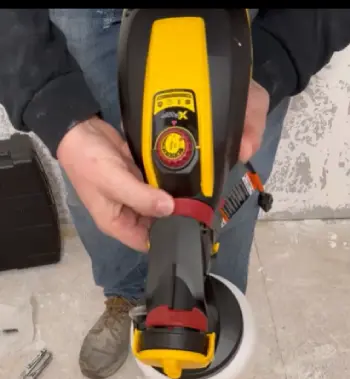
When the job is a large exterior fence or a long stretch of siding I still lean toward the 3000 for the longer cord.
When the work is cabinets furniture or any indoor surface that needs a smoother look and longer continuous spraying the 3500 wins for me.
Both spray unthinned latex successfully on the iSpray nozzle. For the finest cabinet finish I still thin most paints 10 to 20 percent even though the tools do not require it.
That small step improves atomization and reduces the slight texture the iSpray can leave.
I keep both nozzles clean and test the spray pattern on cardboard before every new surface.
Material flow starts low and I increase only until the paint lays on smoothly without runs.
Air power stays in the mid-to-high range for latex. Those habits produce consistent results on either model.
Also Read: Comparison Of Wagner Flexio 4300 And 5000
Frequently Asked Questions (FAQ)
The 3500 is lighter and more compact, adds a side on/off switch for cleaner starts, includes bonus cup liners, and has a shorter cord. The 3000 has a longer cord and lacks the switch.
The 3500 suits most users better for comfort and fewer splatters. Choose the 3000 if you need the longer cord for large outdoor jobs.
Yes. The Detail Finish nozzle delivers a smooth result suitable for kitchen and furniture cabinets when settings are dialed carefully.
No for most latex and stains. Thinning 10-20 percent can improve the finest finishes on cabinets.
Final Thoughts
I set out to compare these two sprayers so you can pick the one that matches the way you actually work. Both deliver fast coverage and solid results without the complexity of a full airless system.
The 3500 edges ahead for everyday comfort and cleaner operation while the 3000 still earns its place when reach matters more than weight.
Whichever you choose spend time on proper masking practice your stroke and clean the tool right after you finish. You will get professional-looking
Recent Posts
I spent months comparing budget options against established names after my last set of tires wore out sooner than expected.My goal here is to share what I learned from putting Dextero and...
AquaTru Carafe Vs. Classic: Which Is Actually Fits Your Kitchen?
I decided to write this comparison after months of testing both the AquaTru Carafe and the Classic in my own kitchen. Tracking covered daily use.Taste stayed consistent. Refill frequency...