
I decided to compare the Wagner FLEXiO 3000 and FLEXiO 4000 after struggling with brush fatigue on a deck and cabinet refinish last summer.
My goal here is to break down which sprayer fits real DIY needs so you can pick the right one without wasting money or time on the wrong tool for your next paint or stain job.
| Feature | Wagner FLEXiO 3000 | Wagner FLEXiO 4000 |
| Design | Handheld | Stationary base with hose |
| Turbine Location | In the unit you hold | On the ground |
| Hose Length | None (self-contained) | 15 ft air hose |
| Weight in Hand | Full unit weight (~8 lbs) | Much lighter gun only |
| Speed Control | Variable X-Boost dial | Variable X-Boost dial |
| Nozzles Included | iSpray + Detail Finish | iSpray + Detail Finish |
| Best For | Smaller projects, portability | Larger surfaces, longer sessions |
| Storage | Hard case typically | Storage bag |
| Unthinned Materials | Yes (latex, stains, etc.) | Yes (latex, stains, etc.) |
| Approx. Coverage Speed | Up to 10x faster than brush | Up to 12x faster than brush |
Understanding The Core Design Difference
I started with the FLEXiO 3000 on a set of outdoor chairs and quickly noticed how the full weight sits in my hand.
That design keeps everything compact. The turbine lives right in the sprayer body, so I can move freely around a room or yard without dragging anything. For quick weekend jobs this felt natural.
The FLEXiO 4000 flips that setup. The turbine stays on the floor or ground and pushes air through a 15-foot hose to a much lighter spray gun.
After an hour of continuous work on a fence, my arm thanked me. The weight stays off my wrist and shoulder. That single change shapes almost every other experience with these two tools.
Key Differences Between The Wagner FLEXiO 3000 And 4000
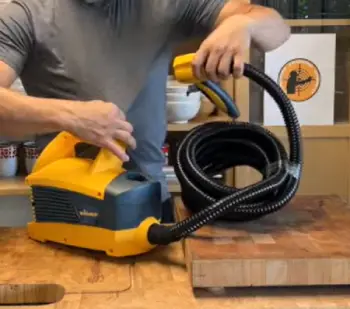
- Handheld versus stationary power source: The 3000 puts the motor in your grip. The 4000 parks it on the ground.
This changes fatigue levels more than any other factor I tested during longer sessions.
- Mobility and reach: With the 3000 I climb a ladder or work in a tight closet freely without extra gear.
The 4000 limits me to the hose length plus power cord so I plan the workspace more carefully.
- Fatigue over time: Short sessions favor the 3000.
Anything past 45 minutes makes the 4000 the clear winner because the gun itself stays light and easy to control.
- Setup and teardown time: The 3000 is grab-and-go. The 4000 needs the hose connected and the base placed before work starts.
Then everything packs into the bag afterward.
- Project scale suitability: Furniture, trim, and small pieces suit the 3000 best. Walls, decks, fences, and full rooms lean toward the 4000 for better comfort.
- Weight distribution: The 3000 carries full unit weight in the hand the entire time.
The 4000 keeps the heavy turbine on the ground so only the light gun stays in your grip.
- Storage footprint: The 3000 fits easily on a shelf or in a small closet.
The 4000 needs space for the base, hose, and bag which takes a bit more room.
These differences show up the moment you start spraying. I learned them the hard way when my forearm cramped halfway through a garage door with the handheld unit.
Key Features Of The Wagner FLEXiO 3000
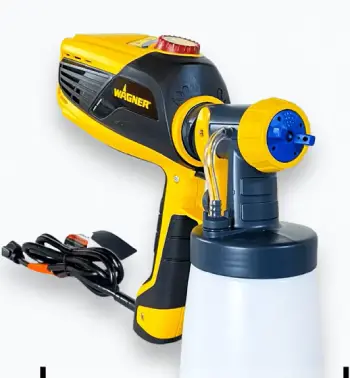
- Variable-speed X-Boost turbine: A dial lets me set air power from low for thin stains to higher for thicker latex.
I rarely thin paint which saves mixing time and keeps the finish consistent.
- Dual nozzle system: The iSpray nozzle covers broad surfaces with a wider pattern.
The Detail Finish nozzle tightens the spray for cabinets and furniture edges so switching takes only seconds.
- Adjustable material flow and pattern: I set flow rate, horizontal or vertical pattern, and width as needed.
On kitchen chairs I drop the flow for spindles and raise it for the seats without stopping.
- Cup capacity and portability: The onboard cup holds enough for most small-to-medium pieces.
I carry the whole unit in one hand and move between rooms easily.
- Cleanup design: Lock-N-Go technology lets me pop the front end off for rinsing.
Cup liners cut mess further if I buy the extras for color changes.
- Compact self-contained body: Everything stays in one unit with no extra hose or base to manage.
This keeps the process simple during work and storage.
- Direct feedback while spraying: Holding the full unit gives clear control and balance.
This helps a lot on detailed furniture work where precision matters.
I used the 3000 on interior trim and outdoor furniture. The control felt precise once I practiced the distance and speed. Overspray stayed manageable indoors with proper masking.
Pros Of The Wagner FLEXiO 3000
- True portability: I carry it upstairs, outdoors, or into a vehicle without extra parts. No hose means fewer trip hazards around the work area.
- Quick start for small jobs: Plug in, fill the cup, set the dial, and spray. It works especially well when I only have an hour after work for a quick project.
- Lower price point: It costs less than the 4000. The entry barrier stays friendly for occasional users who do not need the stationary setup.
- Precise control on detailed work: Holding the full unit gives direct feedback and balance. For furniture legs and spindles I prefer the solid feel in my hand.
- Compact storage: The hard case or smaller footprint fits in a closet or garage shelf easily without taking much space.
- Easy movement between spaces: I switch rooms or floors without reconnecting hoses or moving a base. Setup stays simple and fast every time.
- Good balance for short sessions: The unit feels natural in the hand for furniture and trim work that lasts under an hour. Control stays comfortable throughout.
These advantages make the 3000 a solid choice if most of your projects stay under a few hundred square feet or involve lots of movement.
Cons Of The Wagner FLEXiO 3000
- Arm fatigue on big jobs: After 30 to 40 minutes the weight adds up quickly. My wrist notices it during a full wall section and needs a break.
- Limited continuous runtime comfort: Larger surfaces force more breaks which stretches total project time. The full unit weight becomes tiring over long periods.
- Cup size constraints: Frequent refills interrupt flow on bigger areas. I stop more often than I would with a system that holds more material.
- Heat buildup in the hand unit: The turbine warms the body I hold during use. This becomes noticeable after extended spraying on warm days and adds mild discomfort.
- Less ideal for overhead work: Holding the full weight above shoulder height tires me faster than a lightweight gun. Ceiling or high wall sections feel harder.
- Heavier feel during long sessions: The combined motor and cup weight affects stamina over time. Breaks become necessary sooner than with the stationary model.
- More physical effort on vertical surfaces: Walls and fences demand more arm strength as the session continues. Fatigue builds faster on upright work.
I still reach for the 3000 for furniture and touch-ups, but I plan breaks carefully on anything bigger.
Key Features Of The Wagner FLEXiO 4000
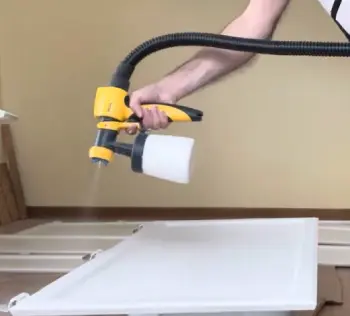
- Stationary X-Boost turbine with 15-foot hose: Power stays strong and consistent while the gun stays light.
I sprayed an entire fence side without arm burn or frequent rest stops.
- Same dual nozzle package: iSpray works well for walls and siding.
Detail Finish handles cabinets and furniture so skills transfer directly from the 3000.
- Full adjustability: Flow control, pattern direction, width, and variable air speed give fine-tuning options.
I match settings to latex one day and solid stain the next with ease.
- Ground-based weight distribution: Long sessions become realistic and far more comfortable.
I finished a large deck railing in one afternoon with almost no shoulder ache.
- Included storage bag and cup liners: The bag keeps the hose and nozzles organized after use.
Five bonus liners speed cleanup between different colors or materials.
- Steady air delivery through the hose: Coverage stays even with fewer stops for rest or adjustment. Large surfaces finish faster and look more uniform.
- Lighter spray gun for better control: The reduced weight improves accuracy on vertical and overhead work. This makes extended spraying much less tiring overall.
On larger surfaces the 4000 shines. The steady air delivery through the hose produces even coverage with fewer stops for rest.
Pros Of The Wagner FLEXiO 4000
- Reduced physical strain: The light gun lets me work longer and more accurately. Shoulder and wrist stay fresher even after hours of spraying.
- Consistent power delivery: Stationary turbine keeps air flow steady even as the cup empties. Results stay even from start to finish on large areas.
- Better for large surfaces: Walls, fences, decks, and siding finish faster with less effort. An 8 by 10 section takes only a few minutes with good technique.
- Organized storage solution: The bag keeps everything together after the job. Parts do not get lost in the garage or mixed with other tools.
- Same material versatility: Unthinned latex, oil-based paints, stains, and urethanes work without thinning in most cases. This saves preparation time.
- Improved comfort on extended jobs: I complete bigger projects in one session without the usual arm fatigue. The lighter gun makes a real difference.
- Steady spray pattern over long periods: The ground-based turbine maintains pressure consistently. Coverage looks professional across large surfaces with fewer adjustments.
The comfort gain alone sold me for bigger projects. Once I experienced the lighter gun I did not want to go back for long sessions.
Cons Of The Wagner FLEXiO 4000
- Hose management: The 15-foot hose can tangle or limit reach in tight indoor spaces. I learn to lay it out carefully before starting to avoid frustration.
- Less portable overall: Moving the base and hose between rooms or floors takes more setup time. The self-contained 3000 is faster and simpler here.
- Higher initial cost: You pay more for the stationary design and longer hose. Budget matters for some buyers who mainly do small projects.
- Base placement needs: The turbine unit needs a stable and dry spot nearby. Uneven ground or wet areas require extra planning when working outdoors.
- Slightly more complex packing: Coiling the hose and fitting everything into the bag adds a few minutes at the end. The handheld unit packs quicker and easier.
- Limited reach without repositioning: The hose length forces me to move the base on very large jobs. Planning the layout becomes important before starting.
- Extra parts to keep track of: Hose, base, and bag add items to manage during storage and transport. The overall package needs more space than the 3000.
These drawbacks matter most if you move frequently between small spaces or store the sprayer in a tight spot.
Real-World Performance On Different Projects
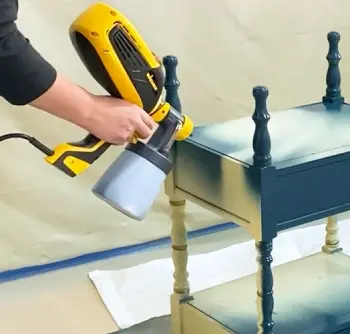
I tested both on similar materials. For a set of six dining chairs the 3000 felt perfect.
I switched to the Detail Finish nozzle, dialed the speed down, and moved around each piece freely. Cleanup took under ten minutes with warm water and the Lock-N-Go front end.
On a 40-foot privacy fence the 4000 changed the game. The light gun let me keep a steady distance and overlap. I finished one side in a single afternoon with far less fatigue. The iSpray nozzle laid down even coats of solid stain without thinning.
Interior walls showed similar patterns. The 3000 worked fine for a small powder room. The 4000 handled a full bedroom with less rest time needed.
Both produced professional-looking results once I practiced the proper 6-to-8-inch distance and 30 percent overlap.
Noise levels stay comparable. Both turbines hum at a level that calls for ear protection during long sessions.
Overspray exists with any HVLP unit, so proper masking and drop cloths remain essential regardless of model.
Maintenance And Longevity Observations
Both sprayers reward regular cleaning. I flush the nozzle and cup immediately after each use. Leaving paint to dry inside creates clogs that take longer to clear later.
The Lock-N-Go system on both makes disassembly straightforward.
Filters need occasional checks. Dusty outdoor work clogs them faster. Replacement parts stay available and reasonably priced. After multiple seasons the turbines on both units still deliver solid power when cleaned properly.
Storage matters.
The 3000’s compact form slips onto a shelf. The 4000’s bag keeps the hose from developing kinks if coiled correctly. I hang the hose loosely rather than tight coils to preserve flexibility.
Who Should Choose Which Model?
If you mainly refinish furniture, cabinets, trim, or small outdoor pieces and value grab-and-go convenience, the FLEXiO 3000 fits well. Its lower cost and portability match occasional or detailed work.
If your projects often include walls, fences, decks, siding, or any surface that takes more than an hour of continuous spraying, the FLEXiO 4000 pays for itself in reduced fatigue and steadier results. The lighter gun improves control over long stretches.
Many households end up preferring one primary tool. I keep the 3000 for quick indoor detail work and pull the 4000 for exterior seasons. Budget and most common project type should guide the first purchase.
Also Read: Comparison Of Wagner Flexio 2500 And 3500
Frequently Asked Questions (FAQ)
The 3500 is a handheld unit with variable speed and dual nozzles. The 4000 uses a stationary turbine base and 15-foot hose for lighter handling on bigger jobs.
It depends on your projects. The 3000 or 3500 suits portable detail work. The 4000 or 5000 works better for larger surfaces and longer sessions.
Both are handheld with dual nozzles. The 3500 offers a lighter updated design and similar variable-speed control for reduced fatigue.
Both are stationary. The 4000 includes a 15-foot hose and storage bag. The 5000 has an 11.5-foot hose and an integrated storage case.
Final Thoughts
I began this comparison because I wanted clear answers for my own projects and for anyone facing the same decision.
The FLEXiO 3000 delivers solid performance in a portable package that works well when you need to move around or tackle smaller pieces.
The FLEXiO 4000 trades some of that mobility for comfort and stamina on bigger jobs.
You now have the side-by-side details, real-use observations, and practical pros and cons to match either sprayer to the work you actually do.
Pick the one that fits your most common project size and your tolerance for holding weight, then get the paint flowing.
Recent Posts
I spent months comparing budget options against established names after my last set of tires wore out sooner than expected.My goal here is to share what I learned from putting Dextero and...
AquaTru Carafe Vs. Classic: Which Is Actually Fits Your Kitchen?
I decided to write this comparison after months of testing both the AquaTru Carafe and the Classic in my own kitchen. Tracking covered daily use.Taste stayed consistent. Refill frequency...