
I spent months testing Zojirushi rice cookers in my own kitchen to settle the induction versus Micom question for myself.
My goal here is to walk you through the real differences in heating, texture, features, and daily use so you can decide which one fits your cooking habits and budget without guesswork.
| Feature | Zojirushi Micom | Zojirushi Induction (IH + Micom) |
| Heating method | Bottom electric heating element controlled by microcomputer | Electromagnetic induction heats the entire inner pot |
| Temperature control | Fuzzy logic adjusts time and heat based on sensors | Faster response and more precise adjustments across the whole pan |
| Heat distribution | Good, but can show slight unevenness in larger batches | Highly even from bottom, sides, and lid |
| Typical white rice time | 45–60 minutes including soak and steam | Comparable total time, cleaner transitions between phases |
| Rice texture | Soft, consistent, reliable everyday results | Fluffier, more uniform grains with better separation |
| Special settings | White, brown, sushi, porridge, cake, steam on many models | Often adds GABA brown, jasmine options, softer/harder white rice |
| Price range | More affordable | Higher |
| Weight and size | Lighter and often more compact | Heavier due to induction coils |
| Energy use | Generally lower | Slightly higher during active heating |
| Best for | Budget-conscious daily cooks, smaller households | Texture perfectionists, frequent brown rice or specialty grain users |
Key Differences Between The Zojirushi Induction And Micom
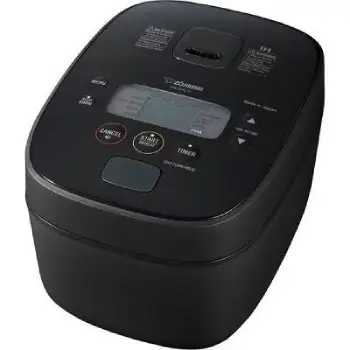
- Heating technology and response time: Micom uses a traditional bottom heating plate paired with a microcomputer that watches sensors and adjusts the cycle.
The element has some lag when ramping up or cooling. Induction turns the cooking pan itself into the heat source through magnetic fields, so temperature changes happen almost instantly and the cooker follows the ideal soak-boil-steam path more cleanly.
- Evenness of cooking: Micom heat starts at the bottom and rises, which can leave larger batches with a denser base or firmer top layer.
Induction surrounds the pot so every grain receives heat from more directions at once.
I noticed clearer grain separation and fewer hard centers especially with short-grain and brown rice.
- Price and long-term value: Micom models cost less up front and still deliver reliable everyday rice. Induction carries a higher price because of the coil system and thicker pans.
If you cook rice nearly every day and care about consistent texture across grain types, the extra cost shows in the results.
For occasional use Micom usually feels like the better value.
- Power draw and kitchen footprint: Induction units pull more watts during active cooking and weigh more due to the coils.
Micom stays lighter and easier to move or store.
Both share the same automatic keep-warm and timer functions that fit busy schedules.
Key Features Of Zojirushi Micom Rice Cookers
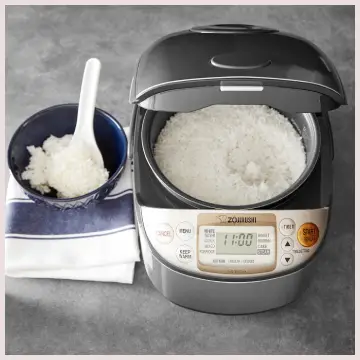
- Microcomputer fuzzy logic control: Sensors track temperature and adjust cooking length on the fly.
This compensates for small differences in water ratio or room temperature so the rice rarely turns out mushy or underdone.
- Multiple menu settings: Most models handle white rice, brown rice, sushi, porridge, sweet rice, quick cook, and often cake or steam.
Some include a steamer basket that expands the cooker beyond plain rice.
- Automatic keep-warm and extended keep-warm: Rice stays ready for hours without drying out too quickly.
Extended mode stretches that window further for households that eat at staggered times.
- Delay timer and reheat: You can set the cooker in the morning and come home to fresh rice.
The reheat cycle brings leftover rice back to serving temperature without turning it dry or hard.
- Durable nonstick inner pan: Easy to clean and built to last through years of daily use when you stick to the included spatula and avoid metal utensils.
Pros Of Zojirushi Micom Rice Cookers
- Lower purchase price: It remains accessible for most households while still delivering reliable fuzzy-logic results without stretching into premium territory.
- Lighter weight and easier storage: Useful when counter space is tight or you need to move the cooker between rooms.
- Solid everyday performance: White rice, brown rice, and porridge come out consistently good. For casual cooks this level of quality is more than enough.
- Versatile extra functions: Cake and steam settings expand what you can do beyond plain rice without buying another appliance.
- Lower energy use: The simpler heating system draws less power during typical cycles compared with induction.
Cons Of Zojirushi Micom Rice Cookers
- Slightly less even heat in larger batches: Top layers can lag behind the bottom when you fill the pot near capacity, especially with denser grains.
- Less responsive temperature changes: The heating element takes longer to adjust, so the cooking curve is smoother but not as precise as induction.
- Fewer specialized texture options: You miss the finer white-rice hardness settings and advanced GABA programs found on many induction models.
- Results with premium short-grain or brown rice feel good rather than exceptional: The difference becomes clear when you taste side-by-side with an induction unit.
Key Features Of Zojirushi Induction Rice Cookers
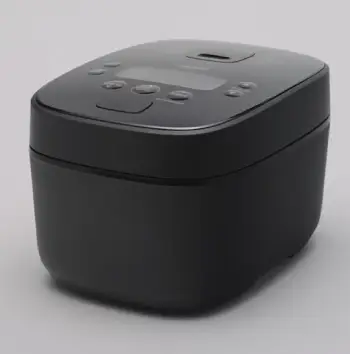
- Induction heating combined with Micom: The pan itself generates heat, giving higher peak temperatures and tighter control.
Triple heaters on the bottom, sides, and lid keep the entire contents at the target temperature more evenly.
- Expanded texture options: Many models let you choose regular, softer, or harder white rice.
GABA brown rice settings use a longer warm soak to develop beneficial compounds. Jasmine and mixed rice programs appear more often on these units.
- Precise phase transitions: The cooker holds the exact temperature needed for soaking, drives a vigorous boil for full starch gelatinization, then settles into gentle steaming.
The result is fluffier grains that stay separate yet sticky enough for Japanese-style meals.
- Automatic keep-warm, extended keep-warm, and timer: Same convenience features as Micom, often with slightly better moisture retention because residual heat stays more balanced.
- Heavier-duty construction: Thicker pans and induction-compatible coatings help the system perform at its best.
Some higher models add platinum-infused nonstick surfaces that interact with water during soaking for a subtly sweeter finish.
Pros Of Zojirushi Induction Rice Cookers
- Superior evenness and texture: Every grain cooks more uniformly. Short-grain white rice becomes fluffier and brown rice more tender without turning mushy.
- Faster, more accurate temperature response: The system follows the ideal cooking curve closely, which matters for the soaking, boiling, and steaming phases.
- Broader menu and texture control: Softer or harder white rice, GABA brown, and extra specialty programs give you more ways to match the rice to the meal.
- Better long-term consistency: Once you dial in water ratios, results stay predictable across different rice brands and seasons.
- Enhanced keep-warm performance: Residual heat stays more balanced, so rice held for several hours retains better moisture and flavor.
Cons Of Zojirushi Induction Rice Cookers
- Higher price tag: The jump from Micom can feel steep if you only cook rice a few times a week.
- Heavier and bulkier: The induction coils and reinforced pan add weight, making the unit less portable and taking more counter space.
- Slightly higher power draw: Active cooking phases consume more electricity even though total cook times remain similar.
- Overkill for simple needs: If your main use is plain white rice for one or two people, the extra precision may not justify the cost.
Real Kitchen Experience With Both
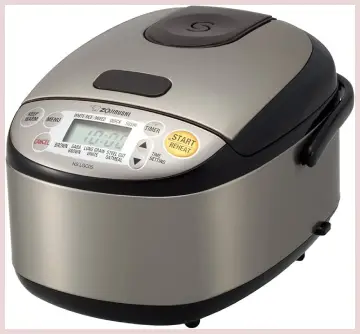
I started with a Micom model because the price felt right and the reviews were strong.
White rice came out soft and sticky, brown rice was chewy without being tough, and the keep-warm function meant dinner stayed ready even when schedules slipped.
After a few months I borrowed an induction unit from a friend who cooks Japanese rice almost daily.
The first batch of short-grain stopped me mid-bite. The grains were more distinct yet still cohesive, the surface had a gentle sheen, and the flavor tasted cleaner.
Brown rice showed an even bigger gap with more tender centers and less of the dry outer layer I sometimes got with Micom.
Cook times stayed roughly the same. What changed was the quality of the heat path. Induction never left a dense bottom layer or a firmer top.
When I made sushi rice the difference showed in how evenly the vinegar seasoning coated every grain.
GABA brown rice on the induction model developed a mild sweetness and softer texture that the standard brown setting on Micom could not match.
Noise levels are similar on both. Both click and beep politely at the right moments. Cleaning stays easy as long as you avoid metal utensils.
The nonstick coating lasts years if you rinse the pan soon after use and wipe the lid gasket regularly.
I found myself reaching for the induction unit more often once I tasted the improvement, yet I still appreciate the Micom for its lighter feel and lower cost when I need a second cooker or travel with one.
Who Should Choose Micom?
If you cook rice a few times a week, mostly white or standard brown, and want reliable results without a big investment, Micom is the practical pick.
It handles family dinners, meal-prep batches, and the occasional porridge or cake with ease.
Smaller apartments or kitchens that need a lighter appliance also favor Micom. You still get the signature Zojirushi keep-warm reliability and fuzzy-logic safety net that prevents most common mistakes.
For many households this level of performance is exactly what they need day after day.
Who Should Choose Induction?
If rice is a centerpiece of most meals, if you buy premium short-grain or experiment with different textures, or if brown rice and GABA options matter to you, induction rewards the extra cost.
The even heat and precise control turn ordinary rice into something closer to restaurant quality.
Households that leave rice on keep-warm for long stretches also benefit from the more balanced residual temperature.
Once you taste the difference a few times it becomes hard to go back to standard heating. The upgrade feels most worthwhile when rice appears on the table almost every day.
How Capacity And Model Lines Fit Into The Decision?
Both technologies appear in 3-cup, 5.5-cup, and 10-cup sizes. The 5.5-cup versions cover most couples and small families comfortably.
Larger households lean toward the 10-cup models for bigger batches. Within each technology the exact menu list varies by series, so check the specific functions that matter most to you—GABA, softer or harder white rice, or a steamer basket—before buying.
Higher-end induction units sometimes add pressure cooking on top of IH and Micom, but that is a separate category with its own trade-offs in complexity, weight, and price.
Matching capacity to your typical portion size keeps either type performing at its best.
Maintenance And Longevity Tips That Apply To Both
Rinse the inner pan after every use and dry it thoroughly. Wipe the heating plate or induction surface and the inner lid gasket so residue does not build up.
Use only the plastic or wooden spatula that comes with the cooker. Avoid abrasive scrubbers that can scratch the nonstick surface. Both systems are built to last many years when treated this way.
The main wear item is the nonstick coating, which stays intact longer if you never scrape it with metal and clean it while it is still warm.
Regular attention to the gasket and steam vent also prevents odors and keeps the lid sealing properly over time.
Also Read: Comparison Of Zojirushi Induction And Neuro Fuzzy
Frequently Asked Questions (FAQ)
It depends on your priorities. For most people a mid-range Micom delivers excellent everyday rice at a fair price. Texture-focused cooks usually prefer an IH model in the same capacity.
Zojirushi’s top pressure induction heating models with AI learning sit at the peak of the lineup for those who want maximum customization and flavor.
Pressure versions reach higher temperatures for softer, sweeter rice that reheats especially well, but they cost more, weigh more, and add cleaning steps for the pressure components. Straight induction already gives outstanding evenness without the extra complexity.
Occasional nonstick wear after years of use, steam residue on the lid if not wiped, and the long cook times that surprise first-time owners. Proper care prevents most issues.
Final thoughts
I started this comparison because I wanted rice that tasted better without turning dinner into a project.
After living with both technologies I can tell you the Micom models are outstanding workhorses that will make most of you happy for years.
If you decide the extra evenness and finer control of induction matter to your daily meals, you will notice the upgrade every time you lift the lid. Whichever path you take, measure your rice and water carefully the first few times, trust the automatic cycles, and enjoy the consistent results that made these cookers popular in the first place.
You now have the practical differences laid out so the decision matches how you actually cook.
Recent Posts
● Interactive 5-Zone Interior & Exterior Paint Blueprint Paint Coverage Calculator: Gallons, Primer, Square Footage & Cost Tap any architectural surface zone on the blueprint...
If you want smooth, shiny hair without spending a fortune on a premium styling tool, the Ella Bella hair dryer may be worth considering.In these Ella Bella hair dryer reviews, I’ll look...