
If you’re someone who enjoys hosting guests, upgrading your kitchen presentation, or simply making everyday meals feel a bit more special, the Bambusi charcuterie board is honestly worth your attention.
I bought it expecting just a basic serving board, but what I got felt more like a lifestyle upgrade than a kitchen tool.
In this review, I’ll share my real experience, comparisons, pros, and what you should know before buying it.
My First Experience With The Bambusi Charcuterie Board
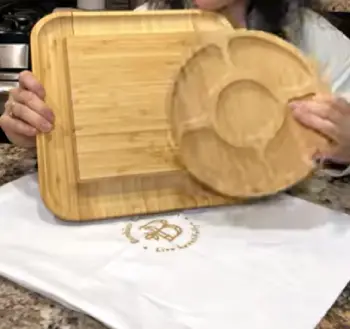
When I first unboxed the Bambusi charcuterie board, my immediate impression was how solid and thoughtfully designed it felt.
I wasn’t dealing with something flimsy or overly polished in a fake way. It had that natural bamboo texture that already made me think, “Okay, this is going to look great on a table.”
I used it first for a small weekend gathering—nothing fancy, just cheese, fruits, crackers, and a few dips.
But here’s the interesting part: the board itself became the centerpiece, not just a background item.
My guests naturally gathered around it. I didn’t even have to “present” it—it just worked.
The built-in compartments made arranging food surprisingly easy. I didn’t have to overthink placement. Cheese on one side, fruits in another, nuts and olives in the smaller sections—it all just made sense.
I also noticed that food didn’t slide around easily, which is something I’ve struggled with on flatter boards.
Cleaning it afterward was also smoother than I expected. I wiped it down with a damp cloth, and it didn’t absorb stains or odors like cheaper wooden boards I’ve used before. That alone made me trust it more for long-term use.
What stood out most to me was how it made even a simple snack feel intentional. You know that feeling when something small makes you feel like you’ve put effort into hosting without actually working too hard? That’s exactly what happened here.
Design And Build Quality That Actually Matters
The Bambusi board is made from bamboo, but what surprised me is how refined the finishing feels. It doesn’t have that rough, splinter-prone surface you sometimes get with budget boards.
The edges are smooth, the compartments are well-defined, and the overall shape feels balanced. It sits flat on the table without wobbling, which sounds basic but actually matters when you’re serving multiple items.
I also appreciate that it doesn’t feel overly heavy. It’s sturdy, yes, but still easy to move around even when fully loaded. That balance between weight and usability is something I didn’t expect to care about until I started using it regularly.
Pros Of Bambusi Charcuterie Board
When I look back at my experience with the Bambusi charcuterie board, the positives are not just surface-level—they actually show up in real use, especially when hosting or preparing food for others.
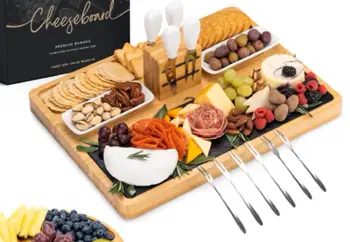
- Strong, Reliable Bamboo Build
One of the first things I noticed is how solid the board feels. It’s made from bamboo, which is known for being both lightweight and durable.
In practice, that means I can carry it fully loaded without feeling like I’m balancing something fragile.
At the same time, it doesn’t feel cheap or hollow.
Bamboo as a material also resists warping better than many softwoods when properly maintained. That matters because I’ve used boards before that started bending after repeated washing. With Bambusi, I haven’t seen that issue so far.
- Naturally Clean and Low Maintenance Feel
What I appreciate most is how easy it is to keep clean. After serving cheese, fruits, and dips, I just wipe it down and it’s ready again.
It doesn’t hold onto strong smells easily, which is a huge plus if you’ve ever dealt with lingering garlic or cheese odors.
I also don’t need to obsess over special cleaning routines. Mild soap, water, and drying are enough. That simplicity makes me actually want to use it more often instead of treating it like a “special occasion only” item.
- Smart Layout That Improves Presentation
The built-in compartments are not just decorative—they genuinely help structure your food. Instead of everything mixing together, I naturally started organizing items: cheeses in one section, fruits in another, nuts and crackers separated neatly.
This small design choice changes the entire presentation. Even basic snacks suddenly look like something prepared for guests.
I didn’t realize how much structure matters until I used this board regularly.
- Great for Hosting and Social Settings
I’ve noticed something interesting whenever I use it—people naturally gather around it.
It becomes a focal point at the table without me trying to “present” anything. That’s a big win if you enjoy hosting but don’t want to spend too much time styling food.
It also creates a more relaxed, shared eating experience. Everyone feels like they can just reach in and pick what they want.
- Eco-Friendly Material Choice
Another positive is that bamboo is a renewable material. It grows quickly compared to hardwood trees, which makes it a more environmentally conscious option.
That’s not just marketing talk—it actually influences how I feel about using it regularly.
- Lightweight but Stable Design
It strikes a balance between being easy to carry and stable on the table. Some heavier boards feel premium but are annoying to move. Some lighter ones feel unstable. This sits right in the middle, which works well in everyday use.
Cons Of Bambusi Charcuterie Board
Now, no product is perfect, and Bambusi has a few limitations that are worth understanding before buying.
These are not dealbreakers for me personally, but they do matter depending on your expectations.
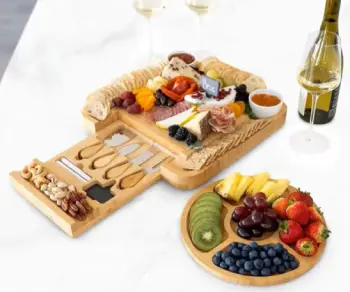
- Not a Premium Hardwood Feel
If you’re expecting a thick, luxury hardwood board with deep grain patterns, this will feel more simple and uniform.
Bamboo has a cleaner, more modern look, but it doesn’t have the rich, natural variation you get from woods like walnut or acacia.
I’ve also noticed that some people prefer that “rustic luxury” feel for charcuterie boards. Bambusi leans more toward functional minimalism rather than artistic wood character.
- Can Show Wear Over Long-Term Heavy Use
While it holds up well in normal use, bamboo boards in general can show surface marks over time, especially if used aggressively. Light scratches from utensils or knives may appear if you’re not careful.
I personally avoid using it as a cutting board to prevent this issue, but if someone uses it heavily for chopping, it won’t stay flawless forever.
- Requires Proper Drying Discipline
This isn’t a “use and forget” item. Like most bamboo boards, it needs to be dried properly after washing. If you leave it damp or store it improperly, it can eventually affect the structure or finish.
I learned quickly that just wiping it isn’t enough—you need to let it fully air dry before putting it away.
- Not Ideal for Heavy Knife Work
Even though bamboo is strong, it is also quite dense. That means it can be harder on knife edges compared to softer hardwoods. Over time, this can contribute to faster dulling of blades.
For me, this wasn’t a big issue because I only use it for serving, but it’s something to keep in mind if you’re planning to use it for food prep.
- Design Is Functional, Not Luxury-Oriented
The compartments and layout are practical, but they don’t scream luxury. If someone is looking for a highly decorative centerpiece with intricate wood patterns, this may feel too simple.
It looks clean and modern—but not extravagant.
- Limited Flexibility in Use Cases
While it works great as a charcuterie and serving board, it’s not very versatile beyond that. Some boards can double as cutting boards, baking surfaces, or decorative trays. This one is mainly designed for serving.
That specialization is good for purpose—but limiting if you want one board to do everything.
Maintenance Tips For Bambusi Charcuterie Board
- Clean Immediately After Use
One of the simplest but most important habits I follow is cleaning the board right after use. When cheese, fruit juices, or dips sit too long on bamboo, they can slowly stain or leave marks that are harder to remove later.
I usually just wipe it down within a few minutes of finishing a meal. If I leave it overnight, even once in a while, I notice it takes slightly more effort to clean the next time.
So now I treat it like a quick “after-use rinse” habit rather than something I delay.
- Use Mild Soap and Avoid Harsh Chemicals
This board doesn’t need strong cleaners. In fact, harsh detergents or chemical sprays can strip away the natural feel of bamboo over time.
What works best for me is simple: a soft sponge, warm water, and a small drop of mild dish soap. That’s it. I avoid anything abrasive because it can dull the surface or leave uneven patches.
If there’s a stubborn spot, I just let warm water sit on it for a few seconds instead of scrubbing aggressively.
- Never Soak the Board in Water
This is one mistake I made early on with wooden boards in general—leaving them in the sink. With bamboo, soaking is unnecessary and can slowly affect its structure.
Now I clean it quickly and keep water exposure short. I don’t let it sit in a bowl or sink full of water. Even a few extra minutes of soaking can be avoided, and that helps preserve its shape and durability.
- Dry It Completely Before Storing
This is probably the most underrated maintenance step. After washing, I always let the board air dry fully before putting it away.
I usually stand it upright so air can circulate on both sides. If I store it while even slightly damp, I notice a faint odor or moisture feel later on. It’s not dramatic, but it’s avoidable.
Good airflow is key here. I don’t rush this step anymore because it directly affects longevity.
- Apply Food-Safe Mineral Oil Occasionally
Every few weeks, I give the board a light oil treatment using food-safe mineral oil. This helps maintain the bamboo’s smooth surface and prevents it from drying out.
I don’t overdo it—just a thin layer applied with a soft cloth, then I let it absorb overnight. The next day, it looks refreshed and slightly richer in tone.
This step also helps reduce small surface cracks over time, especially if you live in a dry indoor environment or use the board frequently.
Comparison Of Bambusi Charcuterie Board With Other Brand
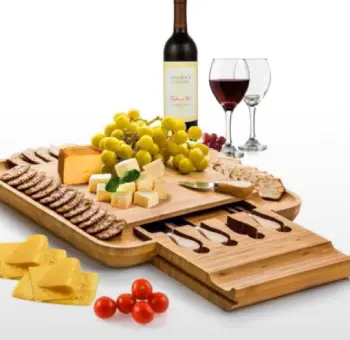
- Bambusi vs Totally Bamboo Boards
When I compare Bambusi to other bamboo boards I’ve owned, including similar styles from brands like Totally Bamboo, the difference comes down to structure and usability.
Totally Bamboo boards often feel more like general-purpose cutting boards that can also be used for serving.
Bambusi, on the other hand, feels intentionally designed for presentation. The compartments alone change how you prepare food.
Instead of just placing items randomly, you start thinking in sections, which makes everything look more organized.
Durability-wise, both hold up well, but Bambusi feels slightly more refined in finish quality, especially in how it resists staining over time.
- Bambusi vs Ironwood Gourmet Boards
Comparing Bambusi to Ironwood Gourmet boards is interesting because Ironwood tends to focus heavily on dense hardwood construction.
Ironwood boards feel more premium in weight and density, and they definitely give a luxury kitchen vibe. However, they usually don’t come with the same functional compartment layout.
That’s where Bambusi wins for me—it’s more practical for actual hosting rather than just display.
If you’re someone who prioritizes aesthetic thickness and a heavy wood feel, Ironwood might appeal more. But if you care about organization and ease of serving, Bambusi feels more user-friendly.
- Bambusi vs Acacia Wood Style Boards
Many acacia boards on the market, like those from various acacia-focused kitchen brands, look visually striking. The grain patterns are rich and eye-catching. But in real use, I’ve noticed mixed performance.
Compared to those, Bambusi feels more consistent in quality and easier to maintain. Acacia boards sometimes require more oiling and careful upkeep to avoid dryness or cracking. Bambusi bamboo boards are more forgiving in everyday use.
Where acacia may win in visual luxury, Bambusi wins in practicality and low-maintenance usability.
Frequently Asked Questions (FAQ)
Yes, bamboo is durable, lightweight, and resistant to moisture, making it a strong choice for serving boards.
It means choosing 3 meats, 3 cheeses, and 3 accompaniments for a balanced board.
Avoid overly wet foods, strong-smelling leftovers, messy sauces, unbalanced portions, and overcrowding.
A good board is one that balances durability, size, and presentation—bamboo and hardwood options are both popular.
Wrapping Up
If you want a charcuterie board that makes hosting easier, looks great without effort, and stays low-maintenance, Bambusi is a strong choice in my experience.
It’s not just about serving food—it changes how you present and share it with others.
For me, it’s become a regular part of how I host and enjoy small gatherings.
Recent Posts
● Interactive 5-Zone Interior & Exterior Paint Blueprint Paint Coverage Calculator: Gallons, Primer, Square Footage & Cost Tap any architectural surface zone on the blueprint...
If you want smooth, shiny hair without spending a fortune on a premium styling tool, the Ella Bella hair dryer may be worth considering.In these Ella Bella hair dryer reviews, I’ll look...