
If you’ve been told by your doctor to start monitoring your blood pressure at home and you’re staring at a wall of options that all look vaguely similar but carry wildly different price tags, the Beurer Blood Pressure Monitor deserves serious attention before you make your decision. I’ve been using it consistently for months as part of my daily health management routine, and I’m ready to walk you through everything — the accuracy, the usability, the features, and whether it justifies its position in the market. You can find Beurer Blood Pressure Monitors on Amazon, Walmart, Best Buy, and the official Beurer website — and based on my experience, they’re absolutely worth your consideration.
My Experience With Beurer Blood Pressure Monitor
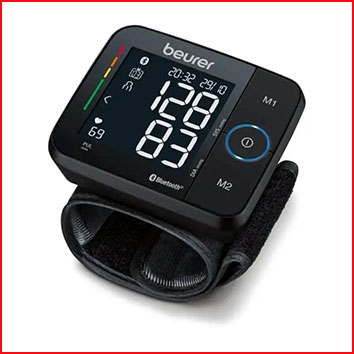
Let me give you the full picture of why I ended up with a Beurer in the first place.
I was diagnosed with borderline hypertension during a routine checkup about a year ago, and my doctor recommended that I start monitoring my blood pressure at home to give us both a clearer picture of what my numbers looked like outside of the clinical environment — where, as many people experience, the act of being in a doctor’s office can temporarily elevate your readings in a phenomenon commonly called white coat hypertension.
The instruction to monitor at home sounds simple until you actually start researching home blood pressure monitors and realize that the options range from inexpensive devices of questionable accuracy to clinical-grade machines that cost more than some medical procedures.
I needed something that was clinically validated, genuinely accurate, easy enough to use every single day without it becoming a source of stress or confusion, and priced reasonably for a device I’d be using indefinitely as part of managing my health.
A colleague who works in cardiology mentioned Beurer during a conversation about home health monitoring — not in a sales context, but as a matter-of-fact recommendation from someone who understood the clinical accuracy standards that matter in this category.
That single professional endorsement carried more weight with me than any advertising could have.
My first reading matched the reading I’d received at my doctor’s office three days earlier within a margin that immediately reassured me about the device’s accuracy.
That correlation between home readings and clinical readings has remained consistent throughout my months of use, which is ultimately the single most important performance criterion for any blood pressure monitor regardless of how many features it offers.
I take readings twice daily — once in the morning before eating or drinking anything and once in the evening — as my doctor recommended. The Beurer stores all of these readings with timestamps in its memory, and I can review trends over time without needing to manually record every result in a separate notebook, which was the tedious system I’d attempted with a cheaper monitor I’d tried before switching to Beurer.
The irregular heartbeat detection feature has also provided genuine value beyond simple blood pressure measurement. On two occasions during my monitoring period, the device flagged potential irregular heartbeat patterns during readings, which prompted me to mention them to my doctor and resulted in an ECG that provided useful additional information about my cardiovascular health picture.
What has impressed me most throughout this entire period of daily use is the consistency. Morning after morning and evening after evening, the Beurer delivers readings that feel reliable — not wildly variable in ways that make you question whether the device or your actual blood pressure is responsible for the number on the screen.
That trust — earned through consistency, accuracy, and reliability over months of real-world daily use — is the most meaningful endorsement I can offer for any health monitoring device.
Read More: My Experience with Beurer Blood Pressure Monitor
Pros Of Beurer Blood Pressure Monitor
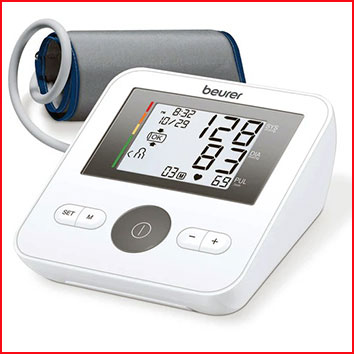
- Clinically Validated Accuracy: Beurer monitors undergo independent clinical validation testing according to recognized international standards, and in my daily use the readings have consistently correlated with clinical measurements taken at my doctor’s office within acceptable variance margins.
- Large, Easy-To-Read Display: The display is genuinely large and the digits are sized and contrasted in a way that makes readings immediately readable without needing to bring the device close to your face or adjust lighting conditions in the room.
- Irregular Heartbeat Detection: The built-in arrhythmia detection feature monitors for potential irregular heartbeat patterns during each measurement and flags them with a clear indicator — a clinically meaningful feature that adds real health monitoring value beyond blood pressure numbers alone.
- Generous Memory Storage Capacity: The device stores a substantial number of readings with timestamps across multiple user profiles, which means you can track your own patterns over time and bring a meaningful data history to doctor appointments rather than relying on memory.
- Multiple User Profile Support: Many Beurer models support two or more individual user profiles on a single device, making it genuinely practical for couples or households where more than one person needs regular blood pressure monitoring.
- WHO Blood Pressure Classification Display: The device visually indicates where your reading falls on the World Health Organization’s blood pressure classification scale, which provides immediate context for your numbers without requiring you to memorize the ranges or consult a reference chart after every reading.
- Comfortable And Universally Sized Cuff: The cuff is designed to fit a wide range of arm circumferences comfortably, and the fit indicator feature on some models tells you whether the cuff is positioned correctly before the measurement begins.
- Automatic Cuff Inflation And Deflation: The fully automatic inflation system removes the need for any manual pumping or adjustment during the measurement process, which reduces user error and makes the experience genuinely accessible for elderly users or those with limited hand dexterity.
- Bluetooth Connectivity For App Integration: Many Beurer models include Bluetooth connectivity that syncs your readings to the Beurer Health Manager app on your smartphone, creating a more sophisticated tracking and visualization experience than the device’s onboard memory alone provides.
- Averaging Function For Clinical Accuracy: The morning average and evening average calculation function automatically averages consecutive readings according to clinical measurement protocols, which produces more statistically reliable data than relying on any single individual measurement.
Cons Of Beurer Blood Pressure Monitor
- Higher Price Point Than Entry-Level Alternatives: Beurer monitors cost more than the most basic blood pressure monitors available from generic brands, which represents a meaningful upfront investment for budget-conscious buyers who are uncertain whether home monitoring will become a sustained habit.
- App Interface Could Be More Intuitive: The Beurer Health Manager app, while functional and data-rich, has a user interface that feels less polished and modern than competing health apps from brands that have invested more heavily in the software side of their health monitoring ecosystem.
- Cuff Positioning Learning Takes Initial Effort: Getting consistent cuff placement right from the start requires some initial attention to the positioning guidelines — readings taken with inconsistent cuff placement show more variance than properly positioned measurements, which can create confusion for new users.
- Device Display Doesn’t Show Reading History: The onboard device display only shows current and recent readings rather than a visual trend graph — for trend analysis beyond simple number comparison you need to use the smartphone app or manually review the stored memory entries.
- Some Models Lack USB Charging: Certain Beurer models still rely on standard replaceable batteries rather than offering a rechargeable USB option, which is a convenience gap compared to some modern competitors that have transitioned their entire monitor lineup to rechargeable battery systems.
- Bluetooth Connection Can Occasionally Drop: Some users report that the Bluetooth sync to the app isn’t always seamless, occasionally requiring the connection to be re-established when the app and device haven’t communicated for a period of time between reading sessions.
- Limited Color And Design Options: Beurer monitors prioritize clinical functionality over aesthetic variety, and the design language is clinical rather than lifestyle-oriented — which suits most users but may feel utilitarian to buyers who prefer health devices that integrate visually into a modern home environment.
- Instruction Manual Is Text-Heavy: While the manual is written in accessible language, it is predominantly text-based rather than using diagrams and visual guides throughout, which can make finding specific information during setup slightly more time-consuming than a more visually organized guide would allow.
Maintenance Tips For Beurer Blood Pressure Monitor
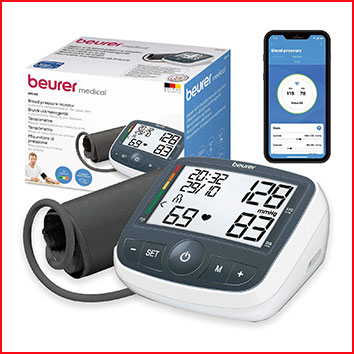
Clean The Cuff Regularly With A Damp Cloth: The cuff comes into skin contact at every single reading, and perspiration, skin oils, and environmental dust accumulate on its surface over time.
Wiping it down with a slightly damp cloth every week — and ensuring it dries completely before storage — keeps it hygienic and prevents material degradation from prolonged contact with skin moisture.
Store The Device Away From Extreme Temperatures: Blood pressure monitors contain sensitive pressure sensors and electronic components that can be affected by prolonged exposure to extreme heat or cold.
Keep your Beurer in a room-temperature environment away from direct sunlight, heating vents, or cold window ledges that would expose it to temperature extremes during storage.
Replace Batteries Before They Deplete Completely: Waiting until the low battery indicator appears and then continuing to use the device for additional readings risks inaccurate measurements as power levels become insufficient to drive proper cuff inflation.
Replace batteries promptly when the indicator first appears rather than trying to extend battery life through a few more measurement sessions.
Wrap The Cuff Properly For Storage: Folding the cuff carefully rather than crumpling or rolling it tightly preserves the internal bladder integrity and the external fabric over the long term. Most Beurer devices come with a storage case — using it consistently protects both the cuff and the monitor body from the casual damage that occurs when devices are stored loosely in drawers with other objects.
Keep The Device Away From Electromagnetic Interference Sources: Blood pressure monitors can be affected by strong electromagnetic fields from devices like mobile phones, microwave ovens, and other electrical equipment placed immediately adjacent during measurement.
Take measurements at least one meter away from strong electromagnetic sources for the most consistent and reliable readings during every session.
Check The Cuff Tube Connection Periodically: The connection between the cuff tube and the monitor body should be checked periodically to ensure it remains firmly seated.
A loose connection causes air leakage that results in failed measurements or inaccurate readings, and the fix is usually as simple as pressing the connector firmly back into its port.
Validate Accuracy Periodically Against Clinical Readings: Even well-maintained, high-quality monitors benefit from occasional validation against a clinically calibrated device — ideally during a doctor’s appointment where you bring your home monitor and compare a reading taken with your device immediately before or after the clinician’s measurement using their calibrated equipment.
Comparison With Other Brands
Versus Omron: Omron is globally the most recognized name in home blood pressure monitoring, and its monitors carry extensive clinical validation credentials that have made it the default recommendation from many healthcare providers for decades. Both Beurer and Omron meet the clinical validation standards that matter for accurate home monitoring — the meaningful differences between them lie in the user experience details rather than the fundamental accuracy that both brands deliver reliably.
Beurer’s display design tends to be more immediately readable for users with vision concerns, while Omron’s app ecosystem has historically been more developed and polished than Beurer’s equivalent. Omron also offers a broader range of validated wrist monitor options for users who cannot comfortably use upper arm monitors.
Versus Withings: Withings has built an impressive reputation in the connected health device space, and their blood pressure monitors — particularly the Withings BPM Connect — offer a genuinely superior smartphone app experience and a more modern, lifestyle-oriented design aesthetic that Beurer’s clinical presentation doesn’t match.
Withings excels for users who want their blood pressure data integrated into a comprehensive connected health ecosystem alongside weight, sleep, and activity tracking — the Withings Health Mate app is one of the most polished health data platforms available for consumer devices.
Versus A&D Medical: A&D Medical is a Japanese medical device manufacturer with a strong reputation for accuracy and clinical validation that has earned significant trust among healthcare professionals in hospital and clinical settings worldwide.
Their home blood pressure monitors carry the same rigorous accuracy standards as their professional equipment, making them a respected choice among medically sophisticated buyers. A&D’s monitors tend toward straightforward functional design without the broader feature set that Beurer offers — no WHO classification display, fewer user memory profiles, and more limited app connectivity in their standard consumer models.
Also Read: My thoughts on Stelo Glucose Biosensor
Frequently Asked Questions (FAQ)
Yes, Beurer blood pressure monitors undergo independent clinical validation according to international standards including ESH and BHS protocols, and in real-world use their readings consistently correlate with clinically calibrated measurements within the variance margins that define clinical accuracy for home monitoring devices.
Both brands deliver clinically validated accuracy at equivalent standards — Omron has a longer market history and a more developed app ecosystem, while Beurer offers a more feature-rich device experience at comparable price points with WHO classification display and broader user memory capacity built into standard models.
Yes, Beurer is a well-established German health and wellbeing technology brand with over a century of history, and their blood pressure monitors reflect a consistent commitment to clinical accuracy, thoughtful feature development, and durable build quality that positions them as a genuinely trustworthy choice in the home health monitoring category.
Clinical accuracy at the validated level required for reliable home monitoring is delivered by several brands including Beurer, Omron, Microlife, A&D Medical, and Withings — the most important criterion when selecting any brand is confirming that the specific model carries independent clinical validation rather than simply being manufactured by a recognized brand name.
Conclusion
After months of twice-daily readings that have genuinely informed how I manage my hypertension, I can tell you with complete confidence that the Beurer Blood Pressure Monitor earns its place as one of the most reliable and feature-complete home monitoring options available at its price point. If you’re serious about understanding your cardiovascular health between doctor visits, find your model on Amazon, Walmart, Best Buy, or the Beurer website. Your health decisions deserve data you can actually trust.
Recent Posts
● Interactive 5-Zone Interior & Exterior Paint Blueprint Paint Coverage Calculator: Gallons, Primer, Square Footage & Cost Tap any architectural surface zone on the blueprint...
If you want smooth, shiny hair without spending a fortune on a premium styling tool, the Ella Bella hair dryer may be worth considering.In these Ella Bella hair dryer reviews, I’ll look...