
If you want cleaner water throughout your home without constantly replacing filter cartridges or purchasing salt, the HALO 5 water system deserves your attention.
Its multi-stage filtration, automatic backwashing, and built-in water conditioning make it an interesting option for homeowners dealing with chlorine, unpleasant odors, sediment, and scale buildup.
I would recommend considering it if you want a long-term whole-house solution, provided its price, installation requirements, and filtration capabilities match your water quality needs.
My First Experience With The HALO 5 Water System
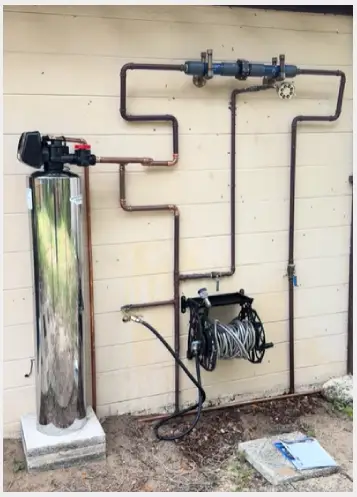
When I evaluate a whole-house water filtration system, I look beyond marketing promises.
I want to understand what it removes, how it handles hard water, how much maintenance it requires, and whether its long-term operating costs make sense.
The HALO 5 caught my attention because it combines several filtration materials inside one large tank rather than relying on multiple small replacement cartridges.
It is designed to treat incoming household water before it reaches showers, kitchen faucets, washing machines, and other plumbing fixtures.
One thing I particularly appreciate about its design is the combination of granular activated carbon, high-activity carbon, Filter-AG Plus, and garnet media.
Each material serves a different filtration purpose. Together, they target chlorine, unpleasant odors, suspended particles, and certain unwanted substances that can affect household water quality.
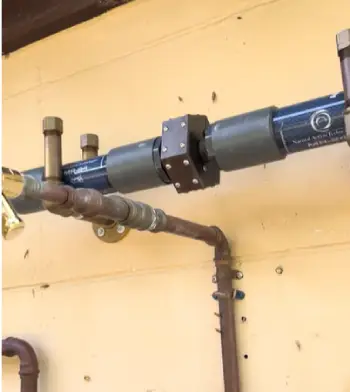
The system also includes the HALO ION 2.0 inline water conditioner. This component uses permanent magnetic fields to condition dissolved calcium and magnesium.
The idea is to reduce the tendency of these minerals to form hard scale on plumbing surfaces and appliances.
However, I would not confuse water conditioning with conventional water softening. The HALO 5 does not use the traditional salt-based ion-exchange process, and it does not remove hardness minerals from water.
Another feature worth considering is automatic regeneration. The system periodically backwashes its filtration media to help prevent channeling, which happens when water repeatedly follows the easiest path through the media instead of contacting the entire filtration bed.
I also like that the system is designed for long service intervals. The manufacturer rates the standard one-inch model for approximately one million gallons, with a stated lifespan of around ten years under its specified usage assumptions.
Still, I would never purchase a filtration system based only on its advertised lifespan. Your incoming water quality, household consumption, chlorine concentration, and installation conditions all influence actual performance.
My overall impression is that HALO 5 is an interesting investment for homeowners who want whole-house filtration and conditioning in one integrated system. Its biggest attraction is convenience, although its price and specific treatment limitations deserve careful consideration.
Also Read: Is Nelsen Water Softener Worth It?
Pros Of The HALO 5 Water System
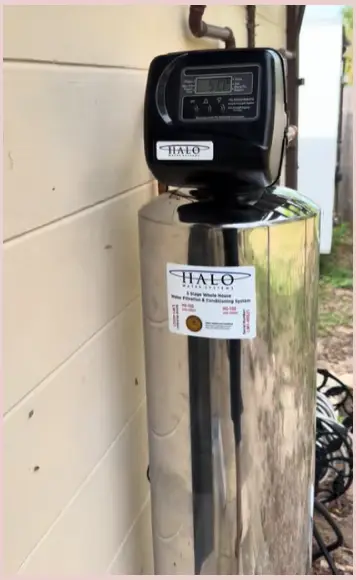
- Whole-House Water Treatment
The biggest advantage is that the HALO 5 treats water entering your entire home.
You do not need to install separate carbon filters at every faucet to obtain the benefits of its main filtration system.
Once properly installed, treated water can reach your bathroom, kitchen, laundry area, and other connected fixtures.
I find this particularly useful for families who want consistent water treatment throughout their property.
It also means you can improve the quality of water used for everyday activities rather than concentrating only on drinking water.
- Multiple Filtration Media
I like the fact that HALO 5 does not depend on just one type of filtration material.
Its combination of activated carbon, high-activity carbon, Filter-AG Plus, and garnet gives the system several treatment functions.
Carbon primarily addresses chlorine, odors, and certain organic compounds, while the other media contribute to suspended-particle reduction.
This multi-media approach makes it more versatile than a basic sediment filter.
However, you should remember that multiple filtration stages do not automatically mean every contaminant is removed. Always check the specific contaminant claims and supporting performance testing before purchasing.
- Reduced Chlorine Taste and Odor
Chlorine is commonly used to disinfect municipal water supplies.
Although it plays an important role in water treatment, some homeowners dislike its taste and smell.
The carbon filtration stages in HALO 5 are designed to reduce chlorine and improve the overall sensory quality of household water.
This can make water more pleasant for cooking, drinking, and preparing beverages.
It may also make showering more comfortable for people who dislike the smell of heavily chlorinated water.
- Automatic Backwashing
Another major advantage is the automatic backwashing function.
The system is programmed to perform a regeneration cycle periodically, generally once every seven days.
This process helps redistribute the filtration media and prevent channeling.
I consider this an important feature because a filtration system should maintain consistent contact between water and its treatment media.
You do not have to manually remove and clean the entire filtration bed every week.
However, automatic backwashing requires a suitable drain connection and uses some water during the process.
- No Regular Salt Refills
Traditional water softeners generally require salt for their ion-exchange regeneration process.
HALO 5 does not operate through that conventional process.
This means you do not need to purchase and refill salt bags as part of its normal operation.
For homeowners who dislike carrying heavy salt bags or monitoring salt levels, this can be a welcome convenience.
Keep in mind that avoiding salt does not mean the system provides conventional water softening.
- Long Media Life
The manufacturer rates the standard H5-100 model for approximately one million gallons of water.
Under the manufacturer’s stated assumptions, this represents roughly ten years of service for a typical household.
Larger models have higher stated capacities.
This is attractive compared with filtration systems that require frequent cartridge replacements.
Nevertheless, actual media life depends on water chemistry, household consumption, and contaminant loading.
I would recommend periodic water testing rather than assuming the system will automatically deliver ten years of identical performance.
Cons Of The HALO 5 Water System
- High Initial Investment
The first disadvantage is the purchase and installation cost.
HALO does not publish a standard retail price for the HALO 5. Homeowners generally obtain pricing through authorized plumbing contractors.
Third-party published installation estimates vary considerably, with examples ranging from approximately $2,000 to more than $7,000.
Your actual quotation may differ depending on the model, location, plumbing modifications, labor, and installation conditions.
This makes it a substantial investment compared with smaller filtration systems.
- It Does Not Conventionally Soften Water
This is one of the most important limitations to understand.
The HALO 5 includes a water conditioner, but it does not use salt-based ion exchange to remove hardness minerals.
If you expect completely softened water, reduced soap consumption, and the familiar results associated with conventional softeners, you may be disappointed.
I would compare your water hardness level with your actual treatment requirements before purchasing.
- Not a Complete Solution for Every Contaminant
Although the HALO 5 uses multiple filtration media, you should not assume it removes every potentially harmful substance.
For example, if your main concerns involve lead, fluoride, arsenic, bacteria, viruses, or PFAS, you should request specific performance documentation for those contaminants.
The system’s material-safety certifications should not be confused with independent certification of every contaminant-reduction claim.
For drinking water safety, I would prioritize independently verified contaminant-specific performance.
- Professional Installation Requirements
The HALO 5 is not simply a countertop appliance that you connect to a faucet.
It requires installation on the main household water line.
The installation also involves plumbing connections, a drain line, electrical power for the control head, and appropriate pressure conditions.
The manufacturer’s warranty requires installation by a licensed contractor.
This increases the overall expense and makes installation less convenient than setting up a small under-sink filter.
- Requires Installation Space
The filtration tank is relatively large.
Depending on the selected model, its height can reach approximately 61 to 74 inches.
You need sufficient room around the main water supply, along with access to the drain and electrical outlet.
Small utility rooms, cramped garages, and limited plumbing spaces may create installation challenges.
Also Read: Is WaterBoss Water Softener Worth It?
Maintenance For The HALO 5 Water System
- Check the Control Head Regularly
The control head manages the system’s automatic regeneration cycle.
I recommend occasionally checking its display and programmed settings.
Make sure the system has the correct time and regeneration schedule.
If the control head displays an error or fails to complete its programmed cycle, contact a qualified technician.
Do not ignore unusual warning indicators simply because the system normally operates automatically.
- Inspect the Drain Line
Backwashing requires a functioning drain connection.
If the drain line becomes blocked, damaged, or improperly positioned, the regeneration process may not work as intended.
Check for visible leaks, kinks, and obstructions.
You should also make sure the drain arrangement continues to meet local plumbing requirements.
- Monitor Water Pressure
Water pressure plays an important role in filtration performance.
HALO specifies an operating pressure range of approximately 40 to 80 PSI for the system.
Excessive pressure can damage components and potentially affect warranty coverage.
I recommend having a plumber inspect your pressure regulator if you notice unusual pressure changes, water hammer, or frequent plumbing leaks.
- Test the Water Periodically
One of my strongest recommendations is to test your water rather than relying entirely on how it looks or tastes.
Clear water is not necessarily safe water.
A basic water test can help you monitor chlorine, hardness, pH, and other relevant characteristics.
If you have a private well, obtain a comprehensive water analysis before installation and follow appropriate testing recommendations afterward.
For households concerned about specific contaminants, request laboratory testing that measures those substances directly.
- Watch for Changes in Chlorine Levels
The manufacturer identifies treated water testing positive for chlorine as an indication that the standard system’s carbon media may have reached the end of its useful life.
This is especially important because gradual filtration deterioration may not be obvious from taste or appearance alone.
Periodic testing can help identify when professional service or media replacement is necessary.
- Keep the Area Around the Tank Clean
Dust, moisture, and accidental impacts can create unnecessary problems around your filtration equipment.
Keep the installation area clean and accessible.
Avoid storing heavy objects against the tank or placing items where they could interfere with plumbing connections.
You should also check for signs of condensation or leakage.
Comparison Of HALO 5 Water System With Other Brands
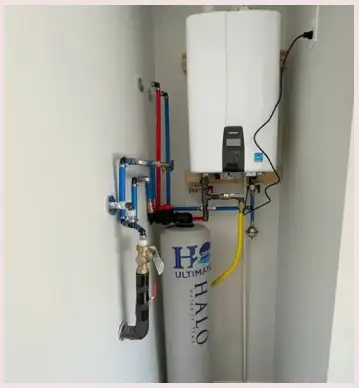
- HALO 5 vs. SpringWell
SpringWell is a popular name in whole-house water filtration.
Its carbon filtration systems are designed to improve municipal water by reducing chlorine, unpleasant odors, and certain organic compounds.
The HALO 5 stands out because it combines multiple filtration media with its integrated magnetic conditioning technology.
SpringWell’s conventional carbon filtration options may appeal more to homeowners who want straightforward filtration without paying for an additional conditioning component.
Another difference is purchasing convenience. SpringWell generally offers direct online purchasing, while HALO 5 is sold through authorized contractors.
I would choose HALO 5 if I wanted its integrated design and had a suitable installation quotation. SpringWell deserves consideration if straightforward carbon filtration and transparent online purchasing are more important.
- HALO 5 vs. Aquasana
Aquasana offers several residential water filtration solutions, including whole-house systems.
Its product range includes options designed to reduce chlorine, sediment, and other selected contaminants.
The main difference is that Aquasana offers multiple filtration configurations, allowing homeowners to select a system based on their specific needs.
HALO 5 combines filtration and water conditioning in one installation.
Aquasana may be more attractive if you want to compare different filtration capacities, configurations, and replacement-filter arrangements.
HALO 5 may be preferable if you value its large media tank and longer stated media service interval.
Before deciding, compare the exact models and their independently verified contaminant-reduction claims.
- HALO 5 vs. Culligan
Culligan is another established water treatment brand with a broad selection of filtration and softening equipment.
Its product range includes conventional water softeners, drinking-water filters, and whole-house treatment systems.
HALO 5 differs because it uses a non-salt magnetic conditioning component instead of conventional ion-exchange softening.
If your main concern is reducing chlorine and improving household water quality, both brands offer options worth evaluating.
However, if you specifically need hardness minerals removed, a suitable Culligan salt-based softener may be a better match.
I would compare installation costs, maintenance contracts, replacement expenses, and treatment performance before making a decision.
Also Read: Is Alamo Water Softeners Worth It?
Frequently Asked Questions (FAQ)
HALO does not publish a fixed retail price. Contractor-installed estimates can range from approximately $2,000 to over $7,000, depending on the model and installation requirements.
Yes, it can be a good option for whole-house carbon filtration and chlorine reduction. However, its performance must match your specific water-treatment needs.
The standard H5-100 model is rated for approximately one million gallons, or around ten years under the manufacturer’s stated usage assumptions.
It may be worth considering if you want long-term whole-house filtration and low routine maintenance. Its relatively high installation cost makes comparing alternatives essential.
Wrapping Up
After evaluating its filtration design, conditioning technology, maintenance requirements, and limitations, I consider the HALO 5 a worthwhile option for homeowners seeking convenient whole-house water treatment.
Its multi-media filtration, automatic backwashing, and long stated service life are attractive advantages.
I would recommend buying it if your water test supports its capabilities and you receive a reasonable professional installation quote. However, households needing conventional water softening or certified removal of specific contaminants should compare alternatives first.
Recent Posts
Flexsteel Vs. Southern Motion: Which Recliner Brand Lasts Longer And Feels Better?
I spent weeks comparing Flexsteel and Southern Motion recliners and motion sofas because I needed durable, comfortable seating that would hold up in a busy home without constant...
Trex Select Decking Reviews: Is This Composite Decking Worth Buying?
If you want an attractive outdoor deck without the constant maintenance of traditional wood, Trex Select decking deserves your attention. I like its combination of durability,...