
If you’ve been searching for the Twisty Paws cat toy reviews, you’re probably trying to figure out whether it’s worth bringing home for your cat.
I had the same curiosity, especially after seeing how widely it’s marketed as a “fun, interactive boredom buster.”
But after testing it and comparing it with other cat toys I trust more, I personally would not recommend it as a long-term investment.
In this article, I’ll share my real experience, what worked and what didn’t, and help you decide whether your money is better spent elsewhere.
My First Experience With Twisty Paws Cat Toy
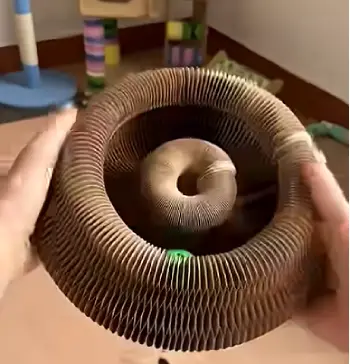
When I first got the Twisty Paws cat toy, I genuinely had high expectations.
It looked clever on paper—an interactive toy meant to keep cats engaged without constant human involvement.
I set it up right away because my cat usually gets bored quickly, especially with basic plush toys or static scratching posts.
At first, my cat was curious. She sniffed it, circled it, and even gave it a few playful taps. That initial reaction gave me hope.
But the excitement faded faster than I expected. Within a short time, she lost interest completely.
I tried repositioning it in different rooms, turning it on and off, and even pairing it with treats to encourage engagement. Still, the interest didn’t last.
What stood out most to me was how inconsistent the toy felt in terms of interaction.
Sometimes it would move in a way that caught my cat’s attention, but other times it seemed too predictable. And for cats, predictability usually means boredom.
Another thing I noticed was durability concerns. After repeated use, the mechanism didn’t feel as smooth as it did on day one.
I also felt that the material quality didn’t match the price point. It’s not that it broke immediately, but I could already sense it wouldn’t last long under regular daily play.
From a practical standpoint, I also found it a bit noisy. While that may not bother every pet owner, it did distract both me and my cat during quieter parts of the day.
Instead of being a calming enrichment tool, it sometimes felt like background clutter.
Overall, my experience with Twisty Paws was underwhelming. I’ve used other cat toys that kept my cat engaged for weeks, even months.
This one, however, barely made it past the first few days of novelty. That’s the main reason I wouldn’t personally recommend it, especially if your goal is long-term enrichment rather than short bursts of curiosity.
Pros Of Twisty Paws Cat Toy
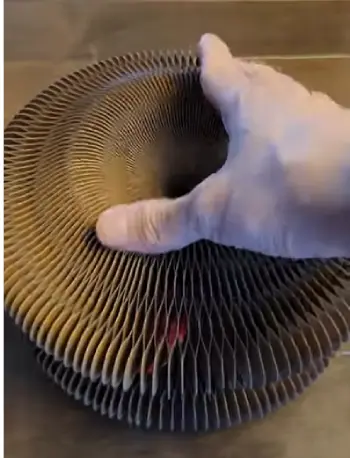
- Lightweight and effortless to handle
One of the first things I noticed is how extremely lightweight the toy is.
I could easily pick it up with one hand, toss it gently across the room, or move it from one space to another without any effort.
This matters more than it sounds, especially if you’re someone who likes to shift toys around different rooms to keep your cat engaged.
For kittens or older cats that don’t respond well to heavy or noisy toys, this light structure can be appealing.
It doesn’t intimidate them, and it allows for gentle interaction. In short bursts, this makes the toy feel approachable.
- Immediate visual curiosity factor
When I first placed it on the floor, my cat did show curiosity. The twisted, flexible design combined with bright colors creates an instant visual trigger.
Cats are naturally drawn to movement and unusual shapes, and this toy does manage to capture that initial attention.
In the first few minutes, I saw sniffing, light paw taps, and cautious investigation. That “new object curiosity phase” is where this toy performs best. However, I noticed this reaction fades very quickly, which limits its long-term usefulness.
- No setup, no hassle, no learning required
One thing I appreciate is that there is zero complexity involved. There are no batteries, no charging cables, no apps, and no assembly steps.
You simply take it out of the package and place it down.
For busy pet owners or people who prefer low-maintenance toys, this simplicity is genuinely convenient. You don’t need instructions or preparation time, which makes it easy to introduce during quick play sessions.
- Soft-enough material for light interaction
During handling, the material felt relatively soft and flexible. My cat was able to paw at it without any visible discomfort. There were no sharp edges or rigid parts that immediately raised safety concerns during initial use.
For gentle cats who enjoy soft-touch toys, this can be seen as a short-term advantage. It doesn’t create immediate risk during casual play, which is always something I look for in any pet product.
- Easy to store and carry
Another practical benefit is its size. It doesn’t take up space, and I could easily store it in a drawer or pet toy box. If you travel or move toys between locations in your home, this makes it convenient.
It’s also light enough to bring along when visiting someone with pets, which could be useful for short-term entertainment.
- Works briefly as a novelty item
The most accurate “pro” I can give is that it functions as a novelty distraction. If your cat has never seen it before, there may be a short window—sometimes just a few minutes—where it triggers engagement.
However, this is where all the positives end. The toy doesn’t evolve, respond, or adapt, so that initial interest fades quickly and doesn’t return in a meaningful way.
Cons Of Twisty Paws Cat Toy
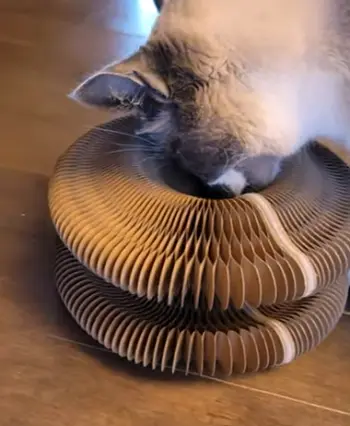
- Extremely short engagement span
The biggest issue is how quickly cats lose interest.
My cat engaged with it briefly—sniffing, tapping, and maybe playing for a couple of minutes—but after that, it was completely ignored.
Cats are instinct-driven animals. They prefer toys that mimic movement, unpredictability, or prey-like behavior.
This toy doesn’t evolve or respond in any meaningful way, so it becomes predictable very fast. Once that happens, your cat simply walks away.
- Weak structural durability
Another major downside is how quickly the structure loses its intended shape. The “twisty” design sounds interactive in theory, but in practice, it becomes loose and less functional after minimal use.
Instead of bouncing or reacting dynamically, it starts to feel floppy and passive. That shift alone drastically reduces its appeal to cats. A toy that doesn’t maintain its structure cannot maintain engagement.
- Lack of true stimulation value
This is not a mentally stimulating toy. It doesn’t challenge your cat’s instincts, problem-solving ability, or hunting behavior. Compared to even basic toys like rolling balls or feather wands, it falls short.
There’s no reward system, no sound, no chase mechanism, and no evolving movement pattern. It’s essentially static interaction disguised as enrichment.
- Poor long-term value for money
Even if the toy is inexpensive, it still doesn’t feel worth it because of how quickly it becomes useless. A good cat toy should provide repeated use over time. This one feels like a short-lived experiment rather than a lasting tool.
When I compare it to other basic toys I already own, it loses in nearly every category—engagement, durability, and versatility.
- Dust and fur accumulation issues
Another practical frustration is how easily it collects cat hair and dust. Because of its flexible design, debris sticks to it quickly. Cleaning it is not difficult, but it is annoying to do frequently.
Over time, this buildup also affects how appealing it looks to cats. They tend to avoid dirty or worn-looking objects, which further reduces engagement.
- Not suitable for energetic or playful cats
If your cat is active, curious, or enjoys hunting-style play, this toy will likely disappoint you. It doesn’t keep up with energetic behavior and doesn’t provide enough stimulation to match their instincts.
Even in multi-cat households, I noticed it being ignored after initial introduction.
- Overhyped expectation vs reality gap
The final downside is the gap between expectation and reality. Based on how it is marketed, you expect an interactive, engaging toy. In reality, it behaves more like a short-term distraction tool that loses purpose quickly.
That mismatch is what makes the experience feel more disappointing than neutral.
Maintenance Tips For Twisty Paws Cat Toy
Even though I don’t recommend this toy for long-term use, if you already own it or still plan to try it, proper maintenance can slightly improve its lifespan and performance.
- Regular cleaning to reduce wear and buildup
I always recommend cleaning any cat toy regularly, and Twisty Paws is no exception. Dust, fur, and debris can accumulate quickly and affect movement.
I used a soft cloth to wipe it down every few days. Avoid harsh chemicals since they can damage internal parts or leave residues that your cat might lick.
- Battery or power management
If your version uses batteries, don’t leave them inside when the toy is not in use for long periods. I noticed that inconsistent power supply can make movement weaker over time.
Replacing batteries early rather than waiting for complete depletion helps maintain smoother function.
- Rotational usage strategy
One trick I tried was not leaving the toy out all the time. Instead, I rotated it with other toys every few days. This slightly helped maintain novelty, though not significantly. Cats respond better when toys feel “new” again after a break.
- Safe storage when not in use
When you’re not using it, store it in a dry place away from humidity. Moisture can damage internal components and reduce durability. I kept mine in a small box to prevent dust buildup.
- Monitoring wear and tear
Check for loose parts or reduced movement speed. If you notice the mechanism slowing down, it’s often a sign that internal friction is increasing. At that point, continued use may frustrate your cat more than entertain them.
- Avoid overuse in one session
I found that limiting play sessions to short bursts worked better than leaving it running for long periods. Overexposure leads to faster boredom and puts unnecessary strain on the toy.
Comparison Of Twisty Paws Cat Toy With Other Cat Toy Options
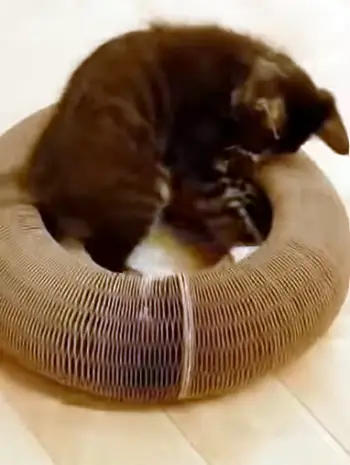
- Twisty Paws Cat Toy Versus feather wand toys
Feather wand toys consistently outperform Twisty Paws in terms of engagement.
When I use wand toys, my cat stays active, jumps, and follows unpredictable movements that mimic real prey.
Unlike Twisty Paws, wand toys rely on human interaction, which keeps the experience dynamic and exciting.
- Twisty Paws Cat Toy Versus laser pointer toys
Laser toys offer another level of stimulation because they tap into a cat’s natural hunting instincts.
The constant movement keeps cats chasing without predictability.
Compared to Twisty Paws, laser toys maintain interest longer, although they still require responsible usage to avoid frustration.
- Twisty Paws Cat Toy Versus treat-dispensing puzzle toys
Puzzle toys that dispense treats are far more effective for mental stimulation.
My cat spends significantly more time solving them compared to interacting with Twisty Paws.
They also reward problem-solving behavior, which creates a stronger long-term engagement cycle.
- Twisty Paws Cat Toy Versus automated rolling ball toys
Rolling ball toys with irregular movement patterns tend to perform better in keeping cats engaged.
They mimic prey behavior more realistically.
Twisty Paws feels more mechanical and less natural in comparison, which is a major disadvantage in feline perception.
Also Read: Comparison Of Orijen And Instinct Cat Food
Frequently Asked Questions (FAQ)
Based on my experience, it is not a strong long-term cat toy. It may attract initial curiosity, but engagement tends to fade quickly.
In my experience, wand toys, laser toys, and treat-dispensing puzzle toys consistently rank higher because they offer more sustained interaction and mental stimulation.
No toy is truly “never boring,” but rotating wand toys, interactive puzzle feeders, and human-involved play sessions tend to maintain interest much longer than automated repetitive toys.
The most effective toys are those that mimic hunting behavior—wand teasers, moving laser patterns, and puzzle feeders that require problem-solving.
Wrapping Up
After personally testing Twisty Paws and comparing it with other enrichment toys, I can confidently say it doesn’t deliver long-term value.
While it offers a brief moment of curiosity, it fails to maintain engagement or provide meaningful stimulation over time.
If you’re serious about keeping your cat active and mentally engaged, I would strongly recommend exploring more interactive, dynamic alternatives instead of relying on this one.
Recent Posts
● Interactive 5-Zone Interior & Exterior Paint Blueprint Paint Coverage Calculator: Gallons, Primer, Square Footage & Cost Tap any architectural surface zone on the blueprint...
If you want smooth, shiny hair without spending a fortune on a premium styling tool, the Ella Bella hair dryer may be worth considering.In these Ella Bella hair dryer reviews, I’ll look...