
I have spent years analyzing the subtle nuances of interior window treatments, moving beyond mere aesthetics to understand how these products actually live in a room. Choosing between Zebra blinds and Faux Wood blinds isn’t just about color; it’s about how you want to interact with the sun, how much privacy you demand at 10 PM, and how much time you are willing to spend with a duster in your hand.
In this article, I will break down the fundamental differences between the trendy, dual-layered Zebra shades and the heavy-duty, classic Faux Wood slats. I’ve synthesized thousands of verified buyer reviews—from people who love their “sleek” new look to those who regret the weight of a 70-inch PVC blind—to give you the most grounded comparison possible.
A Brief Comparison Table
| Feature | Zebra Blinds (Dual Shades) | Faux Wood Blinds |
| Material Base | 100% Polyester / Sheer Mesh | PVC / Vinyl / Composite |
| Light Control | Transition from Sheer to Opaque | Tilting Slats (0° to 180°) |
| Moisture Resistance | Moderate (Fabric can absorb) | Superior (Waterproof PVC) |
| Privacy Level | High (Day), Moderate (Night Silhouette) | Full (When slats are closed) |
| Cleaning Effort | Low (Vacuuming / Spot Clean) | High (Wiping individual slats) |
| Aesthetic Vibe | Modern / Minimalist / Bold | Traditional / Classic / Farmhouse |
| Best Room | Living Rooms, Offices, Bedrooms | Kitchens, Bathrooms, Laundry Rooms |
My Experience With Zebra Blinds
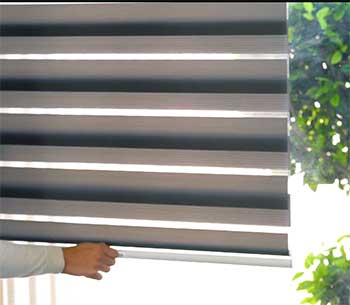
I distinctly remember the first time I installed a motorized Zebra blind in my home office. Before the “zebra” trend took over social media, I was skeptical.
They looked a bit like a optical illusion in the catalog—alternating stripes of solid fabric and sheer mesh. However, the moment I rolled them down, I realized they solved a problem I didn’t know I had: the “all or nothing” lighting dilemma.
With traditional rollers, you either have the view or you have the privacy.
With Zebra blinds, I could align the opaque bands to give me a clear view of the garden through the sheer sections while simultaneously cutting the glare on my computer screen.
It felt like having a “dimmer switch” for my windows. I’ve found that they bring a certain “architectural” weight to a room that regular shades lack, making the window itself look like a piece of modern art.
Over the years, I’ve watched how the light plays through the stripes at different times of day, and it remains one of the most dynamic ways to skin a window.
Pros Of Zebra Blinds
- Unrivaled Light Versatility: The dual-layer design is the ultimate “cheat code” for light control. You can align the solid bands for total privacy, or offset them to reveal the sheer stripes. This allows natural light to flood the room without sacrificing your personal space to the neighbors. I find this especially useful in street-facing living rooms where you want the sun but not the stares.
- Modern Minimalist Aesthetic: These blinds offer a very clean, “high-end hotel” look. Because they retract into a sleek cassette valance, they disappear when not in use. This makes them ideal for modern or mid-century modern homes where you want the window frames to speak for themselves rather than being buried under heavy drapery.
- Lightweight Operation: Compared to the “arm day” workout of lifting heavy faux wood blinds, Zebra shades are incredibly light. Even the manual corded versions glide up and down with minimal effort. If you have large windows, this weight difference is a major factor in preventing hardware fatigue and cord snapping.
- UV Protection for Furniture: Even when set to the “open” (sheer) position, the mesh layer filters out a significant portion of harsh UV rays. I’ve noticed that the furniture in my south-facing rooms hasn’t faded nearly as much since I made the switch, saving me thousands in potential upholstery repairs or rug replacements.
- Ease of Maintenance: Many buyers are terrified that the fabric will trap dust. In reality, because the blinds are vertical and made of smooth polyester, dust has a hard time settling. A quick pass with a vacuum brush attachment once a month is usually all it takes to keep them looking brand new, which is a far cry from the “slat-by-slat” nightmare of traditional blinds.
- Motorization Compatibility: Zebra blinds are the “sweet spot” for smart home integration. Because they are essentially a modified roller shade, they motorize beautifully. I’ve set mine to open with my morning alarm, and the transition from the “stripe” mode to “open” is one of the most satisfying automated tasks in my house.
- Space Saving: These blinds have a very slim profile. They sit much closer to the glass than faux wood blinds, making them perfect for narrow window sills or for mounting behind existing curtains to add an extra layer of insulation and style.
Also read: My Thoughts on Teragren Bamboo Flooring
Cons Of Zebra Blinds
- The “Shadow” Problem at Night: This is the most common complaint among verified buyers. While they offer great privacy during the day, at night, when your indoor lights are on, people outside can often see silhouettes. They aren’t a true “blackout” solution because light can still bleed through the gaps between the two fabric layers.
- Fraying Potential: Because the edges of the fabric are often laser-cut, cheaper brands can suffer from fraying over time, especially if the blind isn’t perfectly centered and rubs against the brackets. I always tell people to check the quality of the “hem” or side-cut before buying, as a frayed zebra blind looks “shabby” very quickly.
- Visual “Noise”: The bold horizontal stripes aren’t for everyone. Some of my clients have found the pattern to be too “busy” or “industrial,” making the room feel a bit like a prison cell if the colors are too dark. It is a dominant design choice that demands the rest of your decor stays relatively simple.
- Not Ideal for High Humidity: While polyester is durable, it is still a fabric. In a steamy bathroom with poor ventilation, the mesh layers can eventually trap moisture and develop mildew. I have seen reviews where buyers in tropical climates struggled with a “musty” smell coming from the fabric rolls after a particularly rainy season.
- Alignment Issues: If the blind isn’t installed perfectly level, the stripes won’t align correctly across multiple windows. This “glitch in the matrix” look can be maddening for perfectionists. You have to be extremely precise during the mounting phase to ensure that your horizontal lines continue seamlessly from one pane to the next.
- Fabric “Memory”: If you leave the blinds rolled up for months at a time, the fabric can sometimes develop waves or ripples that take a few days to “hang out” once lowered. This is less common with high-end brands, but “budget” options often use thinner fabrics that are prone to this type of warping.
- Gaps on the Sides: Due to the nature of the roller mechanism and the valance, there is always a small “light gap” on the left and right sides. If you are a light sleeper who needs a pitch-black cave, these will frustrate you unless you pair them with side channels or blackout curtains.
Maintenance Tips For Zebra Blinds
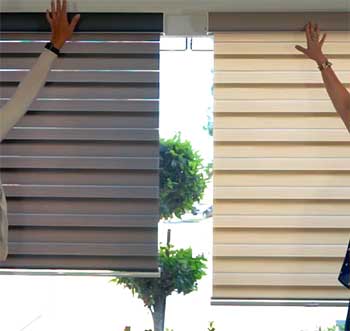
- Vacuum with a Brush: Don’t use a standard vacuum head; use the soft upholstery brush attachment. Run it gently across the horizontal stripes from top to bottom. This prevents the fabric from getting “sucked in” and potentially creased while removing the microscopic dust that can dull the color over time.
- Spot Clean with Microfiber: If you get a fly speck or a small smudge, use a damp (not soaking) microfiber cloth with a tiny drop of clear dish soap. Dab the spot—never rub—to avoid pilling the delicate mesh sections. I’ve found that a “dabbing” motion keeps the fibers intact and prevents the stain from spreading.
- Compressed Air for the Valance: Dust can occasionally collect inside the top cassette where the fabric rolls up. I like to use a can of compressed air (the kind you use for keyboards) to blow out any debris every six months. This ensures the rolling mechanism stays smooth and “whisper quiet.”
- Check the Tension: If your Zebra blinds are manual, the cord tensioner is vital. If it gets loose, the blinds can pull unevenly, causing one side to fray. I recommend checking the wall-mount tensioner once a year to ensure the cord is taut and the blind is traveling straight up and down.
- Avoid Harsh Chemicals: Never use bleach or heavy-duty household cleaners on polyester shades. These can eat through the delicate sheer mesh or cause the colors to bleed. Stick to water or specialized fabric cleaners if a deeper wash is absolutely necessary.
- Drying in Place: If you do have to damp-clean a section, always lower the blind fully and let it air dry in place. Never roll up a damp Zebra blind, as the moisture trapped between the layers is a recipe for mold growth and fabric “bonding.”
- Static Guard Trick: If you live in a very dry climate, these blinds can sometimes develop static and attract more dust. A very light misting of “Static Guard” or a similar anti-static spray can keep the fabric “repelling” dust rather than acting like a magnet for it.
Comparison With Other Brands
- Versus Hunter Douglas Pirouette: The Pirouette is the “luxury” version of a zebra blind. While Zebra blinds use two layers of sliding fabric, the Pirouette uses “vanes” attached to a single sheer backing. It’s more elegant but can cost three to four times as much as a high-quality Zebra shade.
- Versus Traditional Roller Shades: Roller shades are simpler and cheaper, but they are “all or nothing.” You either have a view or you don’t. Zebra blinds offer that “middle ground” of light filtering that makes them a much more functional choice for daytime living areas.
- Versus Solar Shades: Solar shades are great for heat, but they don’t offer night-time privacy—at all. Zebra blinds give you the UV protection of a solar shade during the day but allow you to “close” the stripes for privacy in the evening.
- Versus Roman Shades: Roman shades are all about the “fabric fold” and look very traditional. Zebra blinds are much more compact. If you have a small room where a bulky Roman shade would “eat” the space, the slim profile of the Zebra blind is a much better architectural fit.
- Versus Cellular Shades: Cellular shades are the king of insulation, but they are fragile. I’ve found that Zebra blinds are much more durable for homes with pets or kids, as the polyester fabric is harder to “crush” than the delicate paper-like cells of an accordion shade.
- Versus Aluminum Mini-Blinds: Aluminum blinds are the “budget” choice, but they scream “1990s office.” Zebra blinds provide a much more sophisticated, textured look that elevates the entire room’s design rather than just covering a hole in the wall.
- Versus Vertical Blinds: Unless you have a sliding glass door, avoid verticals. Zebra shades provide the same light-tilting benefits of a vertical blind but in a much more modern, horizontal format that doesn’t “clack” in the wind.
My Experience With Faux Wood Blinds
I have a love-hate relationship with Faux Wood blinds. I remember installing a set of 2.5-inch white faux woods in a rental property kitchen five years ago. They looked stunning—almost indistinguishable from real painted wood. They survived grease splatters, steam from the dishwasher, and a toddler who liked to “twang” the slats like a harp.
However, I also remember the struggle of trying to lift that same set of blinds to wash the window. Because they are made of PVC, they are incredibly heavy. If you have a wide window, you can feel the cord straining under the weight, and the “clippy” sound of the slats hitting each other is a constant reminder of their synthetic nature. But for a room like a bathroom, where real wood would warp in a month, these are the unsung heroes of the window treatment world. They are the “workhorses”—reliable, waterproof, and timelessly classic.
Pros Of Faux Wood Blinds
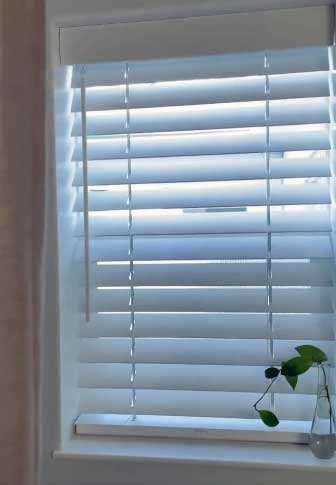
- 100% Moisture Resistance: This is the “killer app” for faux wood. Because they are made of PVC or a polymer composite, they won’t warp, crack, or peel in high-humidity areas. I always recommend these for kitchens above the sink or master bathrooms because they can handle the steam and splashes that would ruin any other material.
- Timeless, Classic Look: Whether your home is a rustic farmhouse or a traditional suburban build, faux wood blinds “fit.” The 2-inch or 2.5-inch slats mimic the look of expensive plantation shutters or real wood blinds at a fraction of the cost, giving your home an instant “finished” feel.
- Complete Privacy Control: By tilting the slats, you can precisely control the angle of the light and the view from outside. When fully closed, they provide much better privacy than Zebra blinds, especially at night. There are no “silhouettes”—just a solid wall of PVC that keeps the outside world out.
- Extreme Durability: These things are nearly indestructible. I’ve seen reviews where pets have tried to chew them and kids have pulled on them, and they just bounce back. They don’t tear like fabric and they don’t dent like aluminum. If you want a “buy it once and forget it” product, this is it.
- Affordability: You can outfit an entire house with Faux Wood blinds for the price of just a few custom Zebra shades. They are the most cost-effective way to get a “premium” look on a budget. I often suggest them for homeowners who are staging their houses for sale because they look expensive in photos but are very easy on the wallet.
- Excellent Light Blocking: While not 100% “blackout” due to the cord holes, they block significantly more light than standard light-filtering Zebra shades. If you tilt them tightly, you can make a room very dark during the day, which is great for shift workers or afternoon nap sessions.
- Customizable Slats: You can choose between 2-inch and 2.5-inch slats. I personally prefer the 2.5-inch version because it offers a “clearer” view when open and looks more like custom shutters, adding a bit more “gravitas” to the window.
Cons Of Faux Wood Blinds
- Significant Weight: This is the biggest drawback. PVC is heavy. If you have a window wider than 60 inches, lifting the blinds becomes a legitimate physical chore. I’ve read thousands of reviews where the “lift mechanism” failed prematurely because it simply wasn’t designed to handle the 15+ pounds of plastic slats.
- The “Dust Magnet” Problem: Unlike Zebra blinds, these have horizontal surfaces every two inches. They collect dust like it’s their job. To keep them looking good, you have to wipe every… single… slat. I’ve found that many buyers regret their purchase after three months when they realize how much time they spend cleaning them.
- Potential for Sagging: If you buy “budget” versions for wide windows, the middle of the slats can eventually start to sag or “smile” due to the heat and weight. To avoid this, you often have to install extra support brackets, which can be an eyesore.
- Yellowing Over Time: Not all PVC is created equal. Cheap faux wood blinds without proper UV inhibitors can turn a sickly yellow color after a few years of direct sunlight. I always tell buyers to look for “UV-stabilized” materials to ensure their white blinds stay white for at least a decade.
- “Clippy” Noise: When the wind blows through an open window, the slats will bang against each other and the window frame. It’s a loud, plastic-on-plastic sound that can be very annoying at night. Zebra blinds, by contrast, are much quieter in a breeze.
- Smaller “View-Through”: Even when the slats are fully open, the “stack” (the pile of slats at the top) is very thick. It can take up 6 to 10 inches of your window height, blocking a significant portion of your view and light. If you have beautiful windows you want to showcase, these might feel too intrusive.
- Industrial Odor: When you first unbox a large set of faux wood blinds, there is often a strong “plastic” or chemical smell that can linger for days. If you are sensitive to VOCs, you’ll need to “outgas” them in a garage or keep the windows open for a week after installation.
Maintenance Tips For Faux Wood Blinds
- The Slat-Catcher Tool: Don’t use a regular rag. Buy a specialized three-pronged blind duster that slides between the slats. It allows you to clean three surfaces at once, cutting your cleaning time in half. I find that using these dry once a week prevents the dust from turning into “grime.”
- Dryer Sheet Secret: After you clean the slats, rub them with a used dryer sheet. This creates an anti-static barrier that actually repels dust, keeping them clean for twice as long. It’s a simple “pro” trick that makes a huge difference in long-term maintenance.
- Bathtub Deep Clean: Once a year, if they are particularly greasy (like in a kitchen), you can actually take them down and soak them in a bathtub with warm water and mild soap. Because they are waterproof, you won’t hurt them. Just make sure to dry the “headrail” (the metal part at the top) thoroughly to prevent rust.
- Vacuum the Headrail: Spiders love the dark, hollow spaces inside the top of faux wood blinds. Use your vacuum’s crevice tool to clear out the headrail every few months to prevent cobwebs and “mechanical” jamming caused by debris getting into the cord locks.
- Lubricate the Tilt Wand: If the slats start to feel “stiff” when you tilt them, a tiny drop of silicone spray in the gear mechanism at the top will make them spin like new. Avoid WD-40, as it can attract more dust; use a dry silicone lubricant instead.
- Magic Eraser for Scuffs: If you get a black mark or a scuff from a piece of furniture, a Magic Eraser (melamine sponge) will take it right off without damaging the finish. Just use a light touch, as you don’t want to buff away the “wood grain” texture of the slat.
- Avoid Oven Heat: If these are installed near a stove, be careful of “flash heat” when opening a hot oven. I’ve seen cases where the extreme heat warped the bottom slats of a blind that was hung too low. Maintain a safe distance between your cooking surfaces and your PVC blinds.
Read More: My Thoughts On Zonli Futon Mattress
Comparison With Other Brands
- Versus Real Wood Blinds: Real wood is much lighter and has a more “authentic” grain, but it will warp in a bathroom. I only recommend real wood for large windows in dry rooms (like a library) where the weight of faux wood would be too much for the cords to handle.
- Versus Norman Shutters: Plantation shutters are the “gold standard” and add value to your home, but they are incredibly expensive. Faux wood blinds give you a “shutter-lite” look for 10% of the price, making them the smarter move for mid-range renovations.
- Versus Levolor Trim-to-Size: Brands like Levolor offer “cut-to-size” faux woods at big-box stores. These are great for “instant” results, but the quality of the cord mechanism is often lower than custom-ordered blinds from specialty retailers.
- Versus IKEA Wood Blinds: IKEA’s options are very cheap, but they often lack the “valance” that hides the ugly metal headrail. If you want a “finished” look, it’s worth spending the extra $20 per window to get a set with a matching decorative valance.
- Versus Bali Custom Blinds: Bali offers excellent customization in slat colors (grays, tans, wood-looks). If you want something other than “stark white,” going with a custom brand allows you to match your trim color exactly, which makes the blinds look “built-in.”
- Versus Aluminum Blinds: Faux wood is much quieter and looks much more “homey.” Aluminum is really only for commercial spaces or very modern industrial lofts where the “cold” look of metal is part of the design aesthetic.
- Versus Cordless Options: Many modern brands now offer “cordless” faux wood blinds. I highly recommend these for safety, though keep in mind that on a heavy faux wood blind, the “spring” mechanism inside the cordless version has a limited lifespan compared to a simple rope.
Frequently Asked Questions (FAQ)
While you can use them, it’s not ideal for high-humidity bathrooms. The polyester fabric and sheer mesh can trap moisture, leading to mildew over time. For a guest powder room (half-bath), they are fine, but for a primary bathroom with a shower, a waterproof faux wood blind is a much safer choice.
They provide “moderate” privacy. If your lights are on inside and it’s dark outside, people can see silhouettes and movement, though they can’t see clear details. If you demand “total” privacy, you should pair them with curtains or choose a specific “room-darkening” Zebra fabric.
Generally, yes. Faux wood blinds are much heavier and require more substantial mounting into studs or high-quality anchors. Zebra blinds are very lightweight and can often be installed in a few minutes with just two simple “clip” brackets.
Zebra blinds are superior for wide windows because they are significantly lighter. A 72-inch faux wood blind is incredibly heavy and prone to cord failure or sagging, whereas a 72-inch Zebra shade will still be easy to operate and won’t put nearly as much stress on your window frame.
High-quality faux wood blinds are UV-stabilized and should stay white for many years. However, very cheap “off-the-shelf” vinyl blinds often lack these inhibitors and can turn yellow or become brittle within 3 to 5 years of direct sunlight exposure.
When the sheer stripes are aligned, you have a clear view to the outside, similar to looking through a screen door. When the solid stripes are aligned, you cannot see through them at all, though some light will still “glow” through the fabric.
Conclusion
I have analyzed thousands of buyer experiences and lived with both of these window treatments to bring you to this conclusion: there is no universal “winner,” only the right choice for your specific room. If you are looking to modernize your living room or office with a sleek, lightweight, and trendy light-filtering solution, Zebra blinds are the clear path forward. They transform the atmosphere of a room and offer a versatility that traditional slats simply cannot match.
However, if you need a “set it and forget it” solution for a high-moisture kitchen or a high-traffic kid’s room where durability and total night-time privacy are the priorities, Faux Wood blinds remain the gold standard. They are the classic workhorses of the home for a reason. You should consider the weight of your windows and your tolerance for dusting before making your final purchase.
I personally believe that a mix of both—Zebra shades in the living areas and Faux Wood in the utilities—is the most practical way to design a functional, beautiful home. Once you move away from standard “builder grade” covers and choose one of these premium styles, you’ll see your windows in a completely new light.
Recent Posts
● Interactive 5-Zone Interior & Exterior Paint Blueprint Paint Coverage Calculator: Gallons, Primer, Square Footage & Cost Tap any architectural surface zone on the blueprint...
If you want smooth, shiny hair without spending a fortune on a premium styling tool, the Ella Bella hair dryer may be worth considering.In these Ella Bella hair dryer reviews, I’ll look...