
If hard water is leaving mineral deposits on your faucets, making your skin feel dry, or reducing the efficiency of your appliances, a Pentair water softener may be worth considering.
I would recommend exploring Pentair for homeowners who want dependable water treatment, customizable system options, and long-term performance.
Its suitability depends on your household’s water hardness, budget, and installation requirements.
My Personal Experience With Pentair Water Softeners
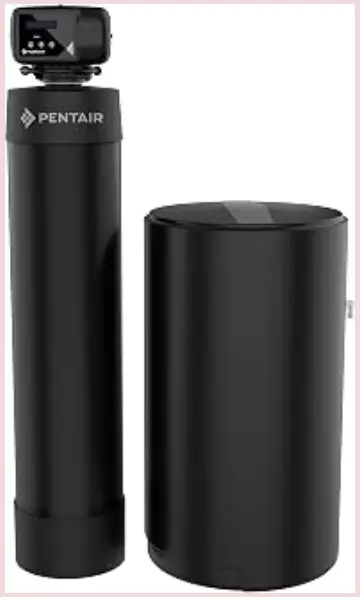
When I evaluate a water softener, I look beyond its ability to make water feel softer.
I want to understand how effectively it handles mineral buildup, how much maintenance it requires, and whether it offers enough value to justify the investment.
Pentair caught my attention because it offers several water treatment solutions designed for residential and commercial applications.
One thing I appreciate about Pentair is its range of water treatment equipment.
Instead of focusing on just one type of household water problem, the company offers filtration systems, water softening equipment, and other treatment technologies.
This makes it easier to consider a complete water treatment setup if your home has several water quality concerns.
The primary purpose of a traditional Pentair water softener is to reduce hardness minerals, particularly calcium and magnesium.
These minerals are responsible for the chalky deposits that appear around faucets, showerheads, and kitchen fixtures.
They can also interfere with soap performance and contribute to scale formation inside water heaters and plumbing systems.
I particularly like the idea of having a properly sized system that regenerates according to household water consumption.
Depending on the model and control valve, certain systems can manage regeneration automatically rather than relying entirely on a fixed schedule. This can help reduce unnecessary water and salt consumption.
However, I would not automatically assume every Pentair system offers identical features. Product specifications, control valves, resin capacity, regeneration settings, and installation requirements can differ between models.
Another important consideration is the water source. If you receive municipal water, your primary concern may be hardness.
However, private well water can contain iron, sediment, sulfur, and other contaminants that require additional treatment. A water softener alone will not solve every water quality issue.
Overall, I see Pentair as a brand worth considering if you want a customizable residential water treatment solution.
Still, I would check the exact model specifications and compare them with your household’s water test results before making a purchase.
Also Read: Is Puronics Water Softener Worth It?
Pros Of Pentair Water Softeners
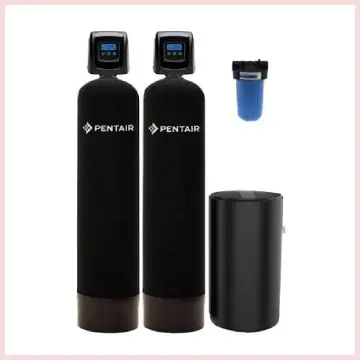
- Effective Hard Water Treatment
The most important advantage is the ability of a properly sized Pentair ion-exchange softener to reduce calcium and magnesium.
If your home has moderately or extremely hard water, you may notice improvements in everyday activities after installing an appropriately configured system.
Soap and shampoo can lather more easily, dishes may develop fewer mineral spots, and bathroom fixtures can require less frequent descaling.
I particularly appreciate this benefit because hard water affects more than just drinking water. It can influence your entire household plumbing system.
- Helps Reduce Scale Buildup
Mineral scale can accumulate inside water heaters, pipes, showerheads, and other appliances.
Over time, this buildup can interfere with water flow and reduce heating efficiency. Removing hardness minerals helps limit the formation of new calcium and magnesium deposits.
For me, this is one of the strongest reasons to consider installing a water softener.
However, existing scale does not necessarily disappear immediately. Older deposits may require separate cleaning or professional attention.
- Different System Configurations
Pentair offers a broad range of water treatment equipment, allowing homeowners to consider different solutions according to their water conditions.
Depending on the product family, you may find different tank capacities, control configurations, and treatment arrangements.
This flexibility matters because a small household does not necessarily need the same equipment as a large family with several bathrooms.
I would rather choose a correctly sized system than pay extra for unnecessary capacity.
- Automatic Regeneration Options
Automatic regeneration is another useful feature available in certain water softener configurations.
Instead of manually deciding when the resin needs cleaning, the control valve can manage the regeneration process according to programmed settings or measured water usage.
Metered regeneration is particularly attractive because it can help the system regenerate based on actual demand.
This may reduce unnecessary regeneration compared with an unsuitable fixed schedule.
- Potential Appliance Protection
Hard water can contribute to mineral accumulation in appliances that regularly heat or circulate water.
Dishwashers, washing machines, water heaters, and other equipment may experience scale-related problems over time.
By reducing water hardness, a Pentair softener can help limit additional mineral deposits.
I would consider this a practical long-term benefit, particularly if your home has expensive appliances.
- Better Soap and Detergent Performance
One of the everyday frustrations of hard water is poor soap performance.
You might find yourself using more detergent, shampoo, or cleaning products than necessary.
Softened water generally allows soap to lather more easily, which can make bathing, washing clothes, and cleaning household surfaces more convenient.
You may also find that laundry feels less stiff after washing, although results depend on detergent, fabric, washing conditions, and the original water quality.
Cons Of Pentair Water Softeners
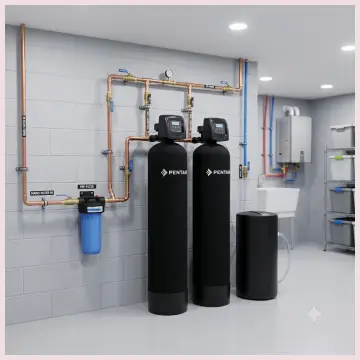
- Initial Purchase and Installation Costs
A whole-house water softener is a meaningful investment.
The total price may include the main unit, mineral tank, brine tank, control valve, plumbing modifications, installation labor, and additional treatment equipment.
Some installations are straightforward, while others require more extensive plumbing work.
I would request a complete installation estimate rather than comparing equipment prices alone.
- Ongoing Salt Expenses
Traditional salt-based water softeners need salt for regeneration.
You must monitor the brine tank and replenish the salt when necessary.
Salt consumption depends on water hardness, household consumption, system capacity, and regeneration efficiency.
If you want a completely maintenance-free solution, a conventional salt-based Pentair softener may not meet your expectations.
- Requires Regular Maintenance
Even a well-designed water softener needs attention.
You should inspect the brine tank, monitor salt levels, check for leaks, and make sure the control valve operates correctly.
Neglecting these tasks can affect performance and potentially shorten equipment life.
- Installation Space Requirements
A whole-house system generally needs enough space for its mineral tank, brine tank, and plumbing connections.
Smaller homes or apartments may not have a convenient location for the equipment.
You should also consider access for salt refilling and future servicing.
- Not Every Model Has the Same Features
One issue I would watch for is assuming that every Pentair water softener includes the same technology.
Different models and product configurations may have different capacities, controls, regeneration options, and specifications.
Before purchasing, I would verify the exact product model rather than relying on general brand descriptions.
- Does Not Remove Every Contaminant
This is an important limitation.
A traditional water softener is designed primarily to reduce hardness minerals. It is not automatically a complete drinking-water purification system.
It does not necessarily remove bacteria, viruses, pesticides, or every dissolved contaminant.
If you have concerns about drinking water safety, you need appropriate testing and treatment equipment.
Also Read: Is SoftPro Water Softener Worth It?
Maintenance For Pentair Water Softener
- Check Salt Levels Regularly
The first thing I would recommend is checking the brine tank.
Salt is essential for the regeneration process in traditional salt-based systems. If the tank runs out, the resin cannot regenerate properly.
I would make a habit of checking the salt level every few weeks, although the ideal frequency depends on household consumption.
Keep enough salt in the tank to support regeneration, but avoid filling it beyond the manufacturer’s recommended level.
- Use Appropriate Water Softener Salt
Not all salt products are equally suitable for every softener.
Depending on the manufacturer’s instructions, you may be able to use evaporated salt pellets, solar salt, or another approved product.
I would avoid choosing salt based entirely on price.
Poor-quality salt can contain impurities that contribute to residue or bridging inside the brine tank.
- Watch for Salt Bridging
Salt bridging occurs when a hard crust forms above the water in the brine tank.
This can create an empty space underneath the crust, making it appear that the tank contains plenty of salt even though the salt cannot dissolve properly.
If you suspect bridging, follow the manufacturer’s cleaning instructions and avoid damaging the tank or its internal components.
Checking the tank periodically can help prevent this issue.
- Clean the Brine Tank When Necessary
Over time, sediment and impurities may accumulate inside the brine tank.
If the tank becomes dirty, cleaning may be necessary.
Before starting, I would follow the exact instructions for your model, shut off the system as directed, and avoid using household chemicals that could damage its components.
After cleaning, refill the tank with the recommended salt and restore the system according to the manufacturer’s procedure.
- Monitor Regeneration Performance
Regeneration is essential for keeping the resin effective.
I would occasionally check whether the system regenerates according to its programmed settings.
Unexpectedly frequent regeneration may indicate incorrect programming, excessive water consumption, or a system sizing problem.
If regeneration stops completely, the control valve or water supply may need inspection.
- Inspect for Plumbing Leaks
A small leak around a connection can become a bigger problem if ignored.
Check the inlet and outlet connections, drain line, bypass valve, and nearby plumbing.
Look for moisture, corrosion, loose fittings, or unusual water accumulation.
If you discover a leak, turn off the appropriate water supply and arrange repairs when necessary.
- Clean the Resin Bed When Recommended
The resin bed is responsible for removing hardness minerals.
Over time, iron and other impurities may affect resin performance, particularly when treating certain well-water supplies.
Some systems may benefit from a manufacturer-approved resin cleaner when water conditions justify it.
I would never use an unapproved cleaning chemical because it could damage the resin or other system components.
- Test Your Water Hardness
One of the easiest ways to determine whether your water softener is working is to test the treated water.
You can use a suitable water hardness test kit or arrange laboratory testing.
If hardness levels suddenly increase, check the salt supply, regeneration settings, bypass valve, and system condition.
Testing also helps determine whether the system is correctly sized for your household.
Comparison Of Pentair Water Softener With Other Brands
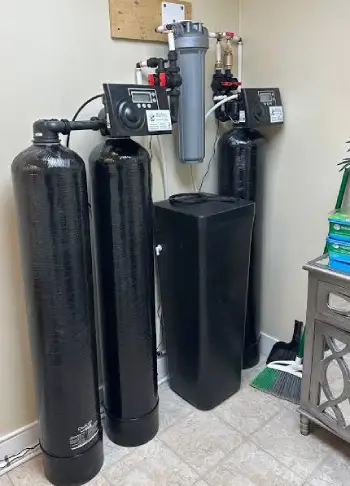
- Pentair vs. Fleck
Fleck is particularly well known for water softener control valves.
This makes Fleck an important comparison when evaluating the control technology used in a water softening system.
Pentair offers broader water treatment solutions, while Fleck is often considered when buyers are specifically comparing control valve platforms and system configurations.
I would pay attention to regeneration controls, replacement parts, serviceability, and the overall quality of the assembled softener.
For homeowners who want a particular control valve configuration, Fleck-based systems may be appealing. Pentair may be more suitable when the wider water treatment product range matters.
- Pentair vs. SpringWell
SpringWell is another brand I would consider.
SpringWell focuses on residential water filtration and softening products, including whole-house treatment systems.
Pentair has a broader presence in water treatment equipment, while SpringWell attracts homeowners looking for packaged residential solutions.
I would compare their available capacities, installation requirements, control features, and replacement component costs.
If you want a complete residential treatment package, SpringWell is worth evaluating. If you prefer exploring a broader equipment selection, Pentair deserves consideration.
- Pentair vs. WaterBoss
WaterBoss is worth comparing if you are shopping for a household water softener.
WaterBoss offers compact residential systems, making it an interesting option for homes where installation space matters.
Pentair may provide more flexibility through its broader equipment selection, depending on the product configuration.
I would look closely at household water consumption, hardness levels, resin capacity, and regeneration performance.
A compact system is not automatically better. You need enough capacity to handle your household’s actual water demand.
- Pentair vs. GE Water Softeners
GE Appliances is another familiar name in the household water treatment market.
GE water softeners are generally attractive to homeowners looking for residential systems with straightforward operating features.
Pentair offers a broader water treatment portfolio, while GE may appeal to buyers comparing conventional household softener designs.
I would examine installation costs, control features, maintenance requirements, and warranty coverage.
The right option depends on whether you prioritize a particular system configuration, convenient local servicing, or overall ownership cost.
Also Read: Is Nelsen Water Softener Worth It?
Frequently Asked Questions (FAQ)
Yes. Pentair offers water treatment equipment that can provide effective hardness reduction when the correct softener is selected, installed, and maintained.
Prices vary by model, capacity, features, and installation. Request a current quotation for an accurate total cost.
Generally, a personal household water softener is not tax-deductible in the United States. Certain medical or business-related exceptions may apply.
I cannot verify a specific 2026 Consumer Reports top pick. Check its latest independent ratings before choosing a system.
Wrapping Up
I would recommend considering a Pentair water softener if your household struggles with hard water and you want a customizable treatment solution.
Its potential benefits include reduced mineral buildup, improved soap performance, and better protection against new scale formation.
However, test your water, compare individual models, and calculate long-term expenses before purchasing. The right Pentair system can be a worthwhile household investment when properly sized and maintained.
Recent Posts
If you're looking for an energy-efficient way to heat water, an LG heat pump water heater may be worth considering. I like the idea of combining inverter technology with lower electricity...
Submersible Vs. Pedestal Sump Pump: Which One Actually Keeps Your Basement Dry?
I spent years dealing with a damp basement that turned every heavy rain into a stressful waiting game.After replacing pumps more than once and comparing options side by side, I decided to lay out...