
Puronics water softeners offer several water treatment features, including mineral reduction, filtration, and scale control.
However, despite their appealing technology, I wouldn’t recommend buying one without carefully examining customer complaints, maintenance expenses, and long-term performance.
If you’re looking for a dependable water softener, I believe you should compare Puronics with better-reviewed alternatives before spending your money.
My First Experience With Puronics Water Softeners
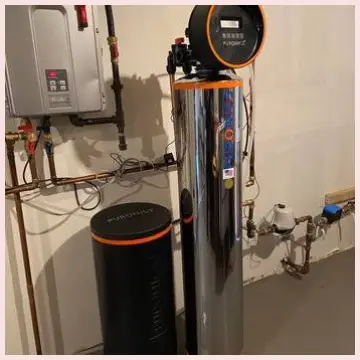
When I evaluate a water softener, I look beyond its advertised features.
A product might promise cleaner water, softer skin, fewer mineral deposits, and better appliance protection, but those claims don’t automatically translate into a satisfying ownership experience.
That’s particularly important when considering Puronics water softeners.
Puronics has built its reputation around residential and commercial water treatment systems.
Rather than focusing exclusively on traditional water softening, the company offers integrated treatment solutions designed to address several water quality concerns.
Depending on the model, these systems may combine water conditioning, filtration, and other treatment technologies.
At first glance, this approach sounds attractive. After all, who wouldn’t prefer one integrated system instead of purchasing several separate water treatment products?
However, I believe the real question is whether the technology delivers consistent results without creating unnecessary maintenance expenses or customer service frustrations.
I would approach Puronics with caution because customer feedback is an important part of the buying decision.
Some owners appreciate the improvement in water quality, but negative experiences involving repairs, warranty expectations, pricing, and customer support deserve attention.
Also Read: Is SoftPro Water Softener Worth It?
Pros Of Puronics Water Softener
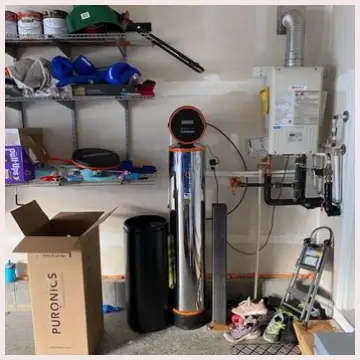
- Combined Water Softening and Filtration
One of the most noticeable advantages of Puronics is its integrated treatment approach.
Some models combine water softening with filtration, allowing homeowners to address several water quality concerns through one installation.
I like the idea of having one system handle multiple tasks because it can reduce the need for separate equipment.
For example, a properly configured system may help reduce hardness minerals while also addressing chlorine, unpleasant tastes, and odors.
This can be particularly useful if your household receives municipal water containing chlorine or has noticeable mineral deposits.
However, you should remember that filtration capabilities depend on the specific model and its media configuration. Don’t assume every Puronics system removes every unwanted substance.
- SilverShield Technology
SilverShield is one of the technologies that makes Puronics different from many conventional water softener manufacturers.
The company uses silver-based technology in certain filtration media to help inhibit bacterial growth inside the filter bed. This feature is intended to maintain a more hygienic filtration environment.
I consider this an interesting design feature, particularly for homeowners concerned about microbial growth inside treatment equipment.
However, it shouldn’t be confused with complete water disinfection. SilverShield technology does not automatically make contaminated water safe to drink or replace an appropriately certified disinfection system.
- Different Models for Different Water Conditions
Another advantage is the availability of different system configurations.
Puronics offers Bacteriostatic and Chlorostatic treatment options, along with different tank designs and specialized filtration systems.
This variety gives homeowners an opportunity to choose equipment based on their water quality requirements.
For example, someone dealing primarily with chlorine-related taste and odor concerns may have different needs from someone struggling with hard water and mineral deposits.
I appreciate having options, but I would still insist on a proper water test before selecting a model. Buying a system based on a salesperson’s general recommendation isn’t a sensible approach.
- Whole-House Water Treatment
Puronics manufactures whole-house systems designed to treat incoming water before it reaches household plumbing fixtures.
This means treatment can extend beyond the kitchen sink.
When properly sized and installed, a suitable whole-house system can help reduce mineral-related problems throughout the home. You may notice fewer deposits on showerheads, faucets, and other plumbing fixtures.
For households experiencing hard water throughout the property, this approach can be more convenient than relying on individual faucet filters.
Still, the results depend on the incoming water conditions, system capacity, and proper installation.
- Options for Salt-Free Water Conditioning
Puronics also offers no-salt water treatment systems.
I understand why this option attracts homeowners. Some people want to reduce scale buildup without adding conventional softener salt or dealing with regular salt replenishment.
However, I would be careful when comparing salt-free conditioning with genuine water softening.
Salt-free conditioners generally aim to change how minerals behave or accumulate rather than removing calcium and magnesium through ion exchange. If you want measurably softer water, you should confirm that the selected system actually performs ion-exchange softening.
Cons Of Puronics Water Softener
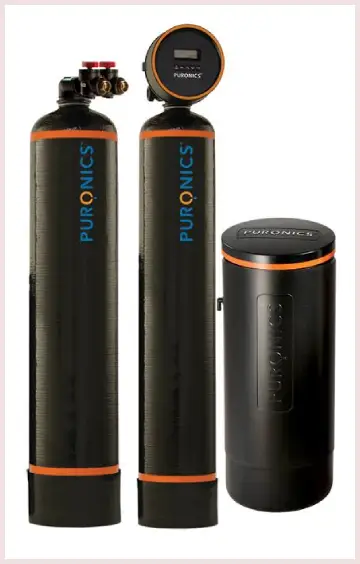
- Negative Customer Feedback
Customer feedback is one of my biggest concerns when researching Puronics.
ConsumerAffairs currently displays a 1.5-out-of-5 rating based on 44 reviews. The published rating distribution also shows that negative ratings make up the overwhelming majority of the displayed feedback.
Some complaints involve customer service, repair experiences, product reliability, and maintenance costs.
Of course, online reviews don’t represent every owner, and dissatisfied customers may be more likely to leave feedback. Nevertheless, a pattern of similar complaints deserves attention.
I wouldn’t dismiss those experiences when choosing a product that requires long-term support.
- Expensive Initial Investment
Puronics doesn’t provide straightforward public pricing for all its whole-house systems.
That makes comparing its products with conventional water softeners more difficult.
Third-party pricing discussions suggest that some softener-only quotations can reach approximately $3,400, while larger whole-house packages may cost $7,000–$9,000 depending on the equipment and installation.
These figures aren’t official manufacturer prices or guaranteed quotations. Your actual price could be different.
My concern is that homeowners may struggle to determine whether they’re paying for necessary treatment equipment or an expensive collection of additional features.
Before agreeing to anything, request an itemized quotation covering equipment, installation, replacement media, service visits, and financing charges.
- Warranty Conditions Can Be Confusing
A long warranty sounds excellent, especially when purchasing an expensive water treatment system.
However, I wouldn’t evaluate a warranty based solely on the word lifetime.
You need to understand exactly what is covered.
Does the warranty include replacement parts? Does it cover labor? Are service visits included? What happens if the system fails because of improper maintenance?
These questions matter because a warranty that covers certain components but excludes labor can still leave you with considerable expenses.
Some publicly documented customer complaints describe disagreements about lifetime warranty expectations and labor charges.
I would insist on receiving the complete warranty document before making a purchase.
- Concerns About Repair and Customer Support
A water softener can require occasional troubleshooting, replacement components, and professional servicing.
If you experience a problem, you need someone who can diagnose it without unnecessary delays.
Some Puronics customers have reported frustrating service experiences, including difficulty obtaining repairs and resolving warranty concerns.
I consider this a serious disadvantage because customer support becomes particularly important after installation.
A manufacturer might offer sophisticated equipment, but that doesn’t help much if you struggle to get assistance when something stops working.
- Replacement Media and Maintenance Expenses
Puronics systems use specialized filtration media, and certain components require periodic replacement.
For example, the company’s published technical information indicates that SilverShield HYgene filtration media requires replacement approximately every 12–18 months.
That means your purchase price isn’t necessarily the final cost of ownership.
You should calculate the expense of replacement media, salt where applicable, professional maintenance, and other consumables over several years.
I wouldn’t purchase a system without understanding these recurring costs.
- Not Every Model Provides Genuine Softening
This is an important issue that buyers sometimes overlook.
Puronics sells both conventional softeners and no-salt conditioning systems.
If your goal is to remove calcium and magnesium from hard water, you need to make sure the model you purchase is designed to perform that task.
A salt-free conditioner may help manage scale, but it isn’t automatically a substitute for an ion-exchange softener.
I would never spend thousands of dollars without confirming the treatment method and expected results.
Also Read: Is Nelsen Water Softener Worth It?
Maintenance For Puronics Water Softener
- Check the Salt Level Regularly
If you own a conventional salt-based Puronics water softener, checking the brine tank should become part of your regular household routine.
Puronics recommends checking the backflush tank approximately every month to six weeks and adding salt when necessary to keep it at least half full.
I would use the salt type specified in your owner’s manual. The company’s FAQ identifies extra-coarse and pellet-type water softener salt as suitable options.
Avoid filling the tank without checking its current level.
Overfilling can make it harder to identify problems such as salt bridging or excessive buildup.
Also, remember that salt consumption varies according to household water usage, water hardness, and system programming.
- Inspect the Brine Tank for Salt Bridges
A salt bridge occurs when a hardened crust forms above the water in the brine tank.
The problem is that the tank may look full even though the salt underneath isn’t dissolving properly.
When this happens, the softener may not regenerate correctly.
I recommend checking the salt condition periodically, especially if you notice that your water has become hard again.
If you find a salt bridge, follow the manufacturer’s instructions for removing it safely. Don’t use sharp tools that could damage the tank.
- Replace Filtration Media on Schedule
Replacement media is especially important for Puronics systems that combine softening and filtration.
The company indicates that SilverShield HYgene media generally requires replacement every 12–18 months.
However, the correct schedule depends on the model, water conditions, and manufacturer’s maintenance instructions.
I wouldn’t wait until the water develops an unpleasant taste or smell before checking the replacement schedule.
Keep a record of installation dates and replacement services so you know when the next maintenance appointment is due.
- Inspect the System for Leaks
A quick visual inspection can help you identify problems before they become expensive.
Check around the tank connections, bypass valve, plumbing fittings, and drainage lines.
Look for moisture, unusual water accumulation, corrosion, or damaged tubing.
Even a small leak can eventually cause property damage if ignored.
If you notice water escaping from the equipment, turn off the system according to the manufacturer’s instructions and contact a qualified technician.
- Monitor Water Hardness
One of the simplest ways to determine whether your water softener is doing its job is to test the water.
I recommend keeping track of incoming water hardness and treated water hardness.
If you notice that treated water is becoming harder, the system may require regeneration adjustments, maintenance, or repairs.
A water hardness test kit can help you monitor performance between professional service appointments.
Don’t rely entirely on how your water feels. Soap performance and mineral deposits can provide clues, but testing gives you more useful information.
- Clean the Exterior and Accessible Components
Dust, dirt, and moisture can accumulate around water treatment equipment.
I would periodically wipe down the exterior with a soft cloth and mild cleaning solution.
Keep the surrounding area clean and make sure the system remains accessible for inspection.
Avoid pouring household cleaners into the tank or using chemicals that aren’t approved by the manufacturer.
You should also keep the area around the equipment free from unnecessary storage items.
Comparison Of Puronics With Other Water Softener Brands
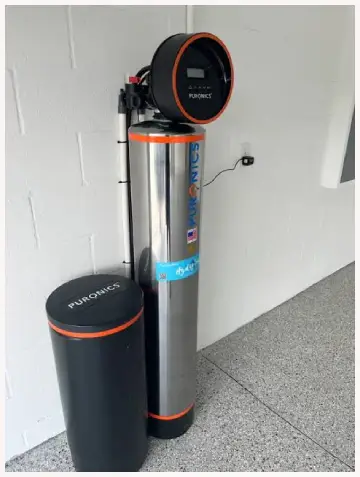
- Puronics vs. Culligan
Culligan is a well-known name in residential water treatment.
Like Puronics, it offers water softeners and filtration systems designed for different household requirements.
The main advantage I see with Culligan is its established dealer and service network in many markets. This can make professional installation and ongoing support more convenient, although availability and service quality vary by location.
Puronics differentiates itself through technologies such as SilverShield and its combined treatment configurations.
However, I wouldn’t automatically consider those features worth a higher purchase price.
If I were choosing between these two brands, I would compare the complete installation quotations, warranty terms, replacement media costs, and local technician availability.
Culligan would deserve serious consideration if its local service support and written warranty were stronger.
- Puronics vs. Kinetico
Kinetico is another established water treatment manufacturer.
Its systems are particularly known for non-electric, water-powered operation and certain twin-tank configurations.
I find the twin-tank approach interesting because suitable models can regenerate one tank while the other continues supplying treated water.
Puronics, on the other hand, emphasizes integrated filtration and softening technologies in selected models.
Both brands can be expensive compared with conventional equipment, so I wouldn’t choose either based on marketing alone.
I would compare their regeneration methods, water usage, service requirements, and warranty coverage.
For households that value continuous soft water, a suitable Kinetico twin-tank system may be worth investigating.
- Puronics vs. Fleck
Fleck is particularly popular among homeowners looking for conventional water softening equipment.
Its control valves are used in many residential softener configurations, including systems built around the 5600SXT valve.
Compared with Puronics, Fleck-based systems can offer a simpler purchasing and maintenance experience.
One advantage is that buyers can often find more straightforward equipment specifications and replacement components through water treatment suppliers.
Puronics offers more integrated treatment options, but those additional features can increase the total purchase and maintenance expenses.
If my primary goal were simply to remove hardness minerals, I would seriously consider a properly sized Fleck-based system.
I wouldn’t pay extra for filtration features unless my water test showed that I actually needed them.
- Puronics vs. SpringWell
SpringWell focuses on residential water filtration and water softening equipment.
Its product range includes systems designed for households dealing with hard water and other water quality concerns.
I would consider SpringWell when looking for an alternative that provides clearly defined product configurations and published equipment information.
Puronics has an interesting integrated filtration approach, but its dealer-based pricing can make direct comparisons difficult.
For me, the better option would be whichever brand offers the appropriate treatment capacity, reasonable maintenance expenses, and dependable local support.
I would also compare the actual warranty documents instead of relying on advertised coverage.
Also Read: Is WaterBoss Water Softener Worth It?
Frequently Asked Questions (FAQ)
A Puronics water softener can potentially last around 10–15 years or longer, depending on the model, water conditions, installation quality, and maintenance. However, individual components and filtration media may need replacement much sooner. Regular inspections and timely servicing can help extend the equipment’s useful life.
There isn’t one universally reliable brand for every household. Culligan, Kinetico, Fleck-based systems, and SpringWell are worth comparing. I would prioritize product reliability, replacement part availability, warranty transparency, and local service support rather than choosing a brand based solely on popularity.
No, that isn’t an accurate way to describe the relationship. Puronics incorporates technology inspired by NASA’s silver-ion water purification research. NASA’s published account explains that the technology was adapted for commercial water treatment applications. It does not establish that NASA uses Puronics residential water softeners for its missions.
Puronics does not provide a straightforward public price list for all its systems. Third-party pricing reports suggest that some softener-only installations may cost approximately $3,400, while larger whole-house packages can reach $7,000–$9,000. Actual prices depend on the model, installation, and additional filtration equipment.
Final Verdict
I wouldn’t recommend Puronics as my first-choice water softener.
Although its integrated filtration technology and SilverShield features are interesting, customer complaints about service, repair expenses, warranty expectations, and pricing make me hesitant.
I would compare Fleck, Culligan, and Kinetico first. For a long-term household investment, I believe transparent pricing, reliable performance, and accessible maintenance support matter more than impressive marketing claims.
Recent Posts
If you're looking for an energy-efficient way to heat water, an LG heat pump water heater may be worth considering. I like the idea of combining inverter technology with lower electricity...
Pentair Water Softener Review: Is It Worth Buying For Your Home?
If hard water is leaving mineral deposits on your faucets, making your skin feel dry, or reducing the efficiency of your appliances, a Pentair water softener may be worth considering. I...