
SpringWell water filtration systems are worth considering if you want cleaner, better-tasting water without constantly purchasing bottled water.
I like their whole-house filtration options, specialized contaminant-reduction systems, and flexible designs for different household needs.
However, the right model depends on your water quality, plumbing setup, and budget.
If you want long-term water treatment with convenient access to filtered water throughout your home, SpringWell deserves a place on your shortlist.
My First Experience With SpringWell Water Filtration Systems
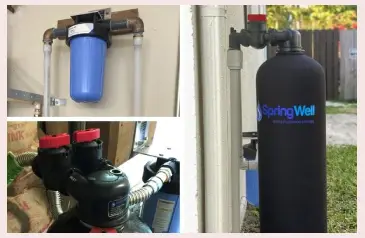
When I started looking at whole-house water filtration systems, SpringWell caught my attention because it offers several solutions rather than relying on one universal filtration product.
I wanted to understand whether its systems could genuinely improve everyday water quality and whether the investment would make sense over several years.
One thing I appreciated about the SpringWell product range was its focus on treating water before it reaches individual faucets, showers, washing machines, and other household fixtures.
Instead of installing separate filters throughout the house, a whole-house system connects to the main water supply. That approach can make everyday water use more convenient.
SpringWell offers different systems for municipal water and private well water. This distinction matters because the two water sources can contain different contaminants.
Municipal water may have chlorine, chloramine, and certain chemical byproducts, while well water may require treatment for iron, sulfur, sediment, or other naturally occurring substances.
I also found the company’s filtration approach interesting. Some systems use multiple filtration stages, while others combine different treatment technologies.
Depending on the model, these can include sediment filtration, activated carbon, catalytic carbon, and specialized filtration media.
The convenience factor is another reason I would consider SpringWell. Once a properly sized system is installed, you can use treated water throughout the home without remembering to refill countertop pitchers or replace small faucet filters frequently.
However, I would not purchase one simply because the brand advertises impressive filtration capabilities. I would first arrange a water test and identify the contaminants that actually need attention.
My overall impression is that SpringWell offers an appealing selection for homeowners who want a more permanent water treatment solution. Still, installation requirements, replacement schedules, water pressure, and the specific model’s certified performance deserve careful attention before making a purchase.
Also Read: Is Pentair Water Softener Worth It?
Pros Of SpringWell Water Filtration Systems
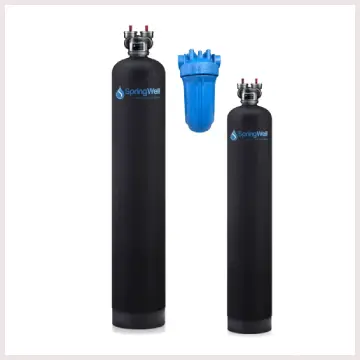
- Convenient Whole-House Filtration
The biggest advantage, in my opinion, is the convenience of whole-house filtration.
Imagine turning on your kitchen faucet, taking a shower, or running your washing machine without having to think about installing a separate filter for every application.
A properly selected whole-house SpringWell system treats water at the main entry point. This allows treated water to travel throughout your home’s plumbing.
For busy households, that convenience can make a meaningful difference.
You also avoid the daily hassle associated with filling water pitchers or maintaining multiple small filtration units.
However, remember that a whole-house filter does not automatically make every contaminant disappear. Its performance depends on the specific filtration media and the contaminants the model is designed to reduce.
- Different Systems for Different Water Sources
I appreciate that SpringWell does not treat municipal water and well water as identical problems.
Municipal water commonly receives disinfection treatment before reaching residential properties. Although this is important for public health, chlorine and chloramine can affect water taste and smell.
Well water presents a different set of potential concerns. Depending on the geology and surrounding environment, it may contain iron, sediment, sulfur, or other substances.
SpringWell’s product selection allows homeowners to compare systems designed for different water conditions.
This flexibility is useful because you do not necessarily need an expensive, complicated system if your water only has one or two specific issues.
- Improved Water Taste and Odor
Water taste is one of the first things I would evaluate when considering a filtration system.
If your tap water has a noticeable chlorine smell or unpleasant aftertaste, an appropriately designed activated-carbon filtration system may help.
Carbon media works through adsorption, capturing certain unwanted compounds as water passes through the filter.
The result can be more pleasant water for drinking, making coffee, preparing meals, and filling reusable bottles.
I also like the idea of reducing the need to purchase bottled water simply because household tap water does not taste appealing.
Still, taste improvement should not be confused with comprehensive purification. Clear, pleasant-tasting water is not necessarily free from harmful contaminants.
- Multiple Filtration Technologies
Another advantage is the availability of different filtration technologies.
Depending on the model, SpringWell systems may use sediment filtration, carbon media, catalytic carbon, specialized treatment media, or reverse osmosis.
Each technology has a different purpose.
Sediment filtration helps capture suspended particles such as sand, rust, and dirt. Activated carbon targets certain chemicals and compounds that influence taste and odor. Reverse osmosis can reduce many dissolved substances.
I consider this variety important because water treatment should be based on actual water conditions rather than marketing claims.
A household dealing with sediment needs a different solution from one dealing with excessive dissolved minerals or arsenic.
- Reduced Dependence on Bottled Water
Buying bottled water regularly can become expensive and inconvenient.
You have to purchase it, transport it, store it, and manage empty bottles. A properly maintained drinking-water filtration system can reduce the need for bottled water.
For families that consume significant quantities of drinking water, this can become a practical advantage.
I would calculate the annual bottled-water expense before purchasing a SpringWell system. Then compare that amount with the equipment cost, installation, replacement filters, and ongoing maintenance.
The savings are not guaranteed, but the comparison can help you determine whether the investment makes financial sense.
Cons Of SpringWell Water Filtration Systems
- Initial Purchase Cost Can Be High
The first disadvantage is the upfront investment.
Whole-house filtration systems generally cost more than basic pitcher filters or faucet-mounted units.
You may also need to pay for plumbing modifications, professional installation, additional prefilters, or specialized treatment equipment.
For homeowners with a limited budget, this can make SpringWell less attractive.
I would compare the total installed cost rather than looking only at the advertised equipment price.
- Installation May Require Professional Help
Installing a whole-house filtration system is not always a simple weekend project.
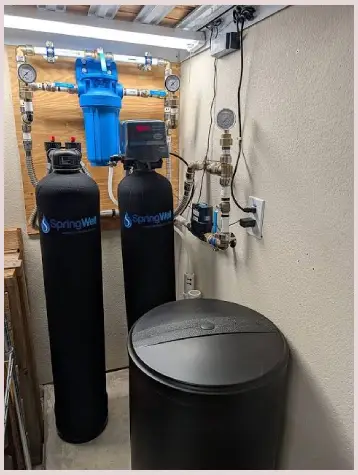
The equipment usually connects to the main water supply, which means you need adequate plumbing space, appropriate connections, and sufficient clearance for future servicing.
If your existing plumbing is complicated, installation may require professional assistance.
I would not recommend attempting an installation unless you understand the plumbing requirements and can safely complete the work.
- Not Every System Removes Every Contaminant
This is probably the most important limitation.
A carbon filtration system cannot automatically remove every dissolved mineral, heavy metal, microorganism, or chemical contaminant.
For example, reducing chlorine does not mean the system also removes arsenic, fluoride, nitrates, or bacteria.
Each contaminant requires an appropriate treatment method.
Before buying, I would compare the manufacturer’s performance specifications with an independent laboratory water test.
- Replacement Components Add Ongoing Costs
Although some systems have relatively long maintenance intervals, filters and treatment media eventually need attention.
Depending on the model, replacement expenses may include sediment filters, carbon cartridges, membranes, or other components.
If you ignore maintenance, filtration performance may decline.
I would calculate these recurring costs before purchasing rather than assuming the system is a one-time expense.
- Requires Adequate Installation Space
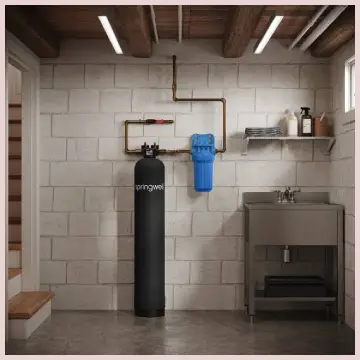
Whole-house filtration equipment can take up considerable space.
You need enough room for the tanks, plumbing connections, bypass valves, and maintenance access.
Some homeowners may struggle to accommodate the equipment in a small utility room or crowded basement.
Measure the available installation area before ordering.
- Salt-Free Conditioning Is Not Traditional Softening
SpringWell’s salt-free water conditioners may help manage scale, but they do not remove hardness minerals in the same manner as salt-based softeners.
If your primary concern is reducing calcium and magnesium concentrations, this distinction matters.
You should not purchase a salt-free conditioner expecting it to deliver the same results as an ion-exchange water softener.
Also Read: Is Puronics Water Softener Worth It?
Maintenance Tips For SpringWell Water Filtration
- Follow the Recommended Filter Replacement Schedule
Every filtration system has specific maintenance requirements.
Some use replaceable sediment filters, while others contain larger filtration tanks with media designed for longer service periods.
I would never assume that all SpringWell models have identical replacement intervals.
Check the product manual and keep a record of installation dates and maintenance activities.
Replacing filters when required helps maintain consistent water flow and filtration performance.
- Inspect the Sediment Prefilter Regularly
If your system includes a sediment prefilter, pay attention to its condition.
Sediment filters capture particles such as dirt, sand, and rust before water reaches the main filtration media.
Over time, collected material can restrict water flow.
I would inspect the prefilter according to the manufacturer’s schedule and replace it when necessary.
If you notice a sudden pressure reduction, a clogged prefilter is one possible explanation.
- Monitor Household Water Pressure
Water pressure can provide useful clues about filtration-system performance.
If your faucets suddenly deliver weaker flow, check whether the system needs maintenance.
A clogged filter, partially closed valve, plumbing restriction, or another issue could be responsible.
I would also compare the pressure before and after installation to understand whether the filtration equipment is creating an unexpected restriction.
- Check for Leaks Around Connections
Even a small plumbing leak deserves attention.
Inspect the inlet and outlet connections, filter housings, bypass valves, and nearby plumbing occasionally.
Look for moisture, dripping, corrosion, or unusual water stains.
If you discover a leak, follow the manufacturer’s instructions and contact a qualified plumber when necessary.
Ignoring a minor leak can eventually create a much bigger household problem.
- Understand Your System’s Bypass Valve
Many whole-house filtration systems include a bypass arrangement.
This allows water to flow around the filtration equipment during maintenance or servicing.
I would learn how the bypass valve works immediately after installation.
Understanding its operation can save time if you need to replace a filter or troubleshoot the system.
However, do not leave the system bypassed unintentionally because household water will no longer receive the intended treatment.
- Test Your Water Periodically
One mistake I would avoid is assuming that filtered water will always maintain the same quality.
Water conditions can change, particularly when you rely on a private well.
Periodic laboratory testing helps determine whether the system is still addressing the contaminants that matter.
For municipal water, you can review available local water-quality reports and arrange additional testing when needed.
For well water, testing for bacteria, nitrates, arsenic, and other locally relevant contaminants is particularly important.
- Clean the Surrounding Installation Area
The filtration equipment should remain accessible and reasonably clean.
Dust, clutter, stored chemicals, and unrelated household items can make maintenance more difficult.
I would leave enough room around the tanks and plumbing connections to inspect the equipment comfortably.
A clean installation area also makes it easier to identify unexpected leaks.
Also Read: Is SoftPro Water Softener Worth It?
Comparison Of SpringWell Water Filtration Systems With Other Brands
- SpringWell vs. Aquasana
Known for whole-house filtration, well-water treatment, reverse osmosis, and salt-free conditioning options.
Offers whole-house filtration, under-sink filters, and drinking-water treatment products.
Aquasana is one of the brands I would compare with SpringWell when shopping for residential water filtration.
Both offer solutions for households that want to improve water quality beyond basic faucet filters.
SpringWell is appealing because of its broad selection of whole-house and specialized well-water treatment systems.
Aquasana also offers several filtration categories, including systems designed to reduce chlorine and other selected contaminants.
I would compare their independently verified contaminant-reduction claims, replacement costs, flow rates, and warranty terms rather than assuming one brand is automatically better.
- SpringWell vs. APEC Water Systems
Offers whole-house treatment alongside drinking-water filtration and conditioning.
Particularly well known for residential reverse osmosis drinking-water systems.
APEC is worth considering if your main priority is drinking-water purification.
Its reverse osmosis systems are designed to reduce various dissolved contaminants, depending on the particular model.
SpringWell offers a broader whole-house treatment approach.
For someone who wants filtered water throughout the home, SpringWell may be more suitable. However, if you primarily want a dedicated drinking-water filtration system, APEC deserves serious consideration.
- SpringWell vs. Culligan
Offers residential filtration products with options for different water conditions.
Offers filtration, water softening, and professionally supported water-treatment solutions.
Culligan has a long history in the water-treatment industry and offers a broad range of residential services.
One advantage is the availability of local service and professional installation options in many markets.
SpringWell may appeal to homeowners who prefer researching and selecting their own equipment.
I would compare the complete ownership experience, including installation, servicing, replacement components, and warranty coverage.
- SpringWell vs. iSpring
A strong option to investigate for whole-house and specialized filtration.
Offers whole-house, under-sink, and reverse osmosis filtration products.
iSpring is another brand I would consider when comparing filtration equipment.
Its product selection includes systems for homeowners with different installation requirements and budgets.
SpringWell may be more attractive if you are looking for a specialized whole-house solution, while iSpring provides several options for smaller drinking-water installations.
The best choice depends on the exact model specifications, replacement costs, and verified filtration performance.
- SpringWell vs. Home Master
Offers residential drinking-water filtration, including reverse osmosis systems.
Home Master is worth considering if you primarily want an under-sink drinking-water solution.
Its reverse osmosis systems offer a different approach from SpringWell’s whole-house equipment.
I would choose based on whether you want to treat water throughout the property or focus on the water used for drinking and cooking.
For whole-house filtration, SpringWell has a more directly relevant product selection. For dedicated drinking-water treatment, Home Master is another option to investigate.
Is Springwell Water Filtration Worth The Money?
In my opinion, SpringWell can be worth the investment if you have a specific water-quality problem and select a system designed to address it.
The biggest advantage is convenience. Instead of installing several small filters around the house, a whole-house system can treat incoming water at a central location.
However, the purchase price is only one part of the equation.
I would consider equipment cost, installation, replacement filters, maintenance, and expected service life before deciding.
For example, a household with noticeable chlorine taste may benefit from a suitable carbon filtration system. A homeowner with hard water may need a dedicated softener or conditioner. Someone concerned about arsenic may require specialized treatment verified for that contaminant.
These are different problems, and one filtration system should not be expected to solve all of them.
I would also pay attention to independent certification. Look for relevant NSF/ANSI certifications and performance data for the exact model and contaminant you want to reduce.
Ultimately, SpringWell makes the most sense when its technology matches your water conditions and your household has enough demand to justify a whole-house installation.
Also Read: Is Nelsen Water Softener Worth It?
Frequently Asked Questions (FAQ)
Yes, SpringWell offers several useful filtration options, but performance depends on the model and your water conditions.
The equipment can last many years with proper installation and maintenance. Individual filters and media require periodic replacement.
Prices vary by model, capacity, and installation requirements. Expect different costs for whole-house, well-water, and reverse osmosis systems.
Not every SpringWell system removes arsenic. You need a model specifically tested and rated for arsenic reduction.
Final Verdict
I would recommend SpringWell to homeowners who want convenient whole-house filtration and have identified a water-quality issue that its products can address.
Its selection of filtration and conditioning options is appealing, but choosing the correct model is essential.
If you want better-tasting water and a long-term household treatment solution, SpringWell is worth considering.
Test your water, compare specifications, and calculate maintenance costs before purchasing.
Recent Posts
Flexsteel Vs. Southern Motion: Which Recliner Brand Lasts Longer And Feels Better?
I spent weeks comparing Flexsteel and Southern Motion recliners and motion sofas because I needed durable, comfortable seating that would hold up in a busy home without constant...
Trex Select Decking Reviews: Is This Composite Decking Worth Buying?
If you want an attractive outdoor deck without the constant maintenance of traditional wood, Trex Select decking deserves your attention. I like its combination of durability,...